Little Sister
July 24, 2026
2694m
Canmore, AB
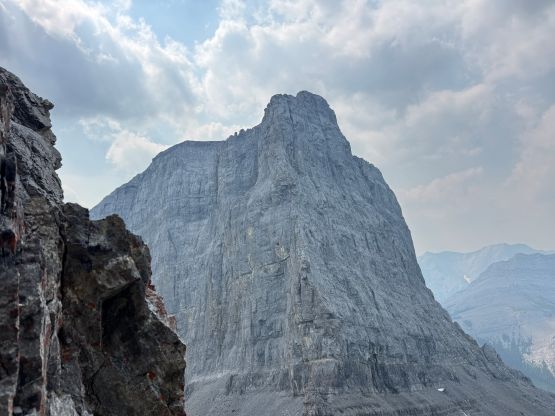
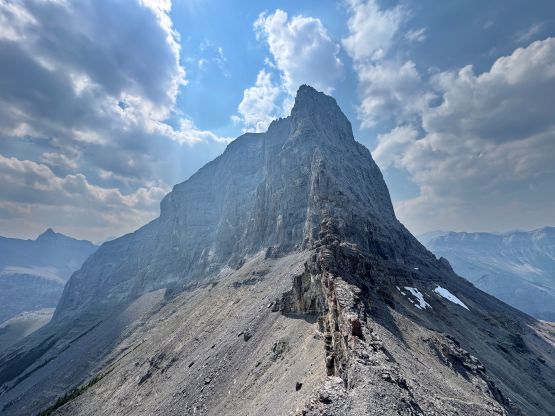
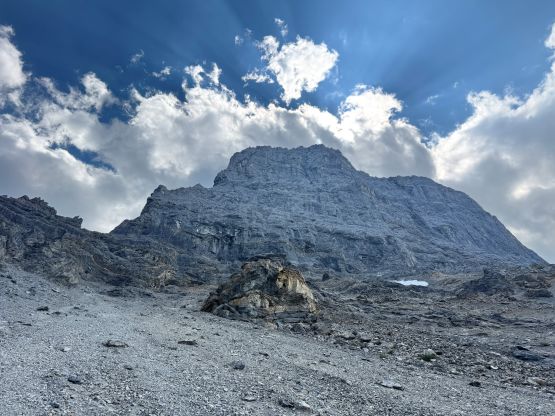
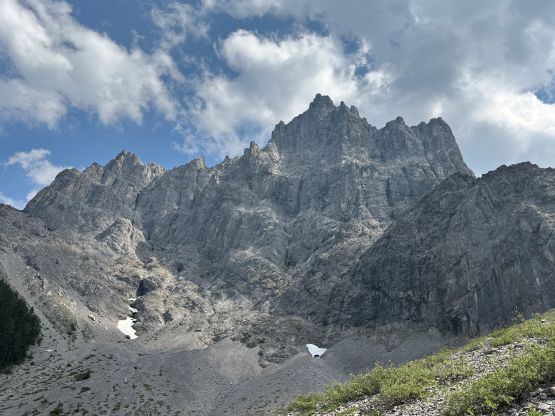
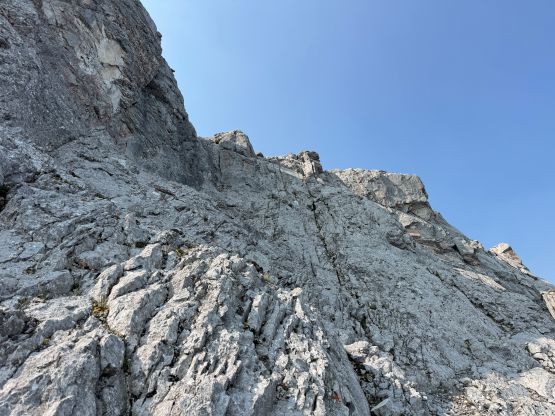
“Little Sister” is the smallest of the Three Sisters that together make an icon of Canmore, but is the only one of the three that requires technical climbing even by the easiest possible route. The standard route via the NE Buttress has a handful of 5th class pitches including at least 2 pitches reaching the grade of 5.6 or above, and the traverse to the true summit is on the typical exposed Rockies choss. The descent involves 8 rappels down into Little/Middle col which is not the same way that one climbs up from, so this is a fairly involved objective overall. I had scrambled “Big Sister” back in 2015 and was never too keen on slogging up “Middle Sister”. I had wanted to climb “Little Sister” for at least a decade but I needed to team up with someone capable of rock climbing. This oppourtunity eventually came in the summer of 2026 when Steven Noel and I were planning to do something together. The original plan was Mt. Farnham in the Purcells but we disliked the three fires in the vicinity and eventually opted to travel farther east to dodge the smokes. In retrospect I didn’t think the eastwards migration made much difference since it was smoky basically everywhere.
Steven N. did most of the research and planned the technical aspects so all I needed was to bring my personal gear and show up. It would take me a full day to drive from Vancouver to Canmore so I left fairly early in the morning. Contrary to the past few trips the entire journey was in thick smokes from Hope all the way to Canmore. I stopped a few times for gas and food and also took a short nap in the vicinity of Salmon Arm. Losing one hour due to time change was never the most exciting thing, but I did get to Canmore by 10:30 pm local time. I simply slept on the front seat of my car and met Steven the next day at 5 am at the trail-head. The exact location of the trail-head was not very clear but I think we parked at the farther possible spot to minimize the walking distance. I got the 70-m single rope to carry whereas Steven carried the double racks, a set of pitons and a heavy hammer. I also carried a Petzl Gully to be used as a hammer since I don’t own an actual piton hammer. We did end up using most of the stuffs so this wasn’t an overkill.
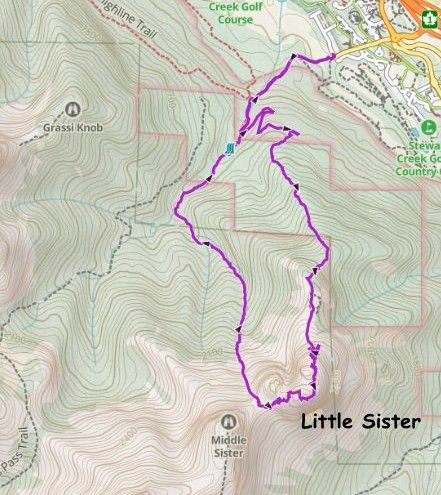
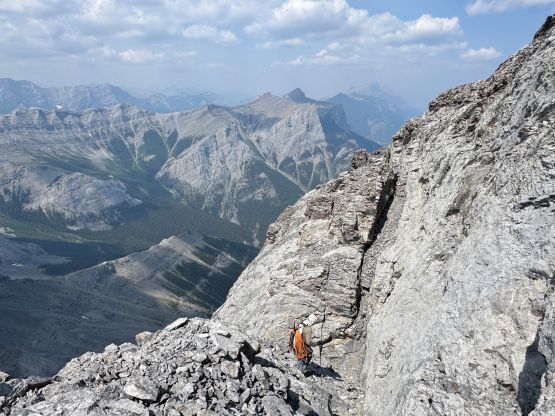
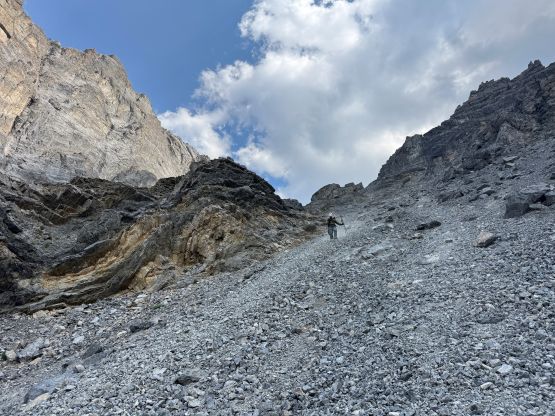
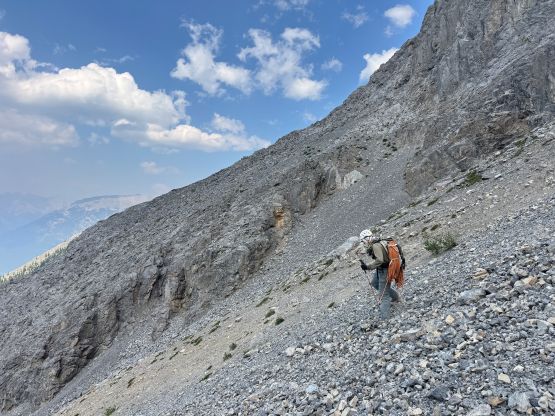
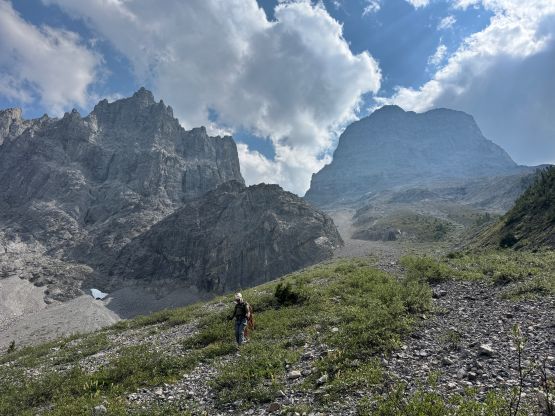
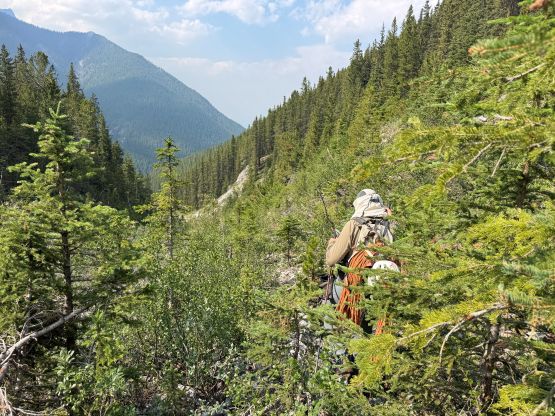
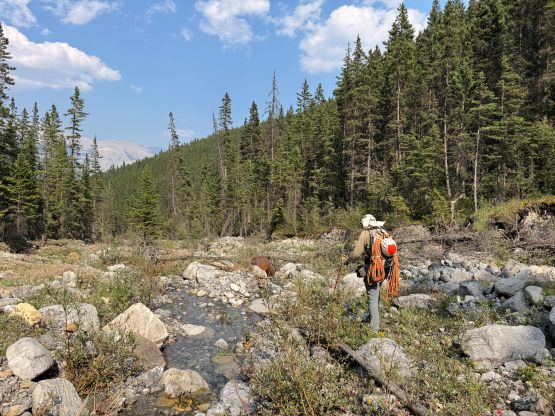
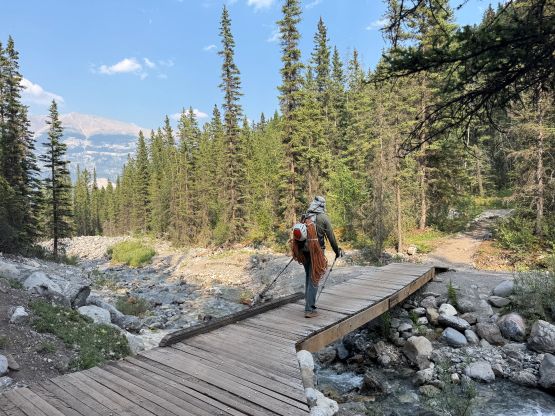
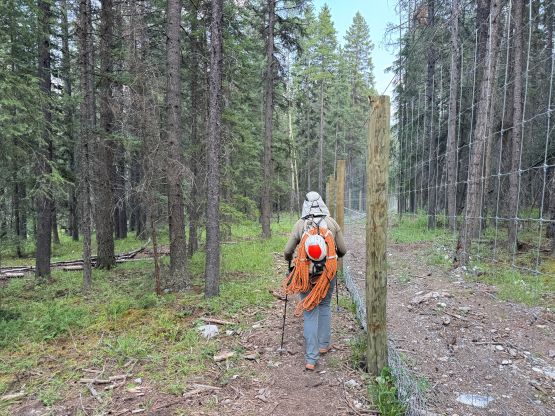
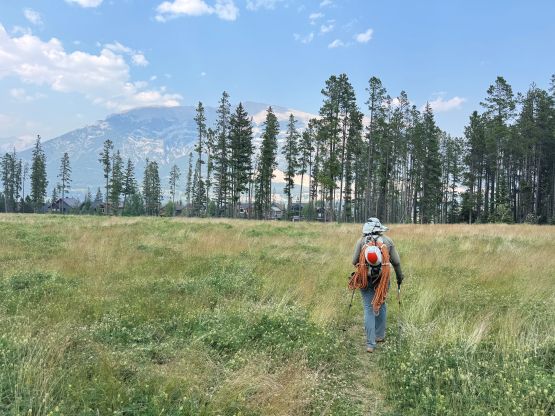
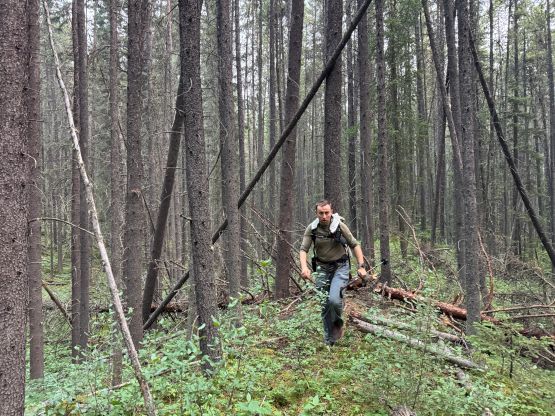
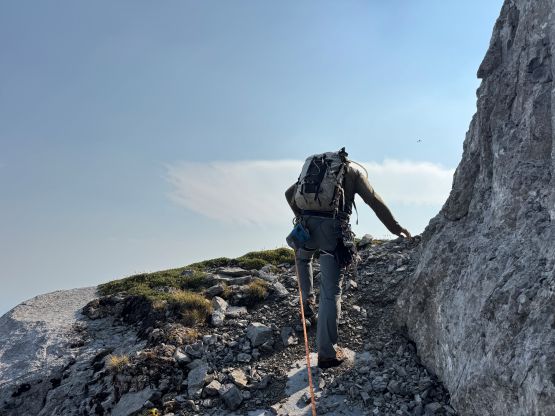
The start of the trail had some confusing cross-country travel next to a sizeable fence but with Gaia GPS these days the navigation was not a problem at all. I even turned on the public tracks so we knew a bunch of others were doing the same. We did miss the climber’s access trail but quickly realized the mistake and corrected ourselves. The access trail was actually not too bad and the “bushwhacking” was non-existent for someone coming from the west coast. There was more scrambling than I thought to traverse to the start of the route including at least one major bump to traverse up and over or around. I took an unexpected slip on class 2 terrain which resulted in bleeding on several fingers and the wounds were still healing even 2 weeks after the trip. This was a sobering reminder that I was in the chossy Rockies, after all.
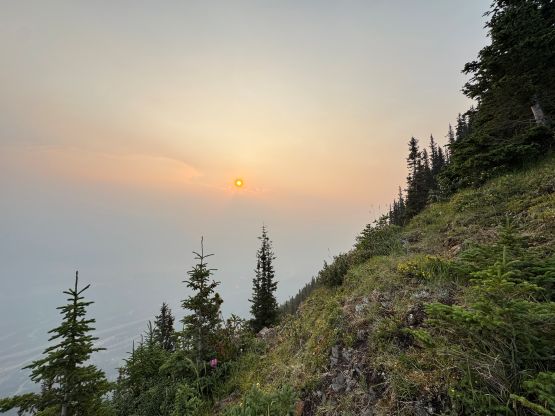
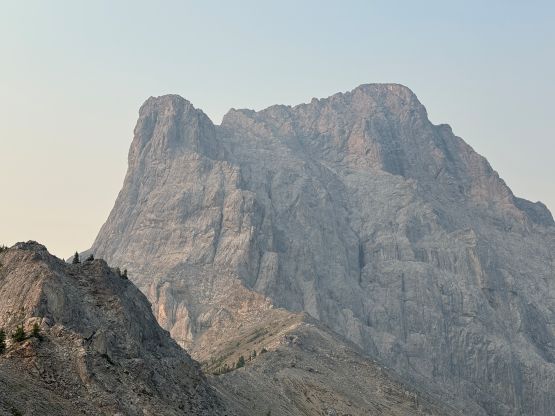
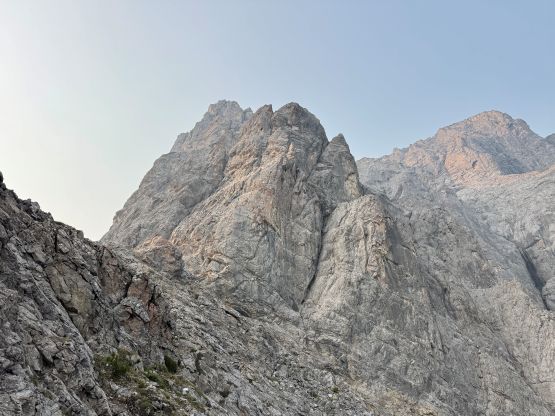
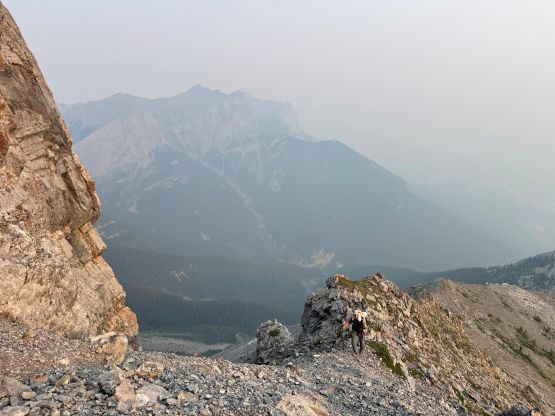
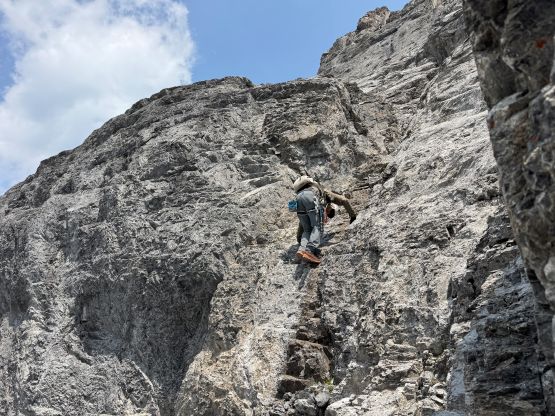
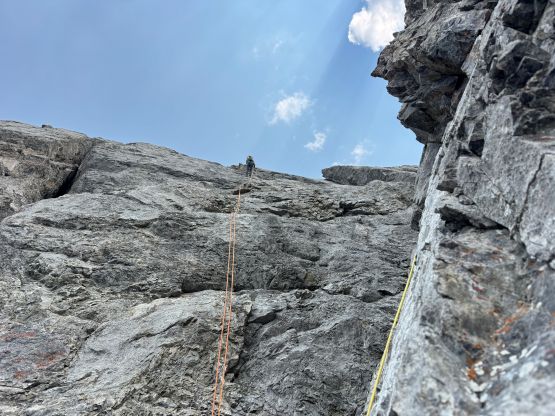
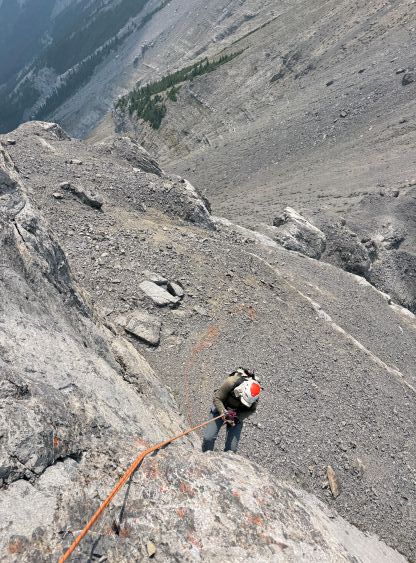
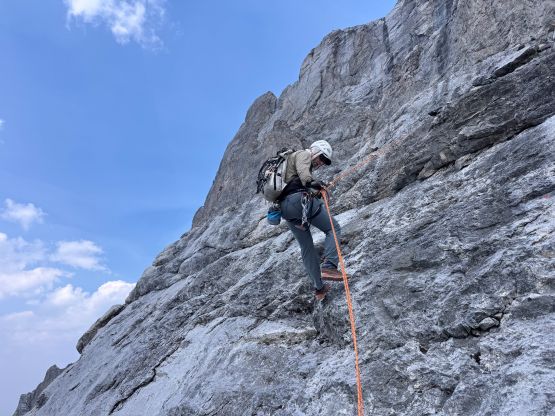
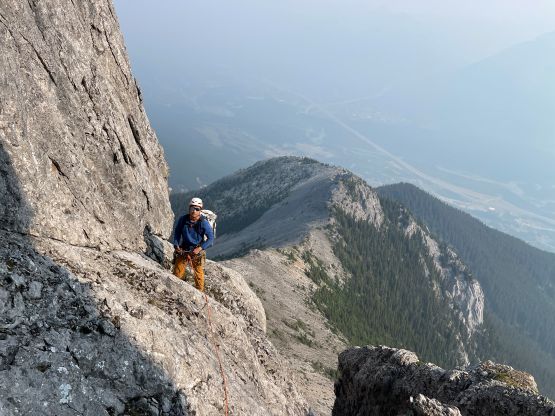
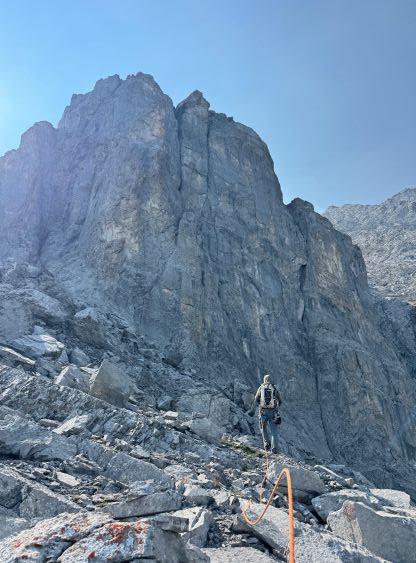
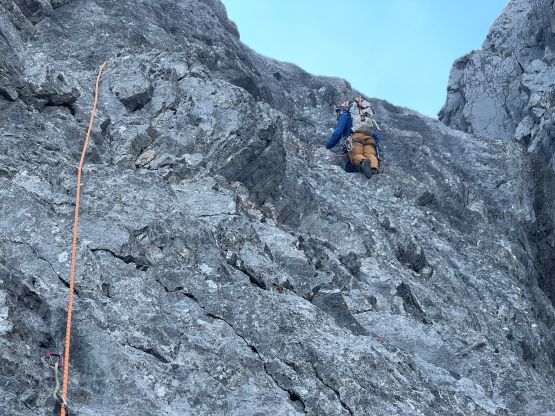
At the base of the route we had some discussion about the strategy. Obviously we would be swapping leads but the 2nd pitch was supposed to be quite sandbagged and significantly harder than any other pitch. I eventually opted to do more leading overall but give the 2nd pitch to Steven N. to lead, so up I went on Pitch 1. This pitch was harder than appeared with a few thin face moves on vertical terrain which felt legit 5.6. There’s a off-width crack to the right but I didn’t use it. The difficulty eased afterwards and I scrambled up the gully on mostly 4th class terrain to the 2-pin belay station. Steven N. then led the crux pitch and took a long time to figure out the several crux spots. Steven was also running out of the draws which suggested that the pitch was quite sustained. It sure was. I actually felt the lower crux “fine” but the vertical section about 2/3 of the way up was definitely giving me some pauses even with a top-rope belay. Once starting those few moves I was committed and my forearms were quire pumped afterwards, which suggested at least a few moves reaching the 5.7 grade. I then led the short 3rd pitch which was straightforward.
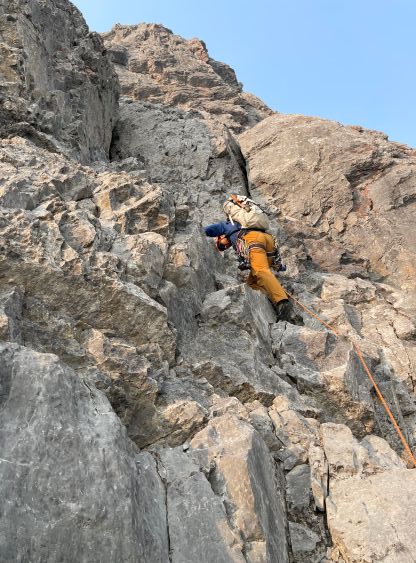
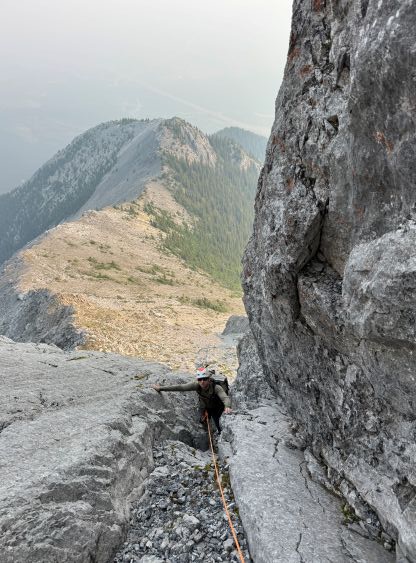
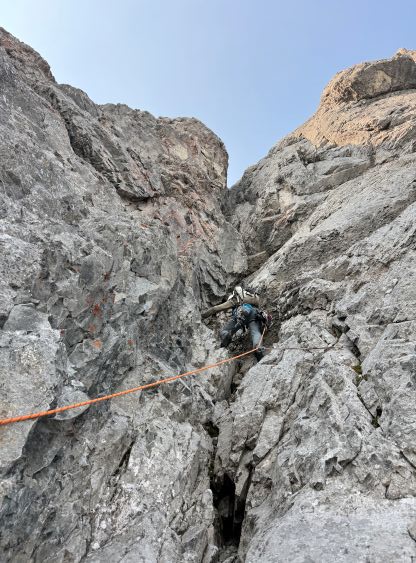
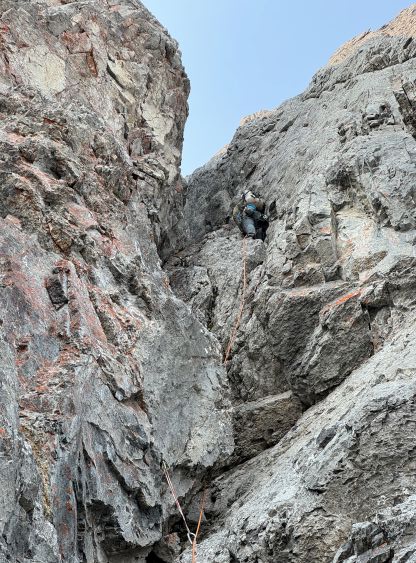
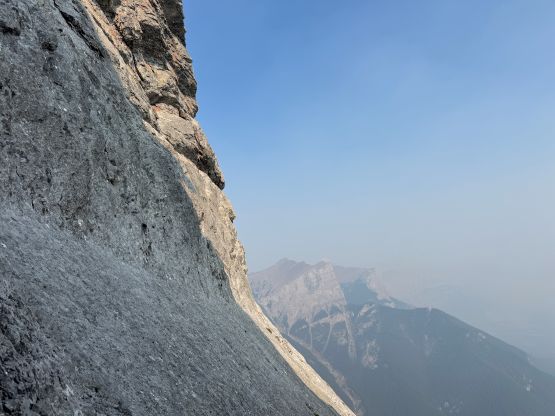
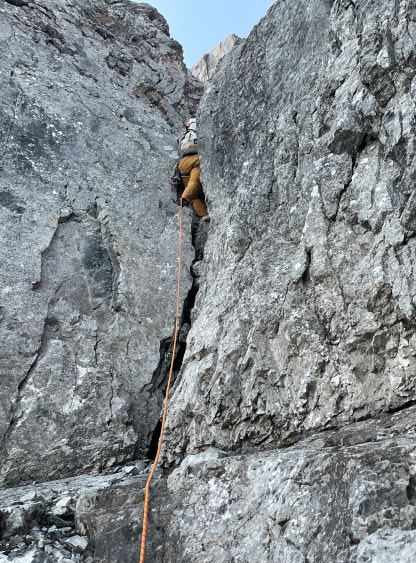
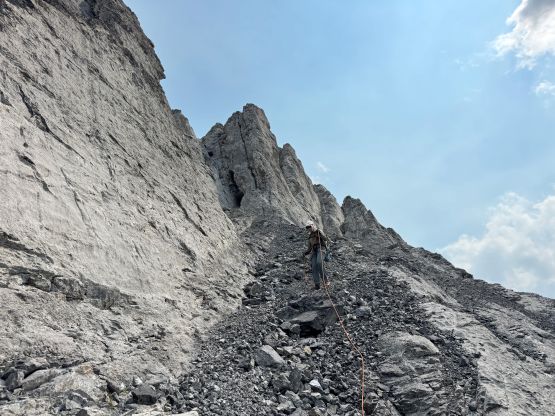
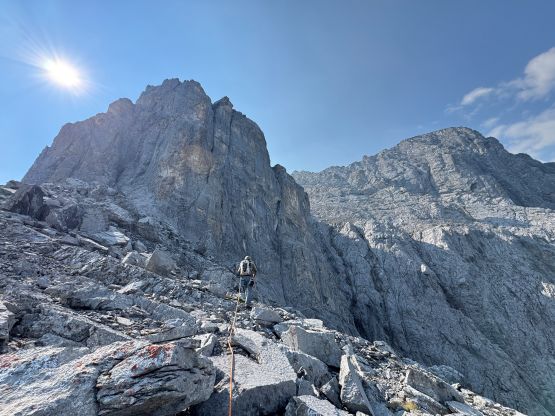
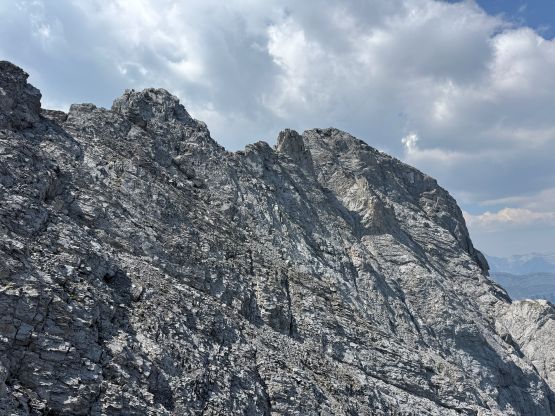
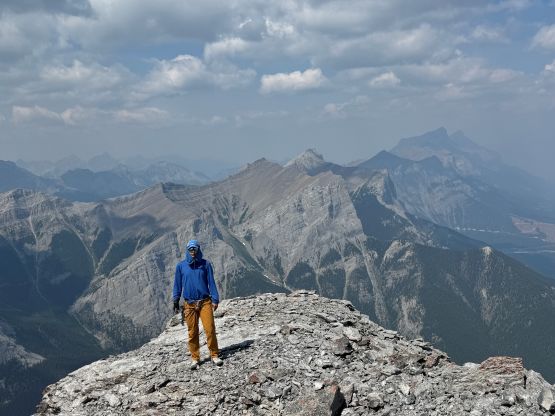
The end of the 3rd pitch marked the ledge traverse out to the left so the “4th pitch” was basically on walking terrain. The 5th pitch was a long one but the climbing was mostly 3rd class to low 5th, that I ran it up without much issues. I didn’t manage to put in a single piece of pro until almost 3/4 of the way up this pitch since I refused to use pitons (and I’m by no mean an expert in pitons). We were now staring at the upper buttress and Steven led the next section scrambling down and around to find the next pitch on the climber’s left side of a dry waterfall. There’s no running water this late in the season and we weren’t expecting to have any neither. I led this last pitch of 5th class climbing which had a few tricky moves but was overall straightforward. The anchor was difficult to find, though. We then swapped the rock shoes back to the approach shoes and did the rest of the scramlble sans the rope. I knew we couldn’t stay entirely on the ridge crest but we also couldn’t be too far off the crest. The exact route was difficult if not pointless to describe as the route-finding shouldn’t be too problematic for those darning to attempt this peak. Except for a few moves to gain the true summit I never thought we did anything “class 5” on the scrambling section. I know a lot of parties hated this traverse but honestly it wasn’t any worse than some of the harder Kane’s scrambles.
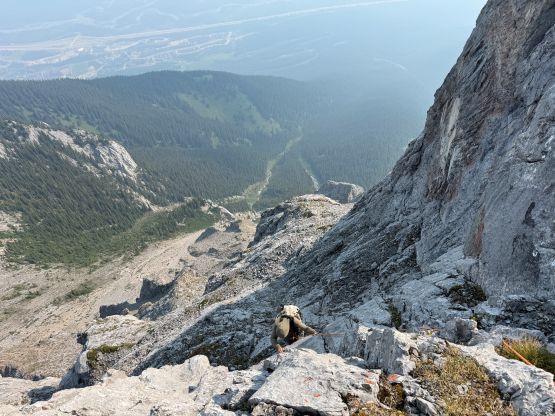
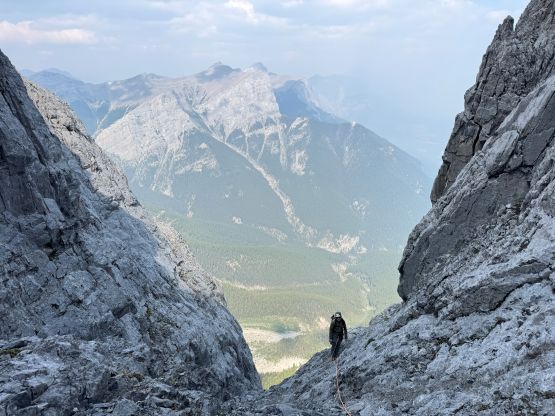
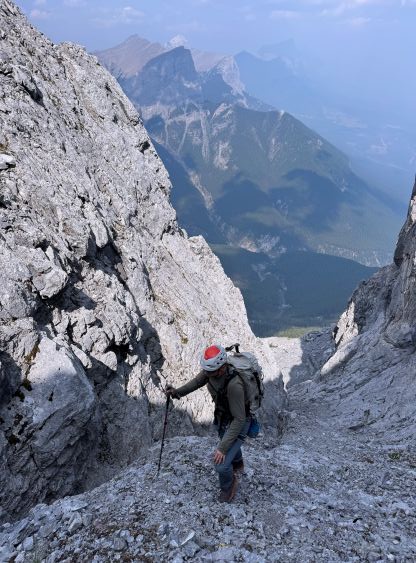
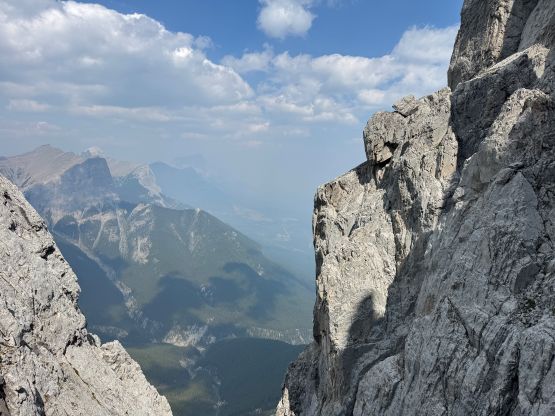
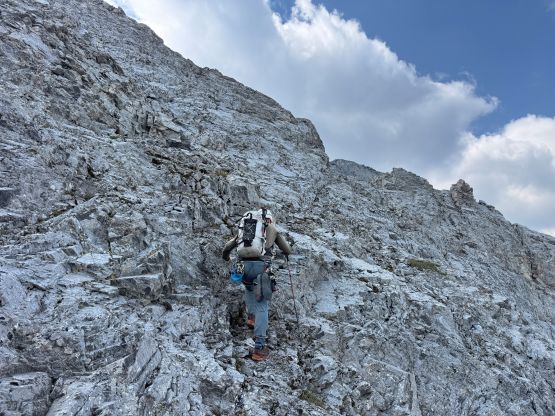
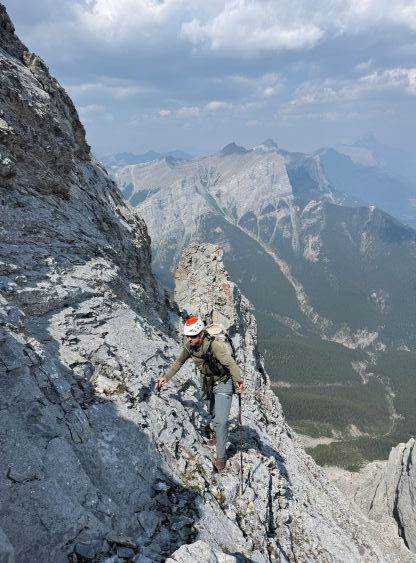
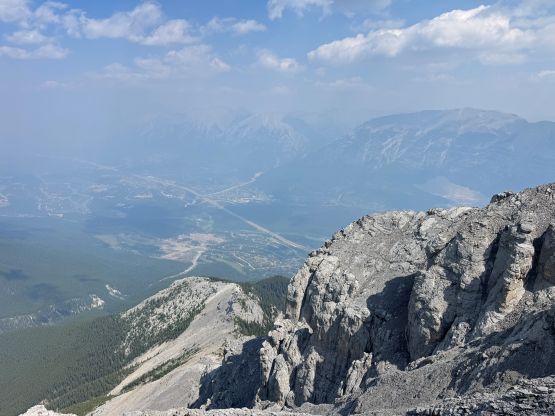
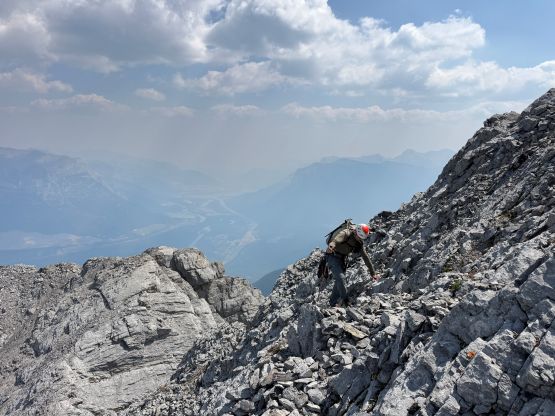
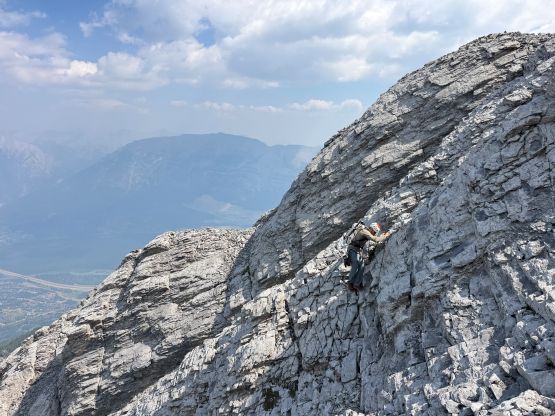
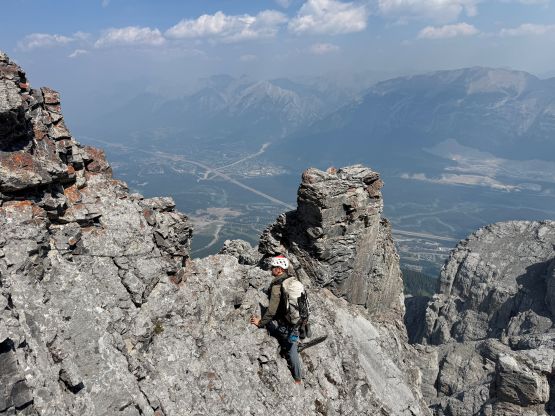
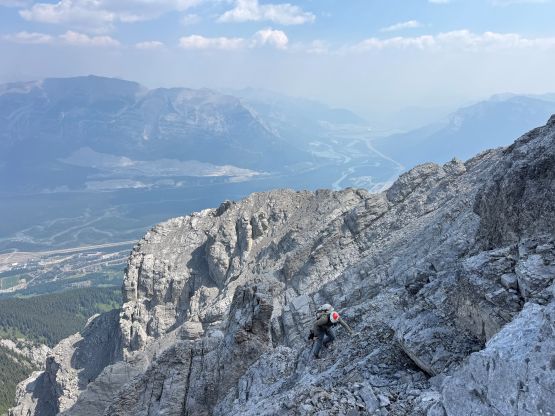
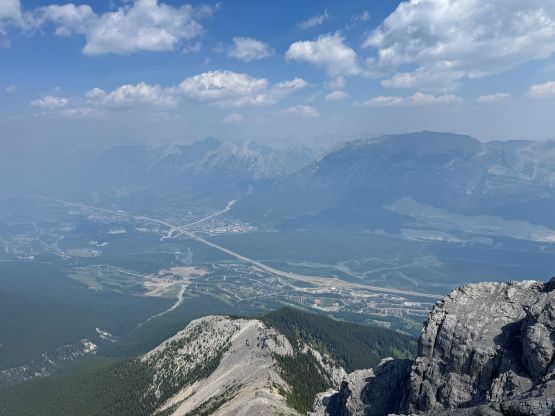
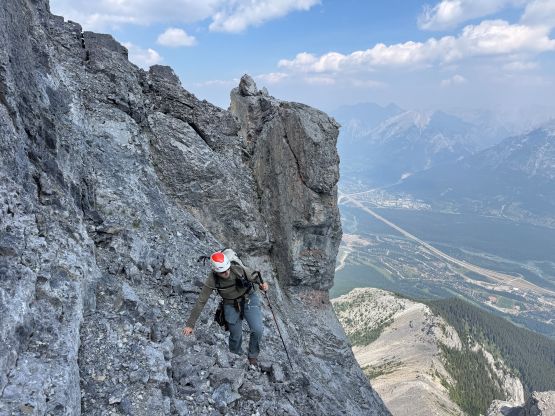
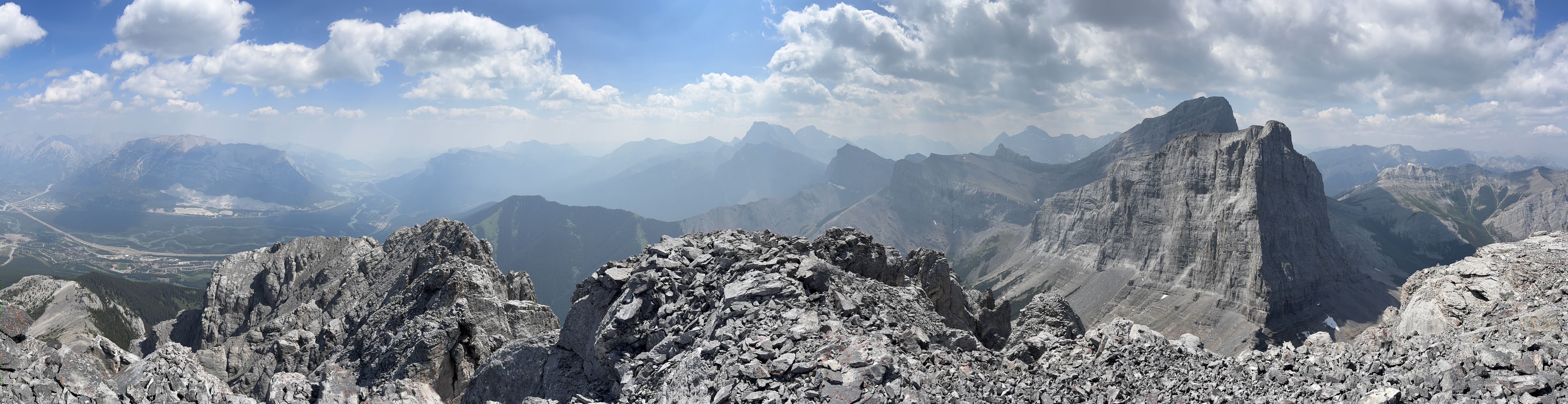
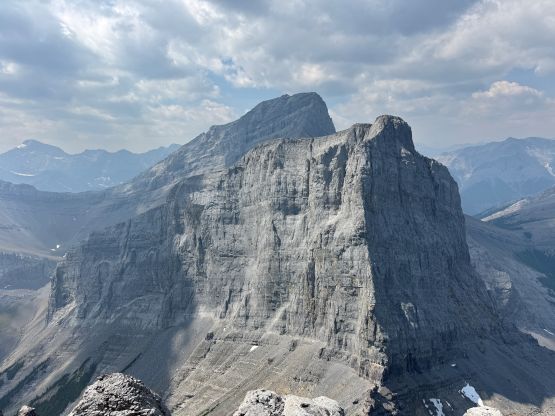
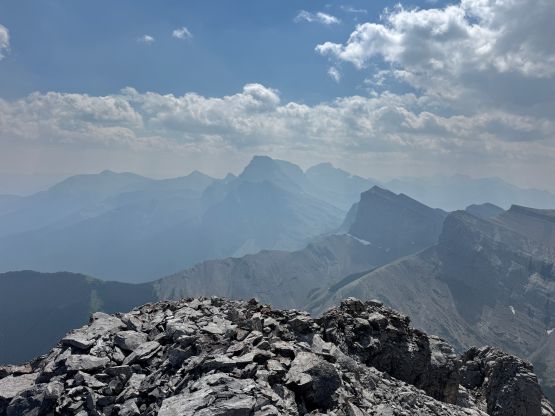
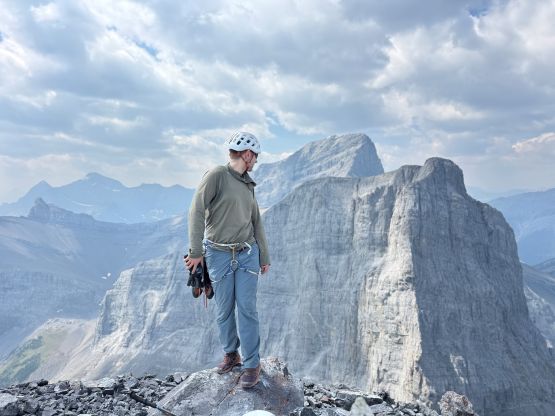
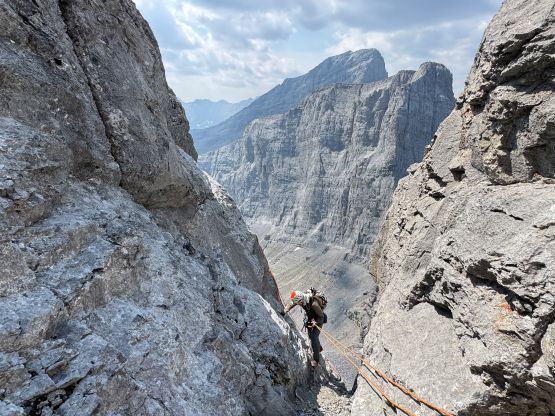
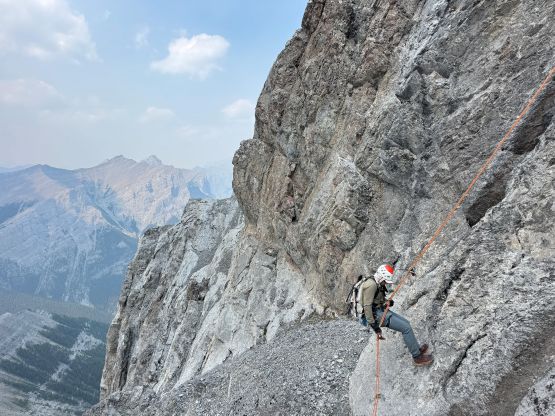
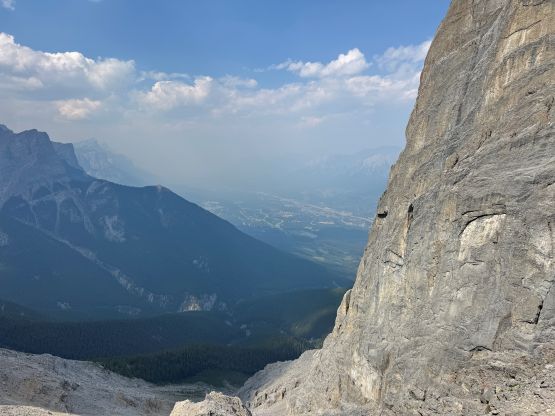
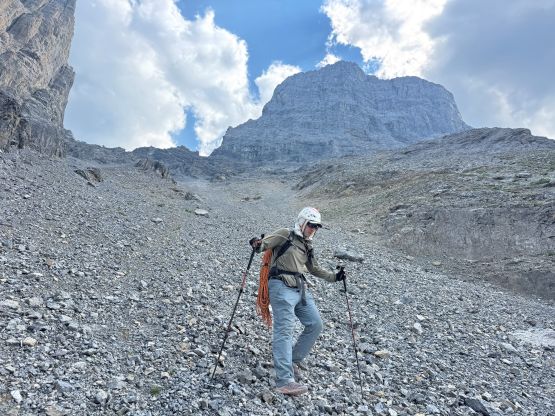
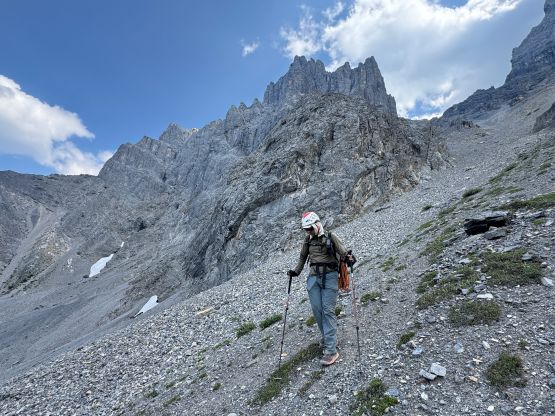
We had the detailed beta about the 8 rappels down into Little/Middle col which was quite complex to say the least. The bigger picture was too overwhelming so I never bothered to “memorize” these beta. It was possible to figure out these rappels one by one by reading the instruction in situ but that had to be combined with our own experience. Both of us here had completed the 11,000ers list years ago and it still required some trial-and-error efforts. Fortunately we never made any mistake and were able to locate each of these rappels. Unfortunately I got hit by a brisk sized rock while rappelling and I still feel the pain in the knee 2 weeks after the trip. I don’t think there’s any injury sustained but the impact was very painful for a minute or two. The second-to-last rappel could be down-climbed but we somehow thought that was the last rappel, so we rapped everything in the end. The descent from Little/Middle col down into Three Sisters Creek was also not trivial. The descent started with compact choss and scree and then turned into some rubble-fuck. We stayed in the middle of the dry creek bed for as much as we could and avoided any notable bushwhacking. We eventually dashed down the Three Sisters Creek, joined the approach trail and finished the round trip in 11.5 hours. We even had spare time to pay a visit to the Vertical Addiction before going to the Safeway for dinner. During the trip we had decided to climb Devils Head on the following day so we had fair amount of driving left to do.