Mount Tisiphone
April 25, 2026
3021m
Lillooet Icefield, BC
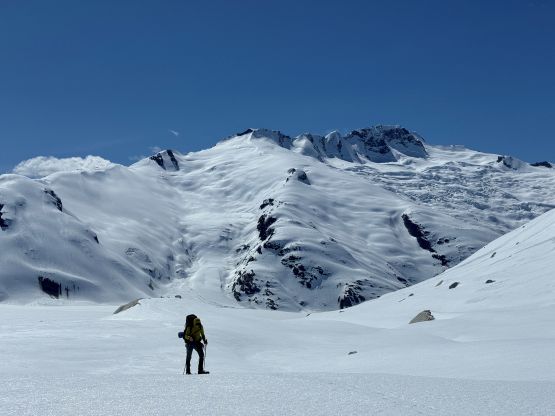
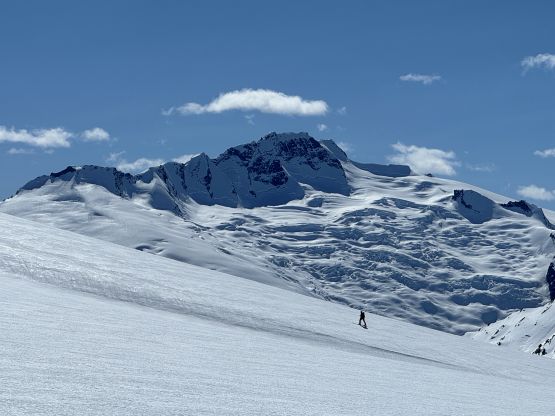
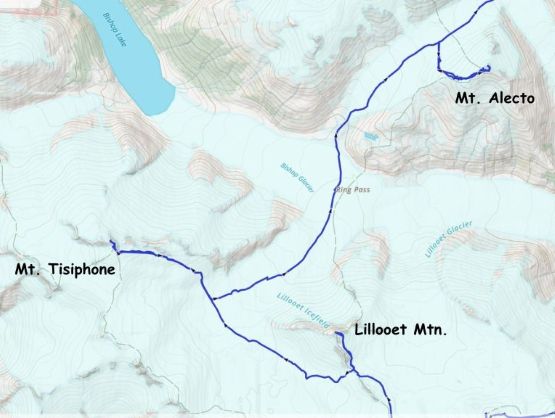
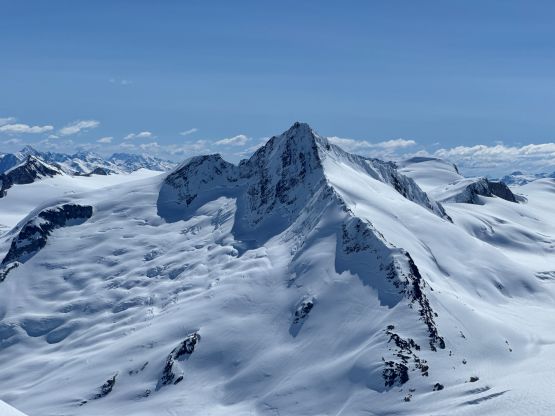
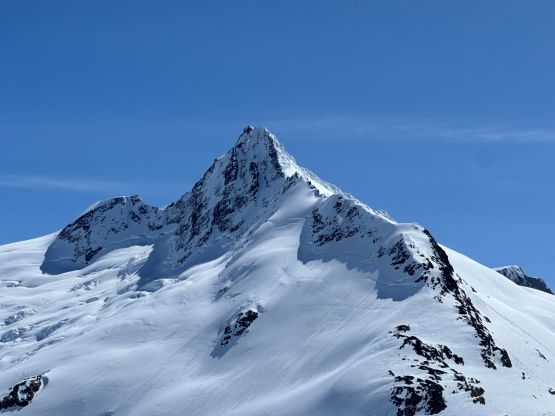
Mt. Tisiphone is a massive glaciated peak in the heart of Lillooet Icefield separating the Lillooet, Toba and Bishop drainages. It’s not the highest in the vicinity but boasts over 1000 m prominence making it one of the more important objectives in the region from peak-bagging perspective. There was however, hardly any “beta” especially for winter/spring ascents, which was quite surprising given that at least a few ski mountaineering parties would come to the vicinity each year. We quickly understood the reason as this was not a simple “add-on”. Francis managed to dig out several paragraphs from first or second ascents over 50 years ago (summer time), and Seb dug out the aerial pictures from John Scurlock’s websites. I estimated the summit attack would be a somewhat challenging fair from the most logical aspects (S/E) but none of the source would give us a clear image of what exactly we would be experiencing. As a result I made us to bring steel crampons and two ice tools each, and we also had two ropes in case things became technical.
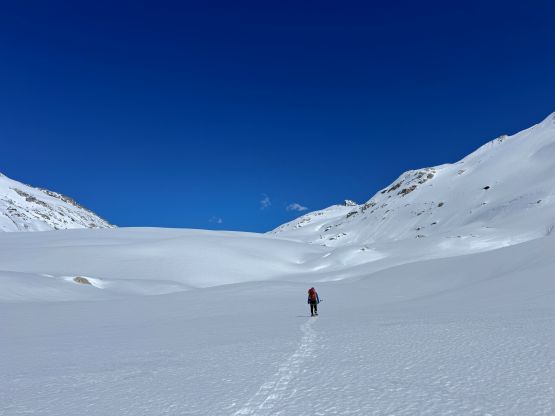
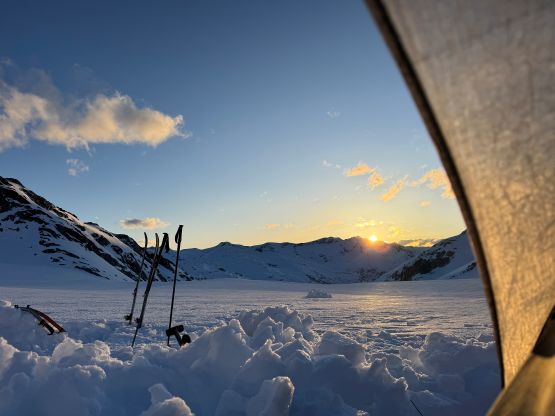
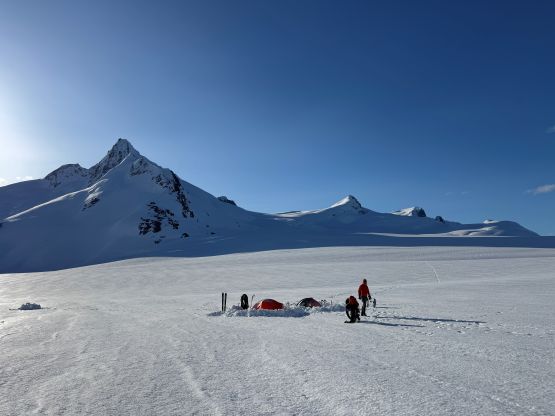
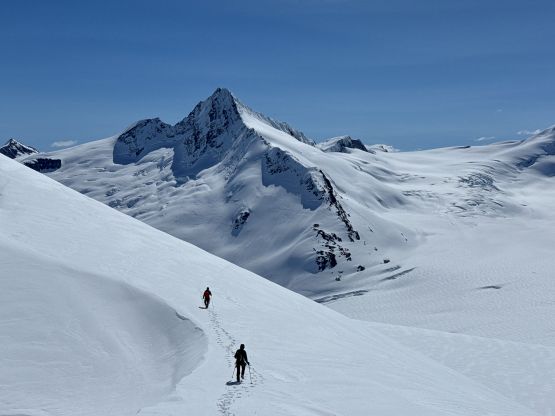
This was the 2nd day of the traverse and we camped at the base of Mt. Tisiphone’s east slopes after descending from Lillooet Mountain. The glacier was quite broken but the snow bridges were solid and we also had a previous party’s skin tracks to roughly guide the way. The night was cold and windy so we didn’t bother to get up until 6:30 am and that’s roughly when we got hit by the sun rays. The morning was still chilly but at least it was now easier to get things going. We collectively decided to leave the snowshoes and skis behind at camp as the condition seemed solid enough to go on just crampons. There was of course close to 1000 m elevation gain from the camp to the summit so this was a rather risky decision, but on a big trip like this we needed to conserve energy wherever possible. I even decided to not carry a backpack as I could carry the jacket on my waist and leash the ice tools to the harness. I threw a water bottle and one sandwich into Alex’s daypack and that’s it.
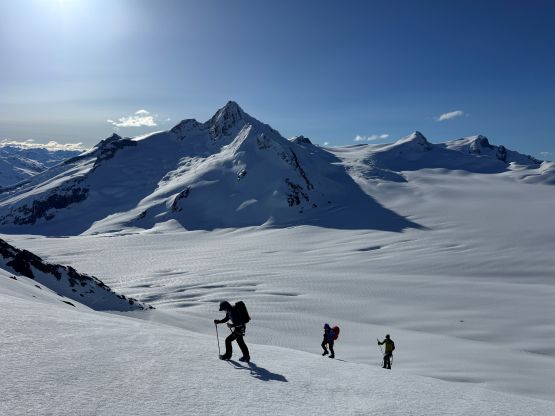
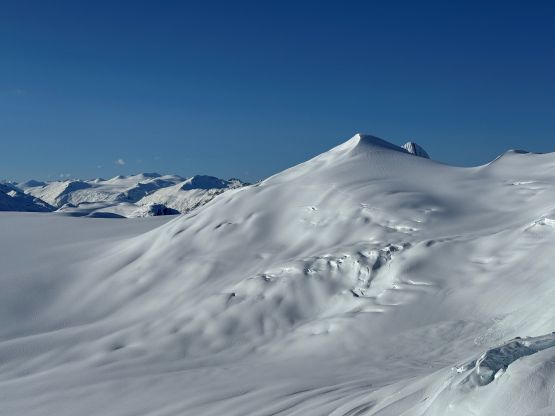
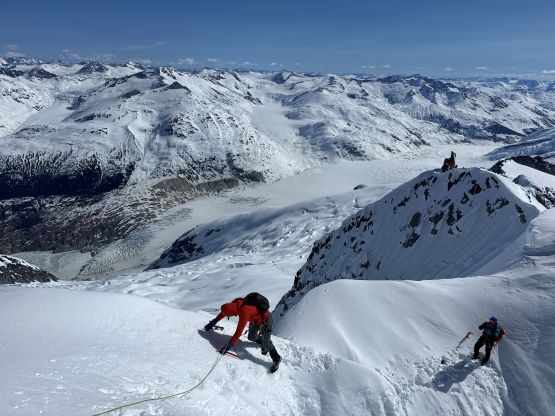
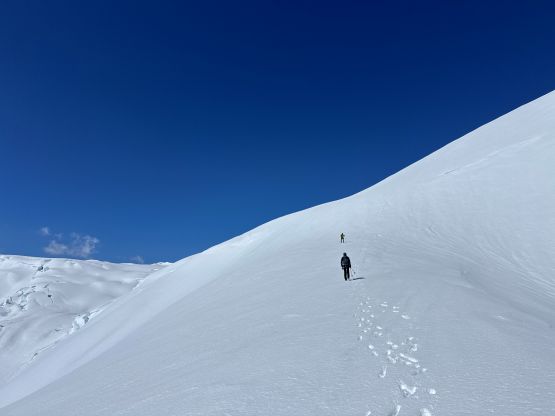
There’s one or two steep rolls at the bottom of the east face of Mt. Tisiphone and would be too steep for skinning or snowshoeing anyway. The grade was about 40 degrees but I managed to make some zig-zagging lines to avoid taking the ice axes out. Higher up we took turn breaking trail as we encountered breakable crusts here and there. The post-holing was overall manageable. I initially thought to ascend the middle of the depression zone which would offer the shortest attack, but the route got outvoted. Instead, we ascended more towards climber’s right closer to the east ridge, but stayed on the SE side of the ridge traversing a series of ramps. There were several large crevasses that must be crossed on sags but the snow bridges felt bomber.
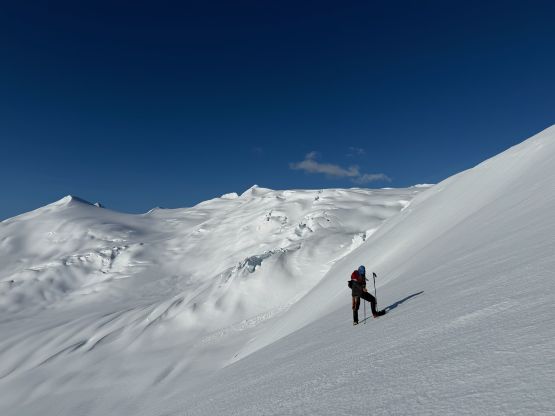
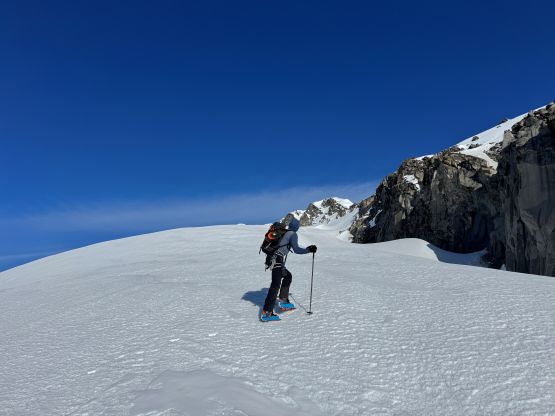
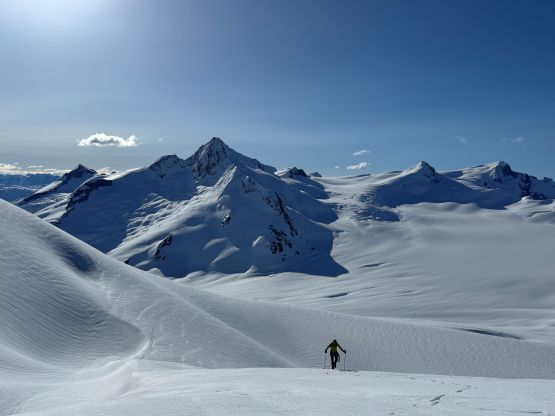
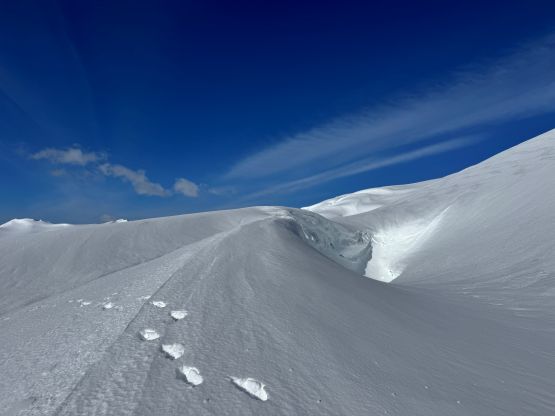
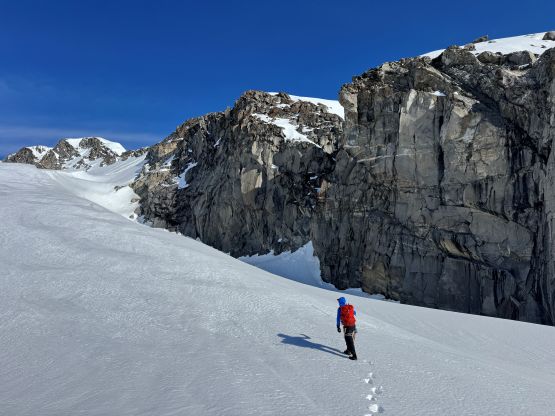
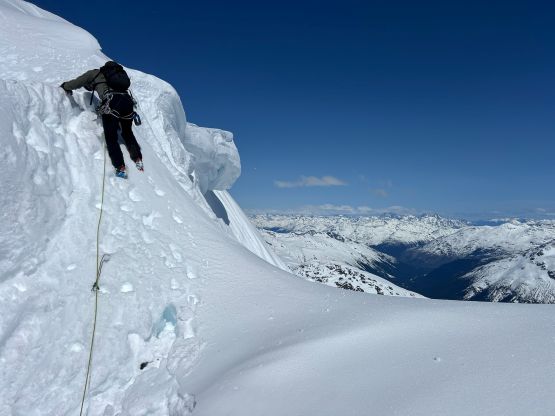
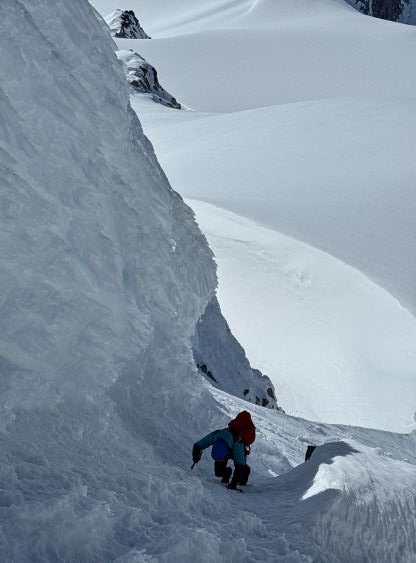
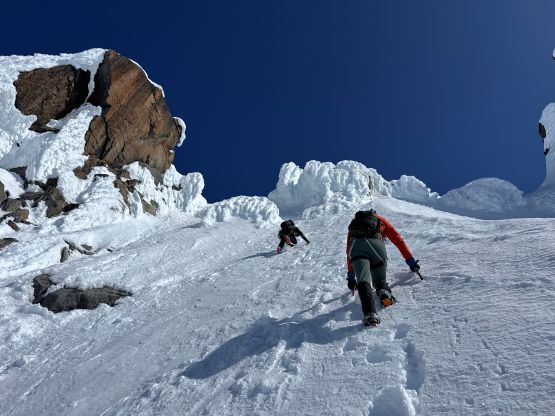
Higher up we traversed left to wrap around the obvious steep section of the east ridge/face and then ascended another stretch of easy snow slopes to the base of the south face. We could finally see the different options. There were at least 3 possibilities but there was no clear solution as to which was the easiest/safest, so we went for the most obvious one by climbing to the saddle between the main and the east summits. The climbing was mostly on 45 degrees snow but the last section was quite icy with the rimed conditions. Upon topping out the ridge I quickly discovered the complexity of this route as the traverse to the main summit was far from “straightforward”. At least we didn’t climb up and over the east peak as such would require a technical descent into the col. Instead of backtracking to try one of the other two choices that I had outlined, I decided to lead a pitch of snow to scout things out. The climbing was too close to the cornices and I even put the ice tools into the cracks a few times, so I asked for a belay. Again, due to the cornices I couldn’t climb the most natural line so stayed more on climber’s left side and dealt with some 60-degree rimed mushrooms. The climbing nevertheless never felt too difficult. Thankfully the traverse from the top of the mushroom to the main summit was rather “easy” but we still needed to be cautious of the cornices.
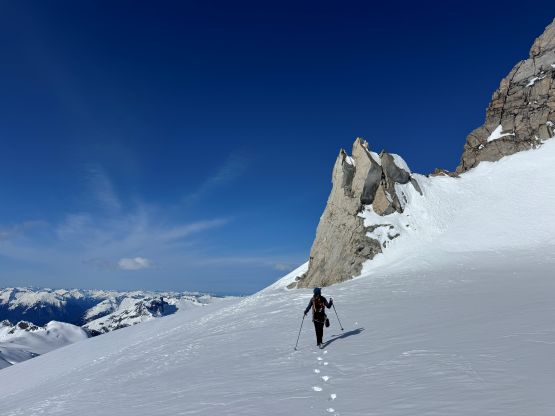
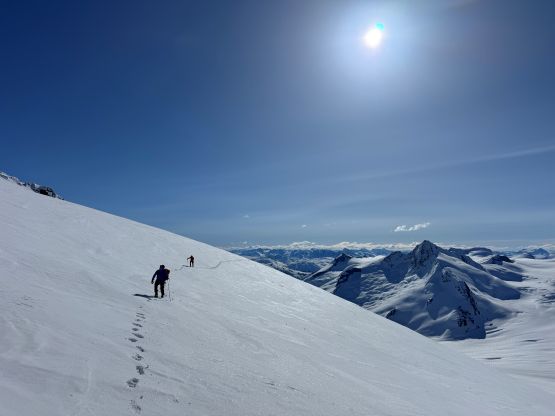
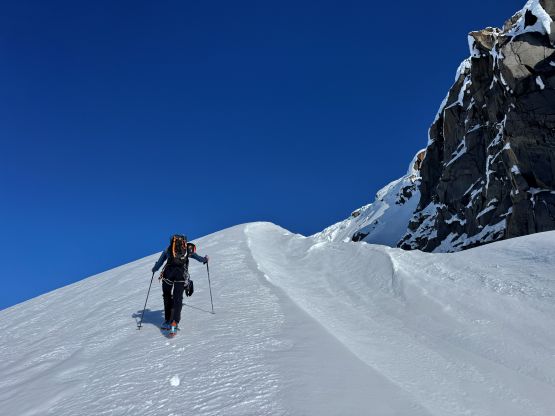
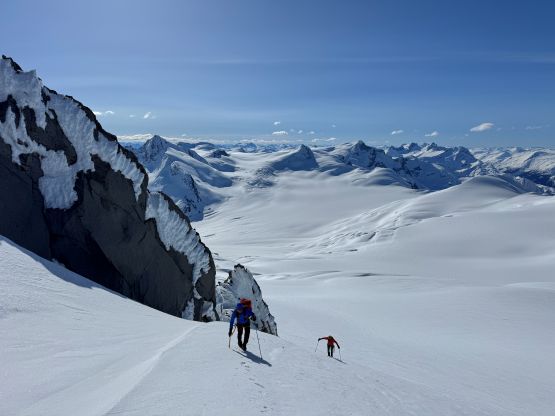
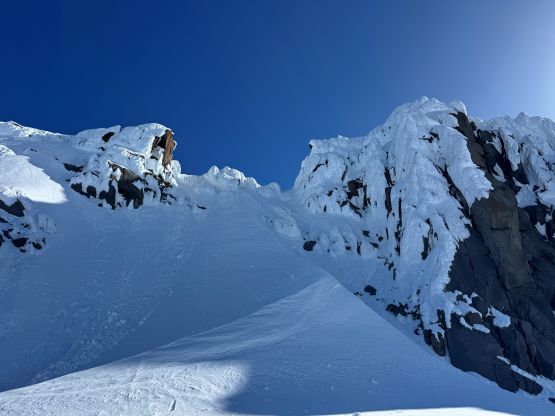
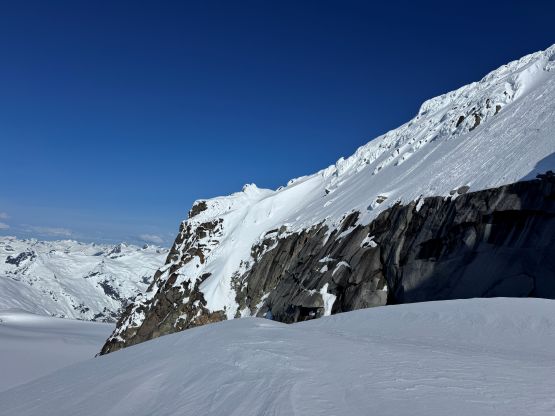
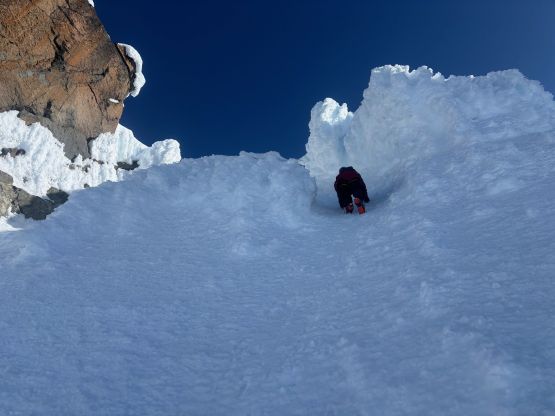
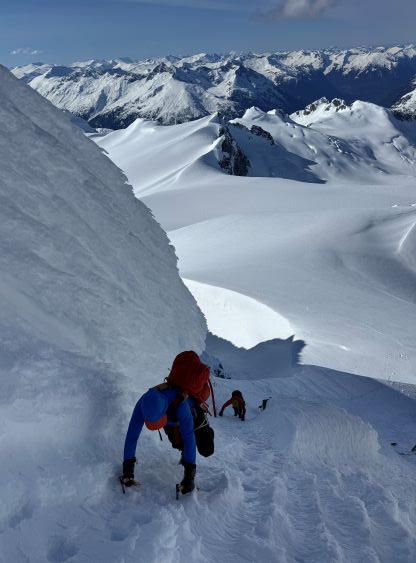
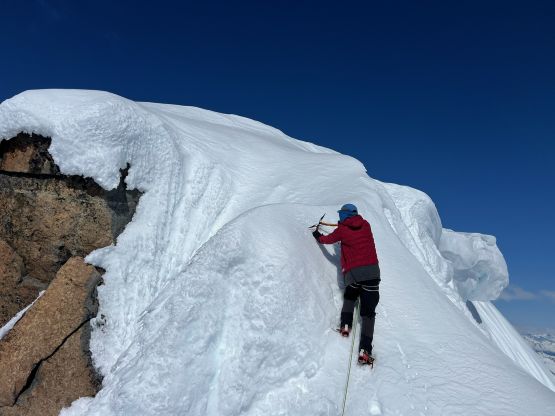
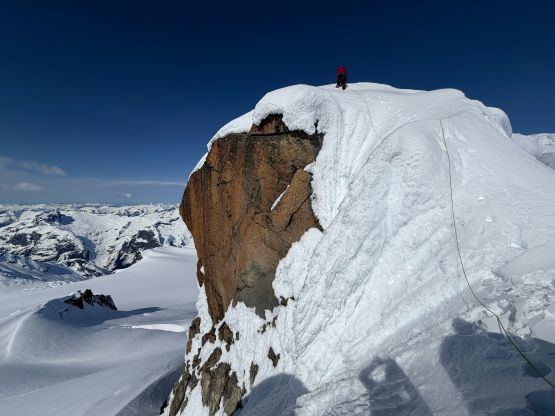
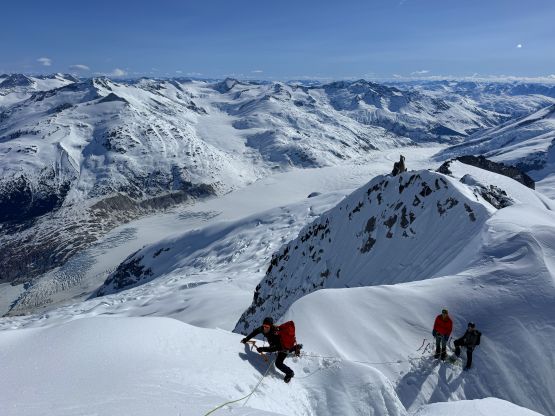
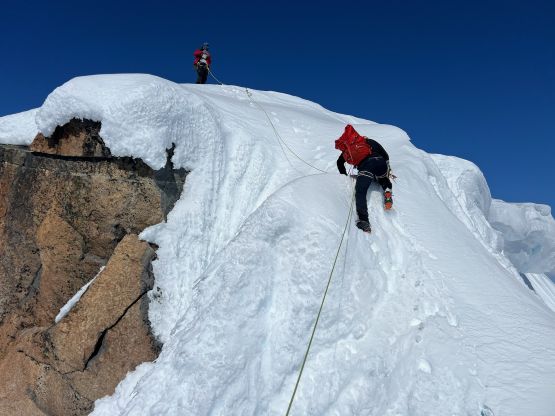
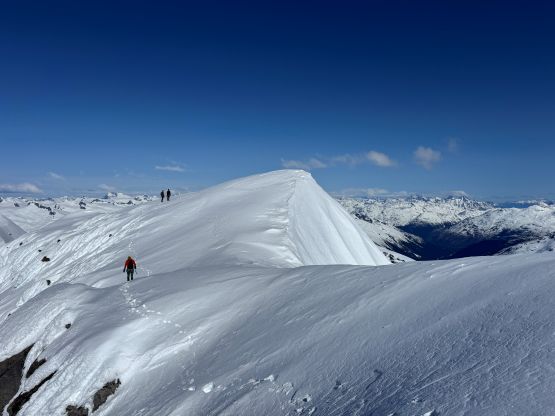
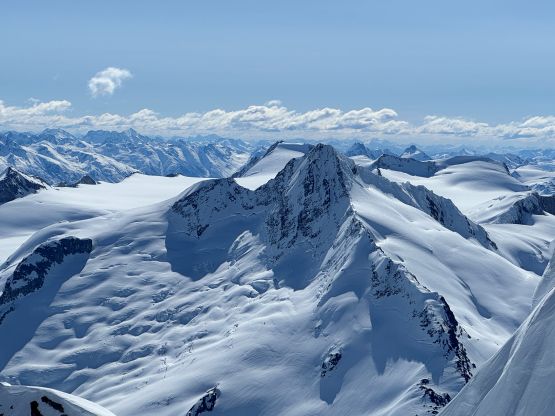
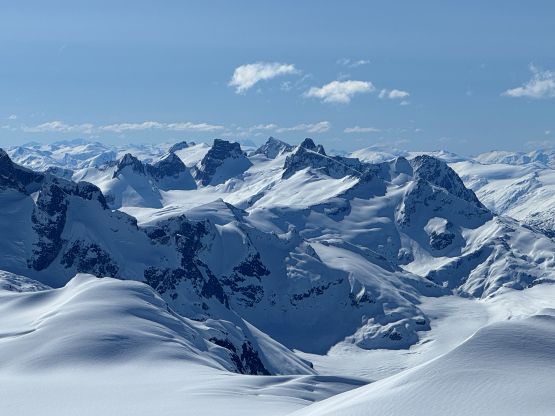
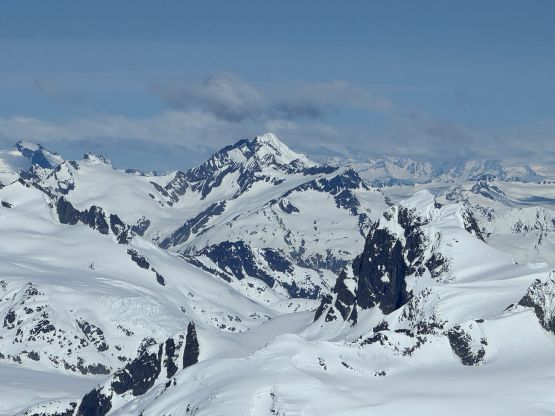
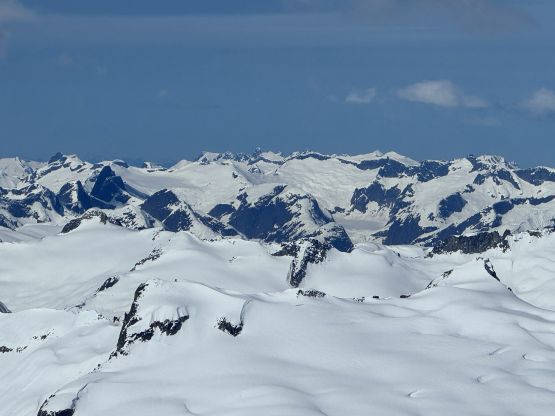
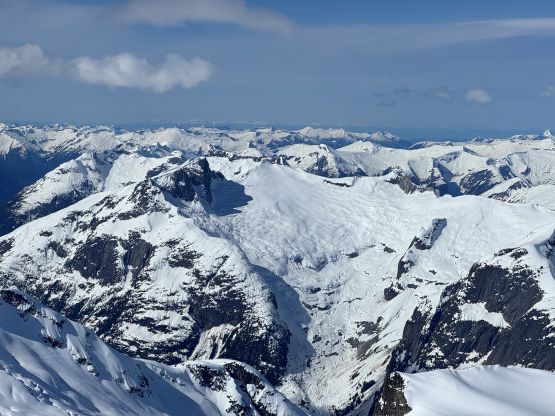
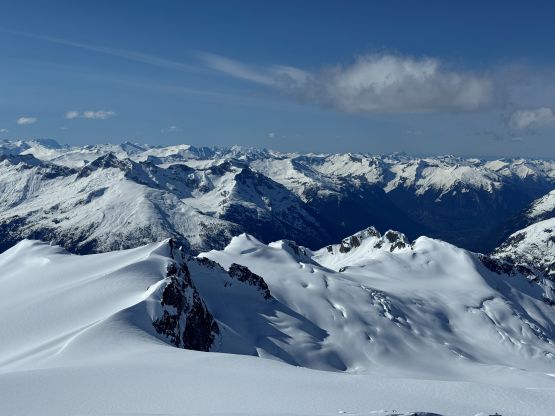
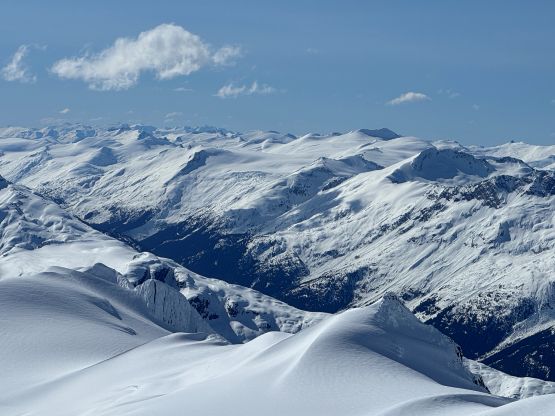
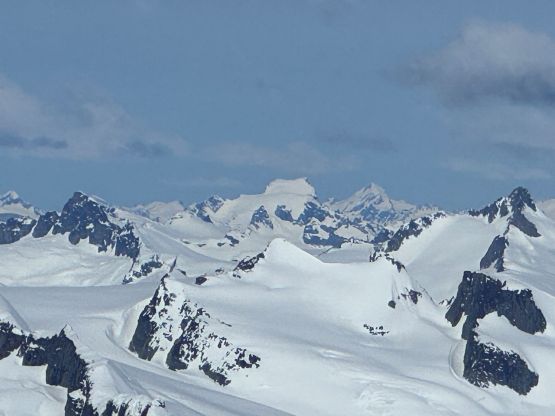
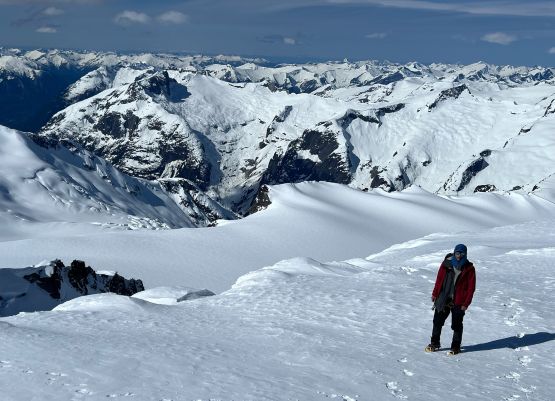
We evaluated a few options of getting down this mountain and the final decision was made to deal with the knowns. Using a buried ice tool Francis belayed everyone down the pitch and then I belayed Francis down from below, after hammering an ice tool into the slope mid-pitch. The down-climbing of this technical-ish pitch was actually not bad. Afterwards I didn’t quite like the rimed section below the col but with careful foot work we all got down with no mishap. We then enjoyed a long and scenic plunge down the east glacier back to the camp. The snow had softened considerably allowing some boot skiing. I eventually took the crampons off and did a few turns on boots.
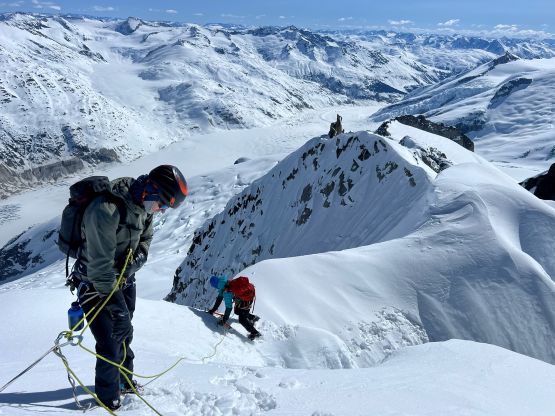
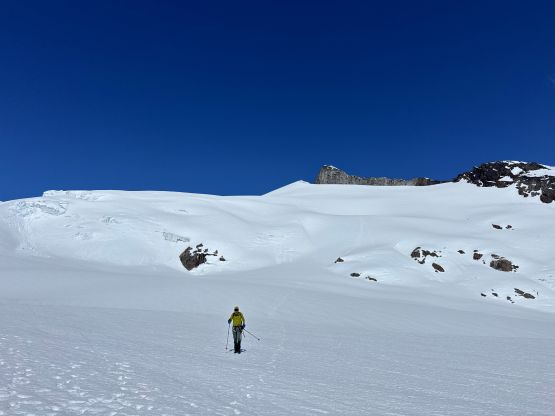
After packing up the camp we continued the long and monotonous journey down towards Ring Pass, or commonly known as the “Four Way Stop”. We had scouted out the section from the summit of Lillooet Mtn. in the previous day and we knew there were a shit ton of large and open crevasses. Thankfully we were able to pick up Alex Barth’s skin tracks so the ropes stayed in our backpacks. Francis was much faster on skis and enjoyed a half-an-hour sun bathing at the lowest point of the traverse (just under 1700 m elevation on Bishop Glacier), whereas the 3 of us on snowshoes were awarded with a tiring but scenic plod. We discovered some rather fresh grizzly tracks in the vicinity of Ring Pass.
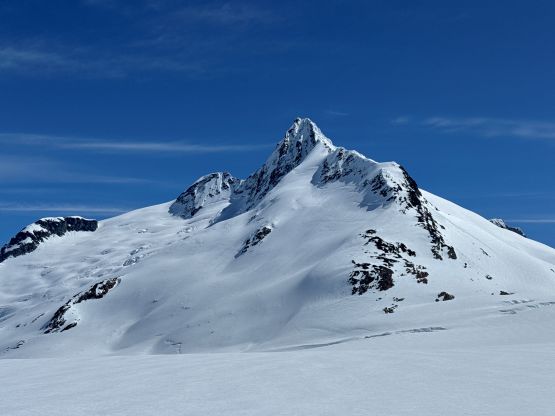
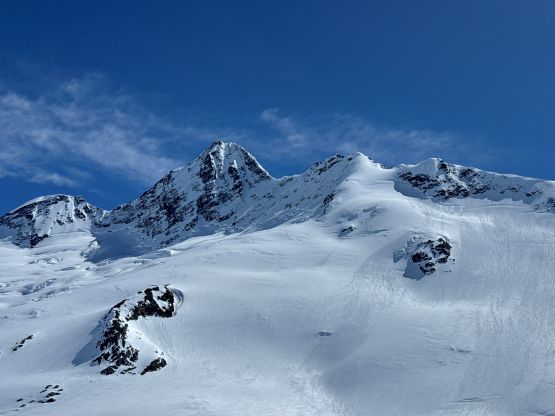
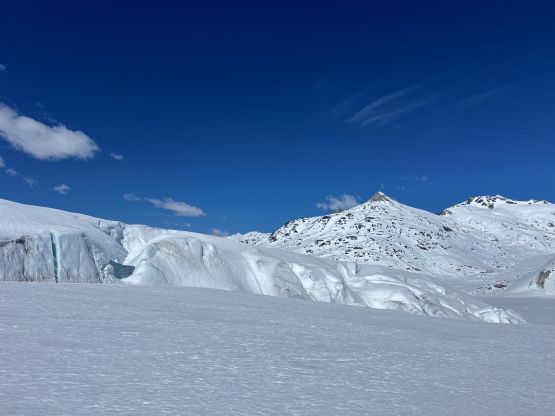
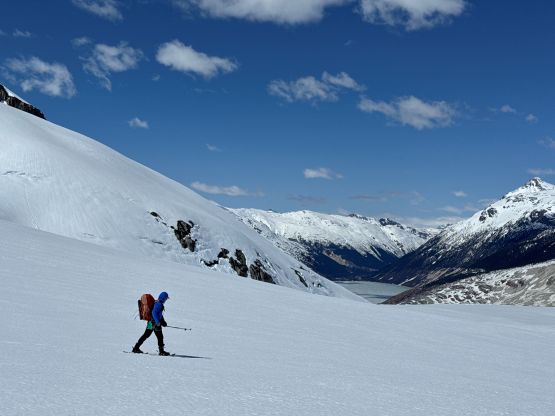
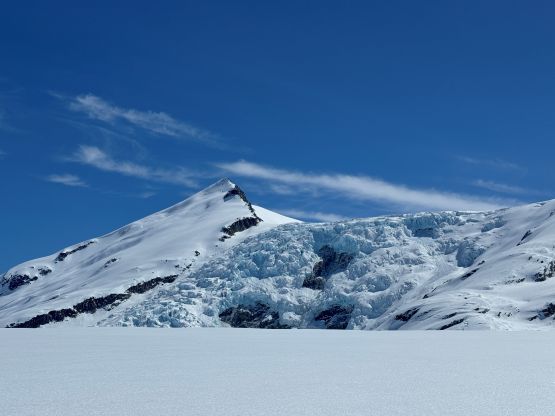
We then plodded a few hours up Ring Glacier to the base of Mt. Alecto. There was about 400 m elevation gain on some gradual terrain, and the plodding was very tedious and exhausting. The worst was to gain the glacier but once on the glacier, it wasn’t too bad. The exact itinerary was a bit unclear by this point but I had outlined a rough idea, that was to ascend Mt. Alecto in the evening of Day 2. We were on schedule with this plan, so off we went.