Weavers Needle
March 4, 2026
1388m
Phoenix, AZ
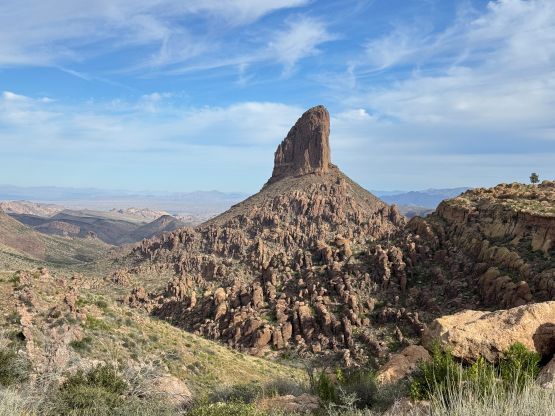
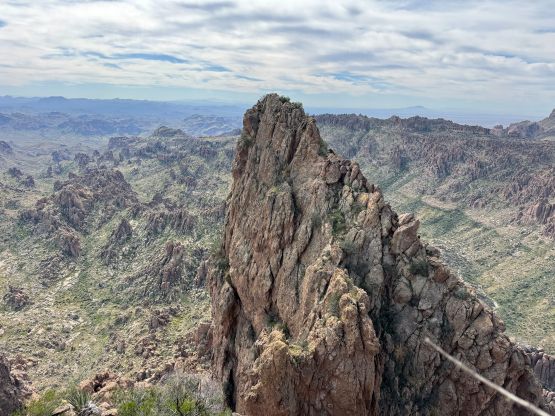
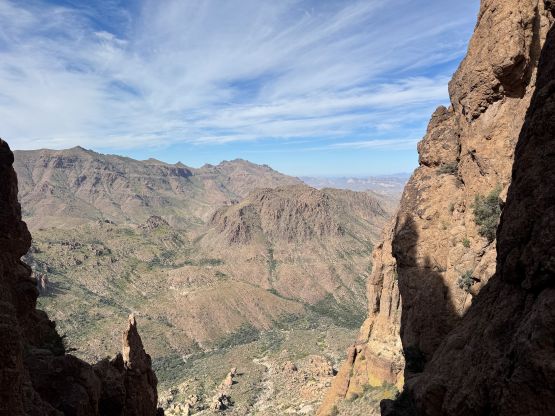
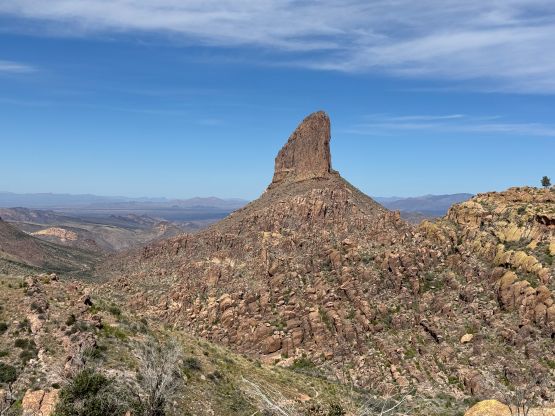
Weavers Needle in the Superstition Mountains might not be the highest peak in the vicinity but is surely one of the more iconic objectives in the state of Arizona. There are two commonly used routes and both require some degree of rope work. The two routes converge at the saddle between the main and the south peaks but they take different approaches. The easier of the two (the 4th/low 5th class east gully) has a longer approach whereas the west gully has one pitch of “real climbing”. There’s a chockstone in the west gully and the easiest way is to squeeze through the tunnel underneath it, and if doing so the route should be no worse than 5.5, but Caspar and I ended up doing the climber’s right variation over the chockstone, and that required a few harder moves.
This was the 2nd day of this trip and Erica opted out in order to give her knees some much-needed resting. Weavers Needle is one of the objectives in this trip that involves a long approach (15 km round trip). The word “long” is debatable as it’s rather “short” compared to the stuffs we do in B.C. and Washington. But by Arizonian standard it can be called as a long approach. Caspar and I agreed to take the shorter but technically harder west gully because both routes are well within our capability and in this case, I preferred the one that has a shorter approach. Due to the afternoon heat we decided to get up at 5:30 am but we ended up pushing the alarms back by an hour. As a result it was already hot and sunny by the time we drove into the Superstitions. The drive took an hour from Caspar’s uncle’s house in Paradise Valley. The road to Peralta Trailhead involves a few miles of gravel but the 2WD sedan did the job reasonably well. We did bottom the car out once but I think that could be avoided with some more careful driving.
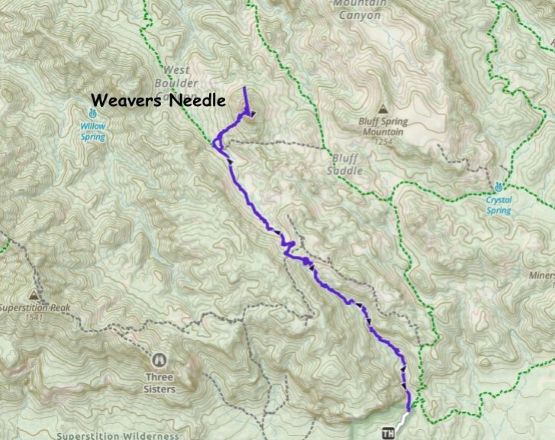
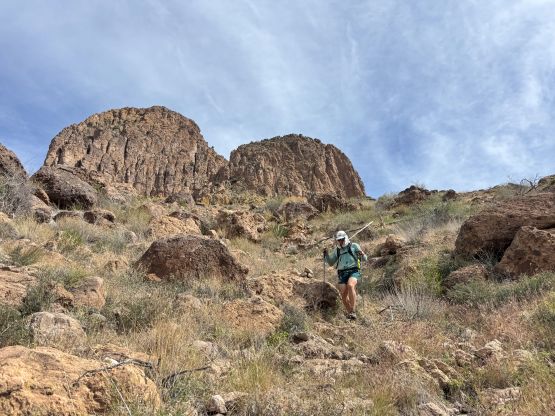
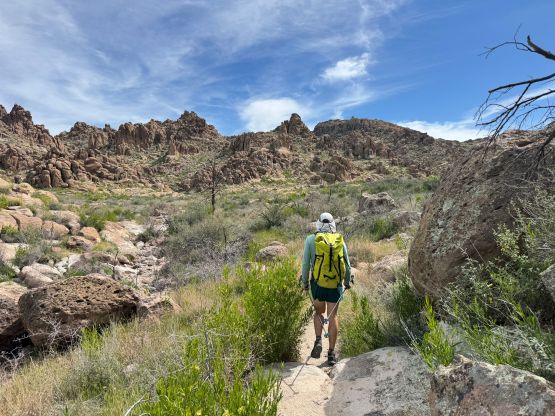
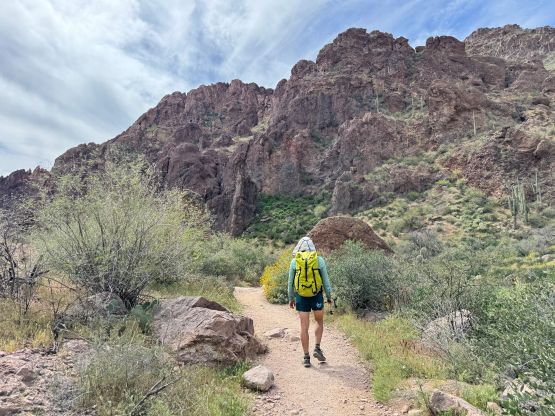
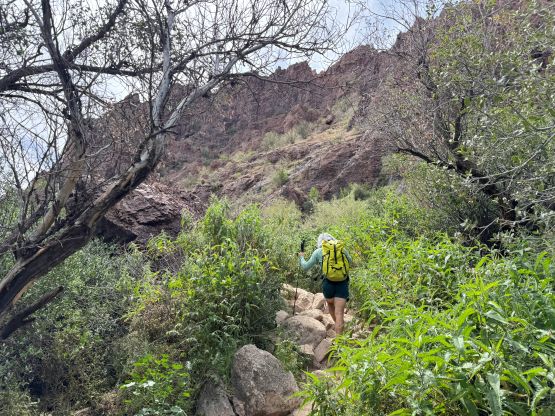
There’s not much worth noting about the plod to Fremont Saddle as the trail is obvious and well-maintained. The trail quality wasn’t the “top notch” though as it’s quite rocky and not entirely runnable for the downhills. The last stretch to the saddle was also foreshortened and felt like a drag, especially considering that we both carried a 60m rope and some rock rack. We got to the saddle in about 50 minutes and took the first break there with sights of Weavers Needle to the north. We then picked up the lesser travelled trail to the north and dropped ~150 m precious elevation to the base of the west face. The climber’s trail was correctly marked with a cairn and we followed this trail all the way into the chimney where we ditched the poles, some food/water and one backpack, and took the next break.
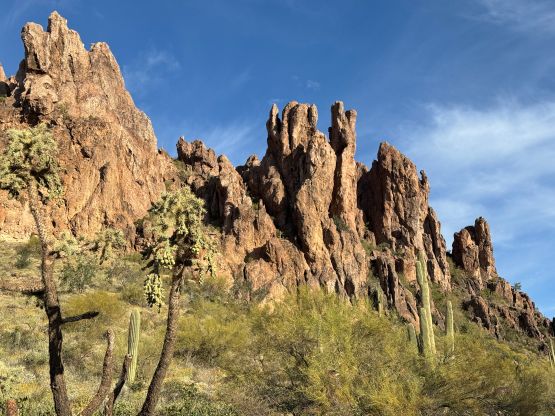
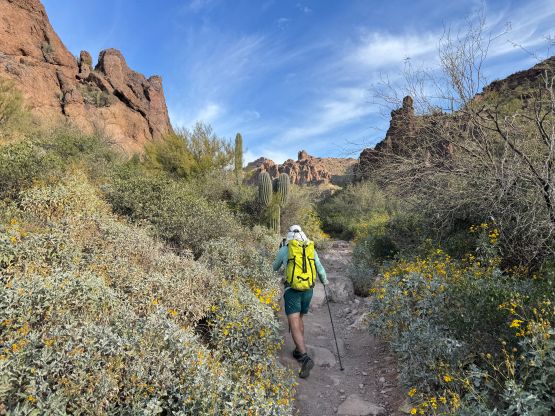
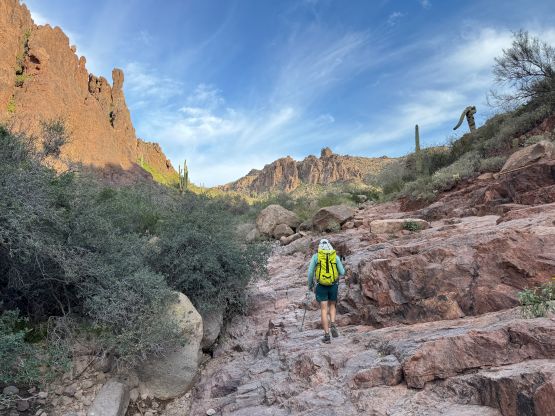
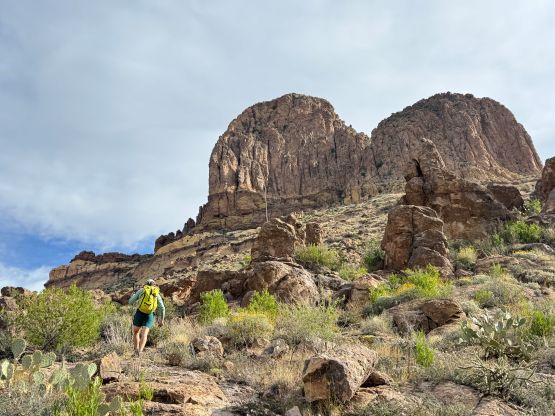
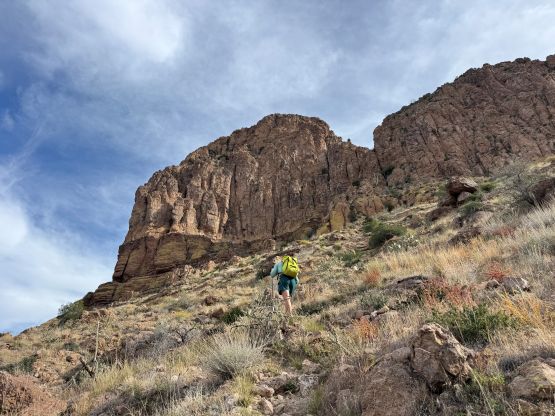
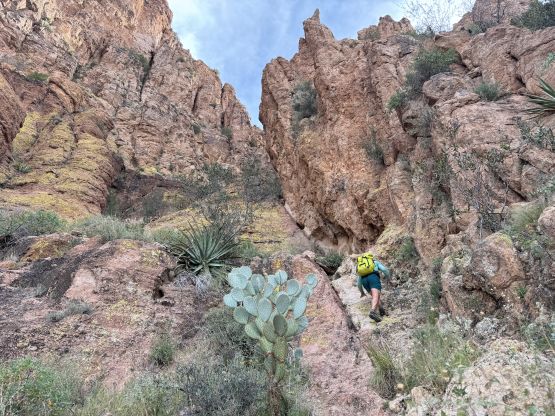
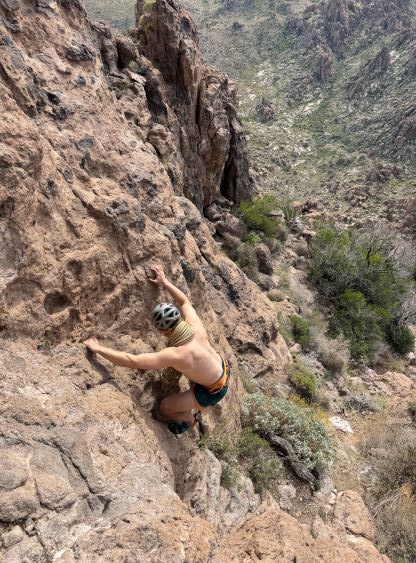
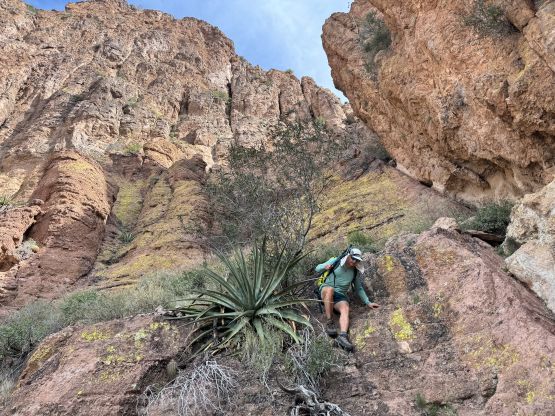
It sure seemed like the climbing wouldn’t be too sustained so the decision was made to solo as much as we could. We did switch footwear to the climbing shoes but carried the trail runners for the south ridge scramble to the summit. On hindsight we should have worn the runners all the way to the base of that short “4th class pitch” before switching footwear. We switched the footwear too early and ended up having to wear the rock shoes on some choss. The 4th class pitch really had just a few slabby moves and then there came another long stretch of 3rd class scrambling to the start of the chimney pitch. The terrain ahead appeared no worse than “low 5th class” so we kept soloing, all the way to the vertical section underneath the chockstone. Caspar was committed to solo the entire pitch so dragged the rope up. I asked for a belay and that’s definitely the right decision. The section underneath the chockstone was indeed “real climbing” with moves up to 5.5 and the climbing around the chockstone to the right involved a few 5.7 moves that were challenging enough for me even with a belay.
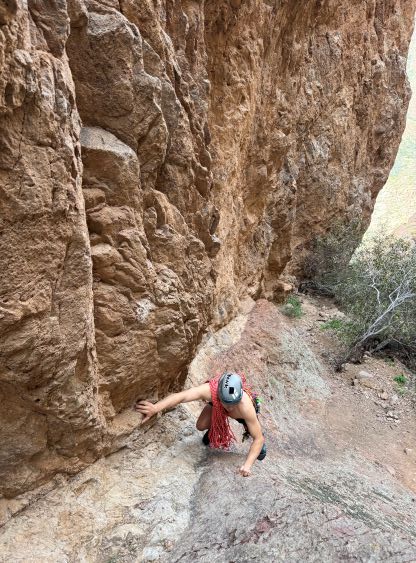
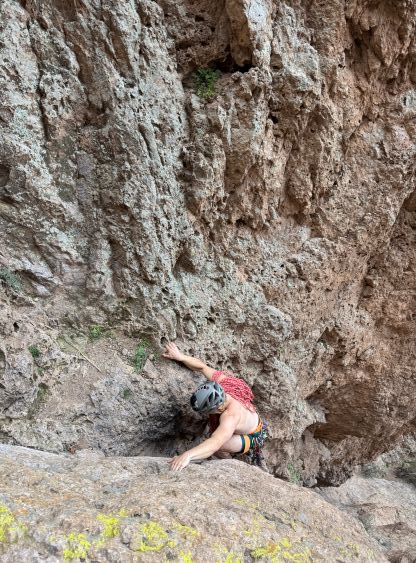
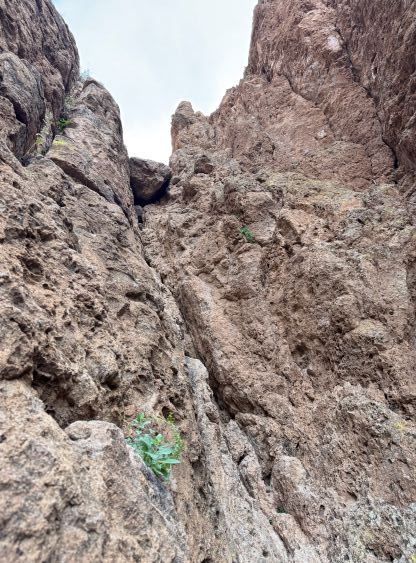
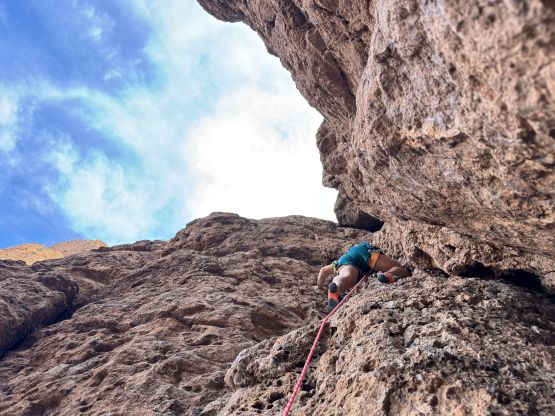
We then ditched the 2nd 60m rope as the only reason to bring the double rope system was for the long rappel down the gully. The 4th class pitch out of the notch was also quite vertical but had reliable holds. I was the only one bringing trail runners up here so took my time switching footwear, and then we scrambled the rest of the route. There’s one more difficult section much higher up on the route that we ended up rappelling on the descent, but we could have downclimbed it if needed. The summit itself felt somewhat anticlimactic and the views were also mediocre, probably because the only impressive peak around was underneath us. At this point we were only 2.5 hours into the trip and luckily I was able to catch some reception to text Erica about our progress. The original thinking was to finish the round trip in about 8 hours but we definitely would be much faster than that.
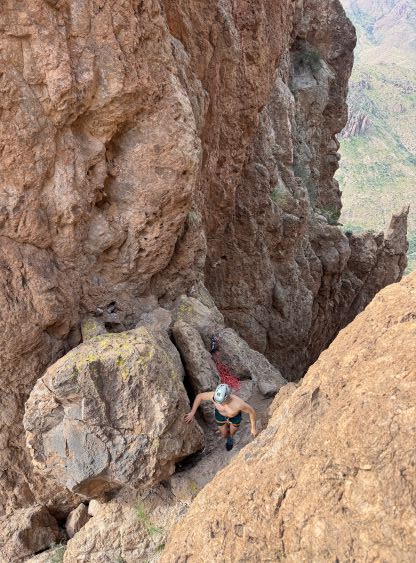
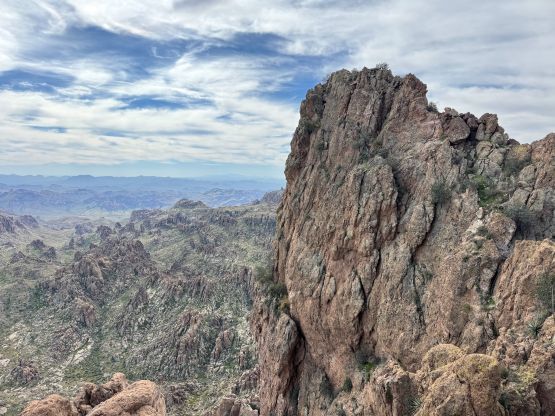
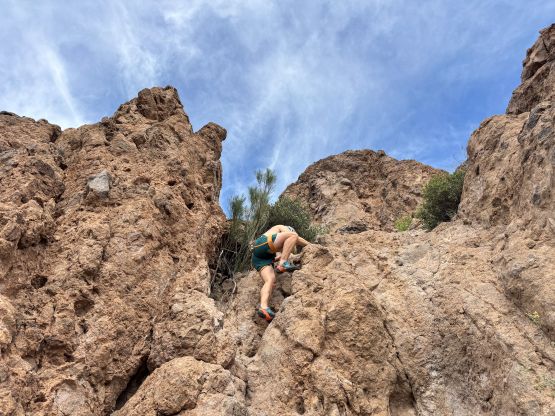
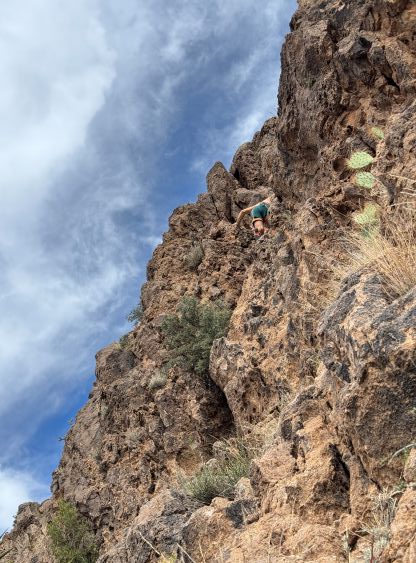
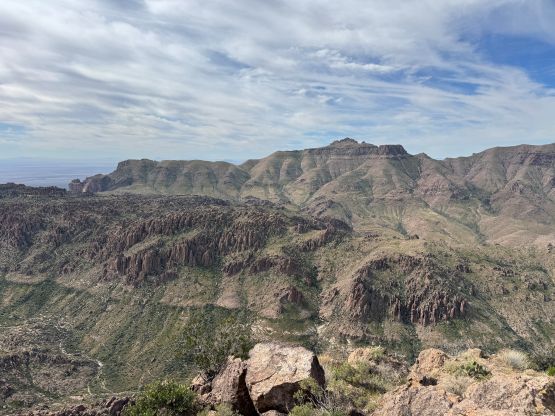
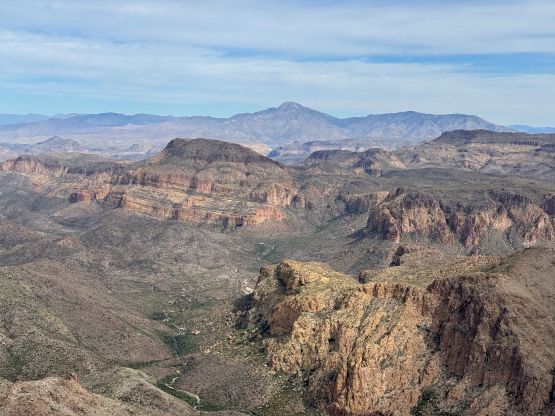
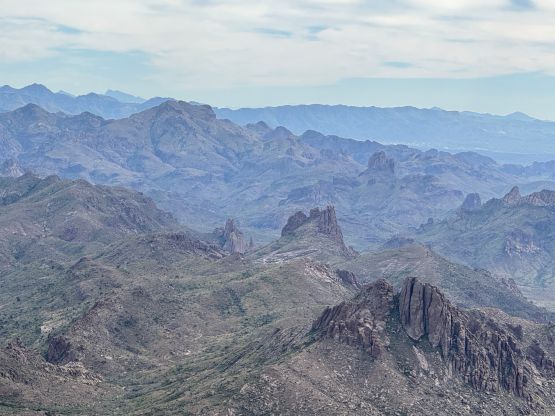
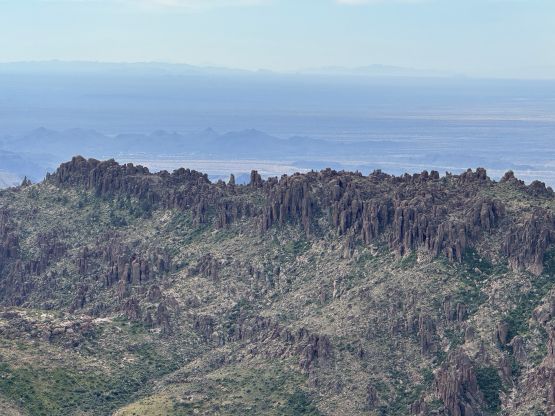
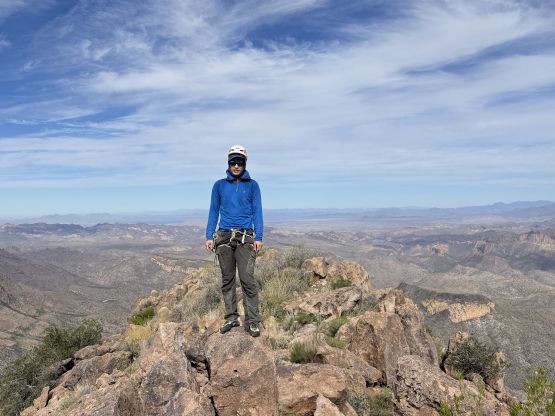
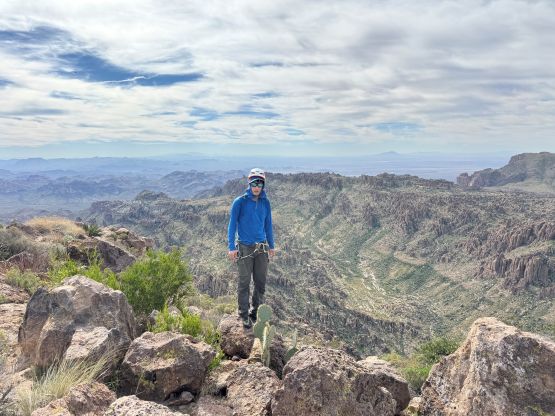
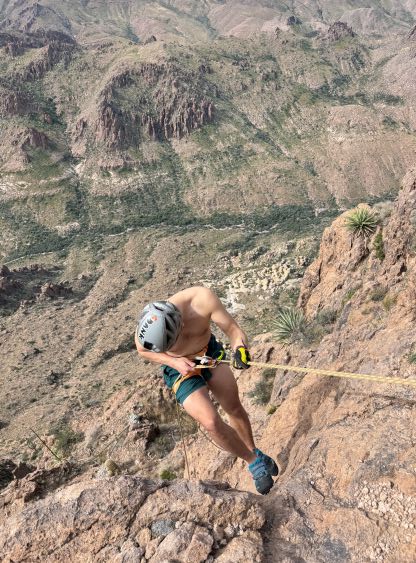
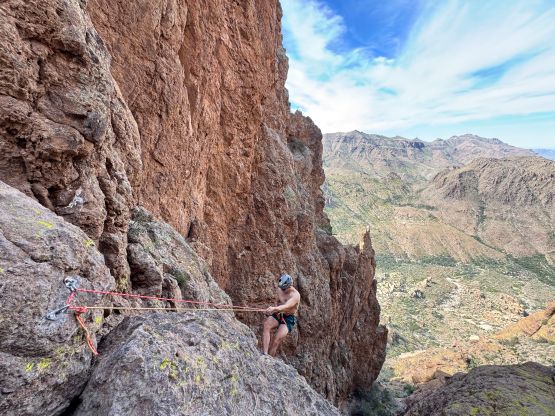
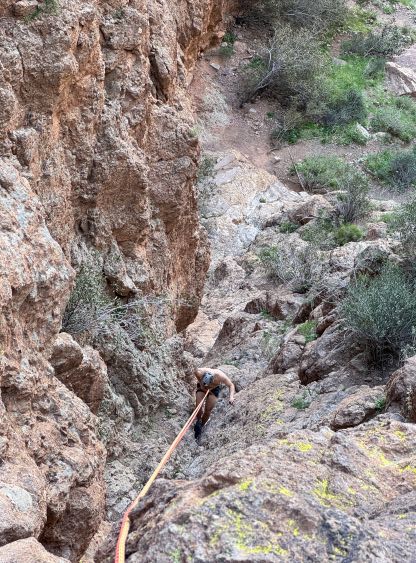
My original thought was to down-climb everything on the south ridge but we somehow veered too far skier’s right and ended up right at the two-bolt chain anchor. We might as well rappel that upper crux then. We then carefully down-climbed all the way to the notch and then did one double-60m rappel all the way to the bottom of the “4th class pitch”. There’s however, already a new two-bolt anchor midway in the gully so having two 60m ropes was definitely overkill. The beta we had seemed outdated. The rest of the return was uneventful but felt like a drag. Our round trip time was just over 5 hours. Erica didn’t even bother to leave the parking lot knowing our progress. We then drove back into the city of Phoenix, did some resupplying and then drove west towards the next objective.
 Steven's Peak-bagging Journey