Cerro El Plata and Lomas Amarillas
December 18-25, 2024
5968m
Mendoza, Argentina
Cerro El Plata is the highest peak in the Cordón del Plata Provincial Park and subsequently one of the highest peaks looming above Mendoza’s skyline. It’s a little bit unfortunate that the summit is just shy of being 6000 m and the prominence is also just shy of being an “Ultra”, otherwise this peak would receive much more attention internationally. This is still a very popular climb, but only among the locals. Over the 8 days of expedition we crossed path with only two teams of European climbers and everyone else was from Mendoza, Argentina. The first time I heard about this peak was in 2020 when Connor, Dave and I went for Mercedario which was also not far from Mendoza. Connor had used Cerro El Plata to acclimatize for Aconcagua a year prior to our Mercedario climb, and I took note of his strategy. About 5 years later it was my turn to plan the Aconcagua’s expedition and I decided to do exactly what Connor had done. Erica signed up for the trip even though she had no experience even above 3200 m, but she has exceptionally strong aerobatic fitness, that with my experience in high altitude climbing I thought we should be fine.
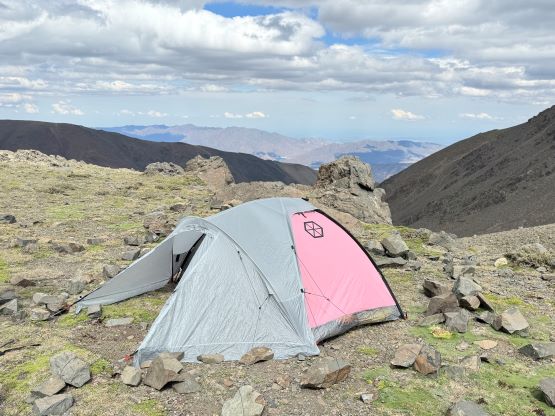
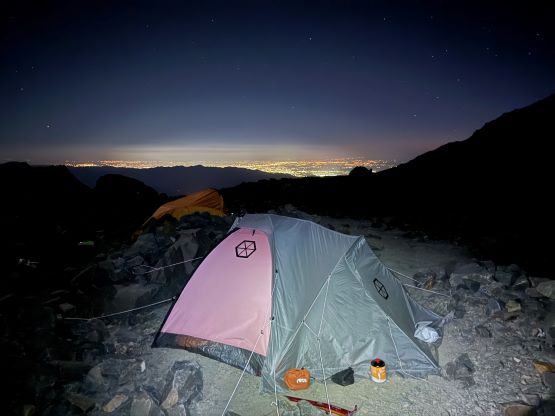
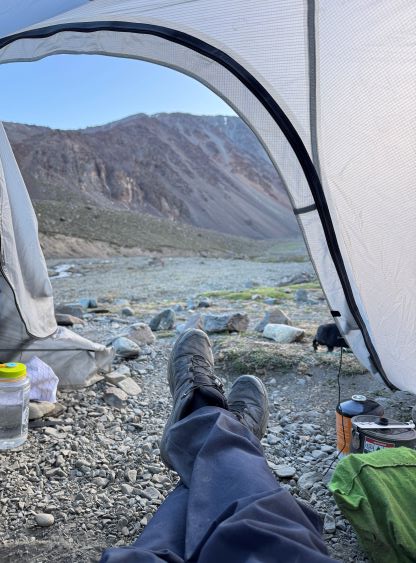
We made the commitment back in September so had a few months to plan things around including purchasing thousands of dollars of gears (especially for Erica). I lacked a proper high altitude tent and I debated among a few options. In the end I bought two tents – Samaya 2.0 with vestibule and Hilleberg Nammatj GT3. The Hillberg tent was purchased first but I changed my mind shortly afterwards. I still opted to keep the Hillberg tent but mostly for later use in Alaska and some other polar expeditions. The Samaya tent is what I think the current best solution for these high Andes expedition in primarily windy, cold but dry weather. The 2.0 model is a bit on the small side but Erica and I were fine with that. One decision that I might have regretted was to plan and buy expedition food after arriving in Mendoza. This worked out well in the way of saving us an extra checked bag, but the prices here are at least 50% higher than in Canada, and the options are very limited. A very basic pack of Ramen costed 2 USD and a pack of backcountry meal could easily cost 20 USD. Anyway, we booked the one-way flights and arrived on the 16th of December with all of checked bags and checked into Hotel Umbral del Aconcagua for two nights. The 5 hours of jetlag was not on our side unfortunately, that we slept straight to 3 pm on the next day. This left us a mere few hours to scramble around the city to look for food (which was surprisingly very difficult as mentioned above), but fortunately Argentina is a country when life literally starts in the evening. I also signed up for two hours of online work which I kind of regretted given our time constraint, but in the very end I did manage to put everything together at 2 am.
One challenge for us international climbers is the transport from Mendoza to the trail-head at Vallecitos as there’s no public transportation option. Connor had rented a vehicle for his 5-day trip but we had planned 8 days up there and to park an expensive rental vehicle at the trail-head for that many days would be too costly. I consulted with a few guided companies but the price quotes were around 300 USD round trip, which I also thought was outrageous. In the very end through Facebook I contacted Refugio Mausy which is the most popular trail-head hut, and the owner (Lusiana) directed me to Claudio on What’s App. This guy does a lot of transportations locally and the quote I got was 200 USD. I managed to bargain it down to 180 USD and given the expensive prices in this city I thought this was as good as we could get. Claudio arrived on the morning of 18th about half an hour late at 10:30 am, but time would be the last thing that we worried on a long expedition like this, so no problem whatsoever. The drive to the trail-head was without event but the final stretch of the switchbacks was quite rough. I wondered how did Connor drive a rental car up there. It would be doable, but far from ideal. Claudio had a trusty 4WD vehicle and the job was easily done. There’s a park’s office a few kilometers from the refugio but the registration was free, thankfully.


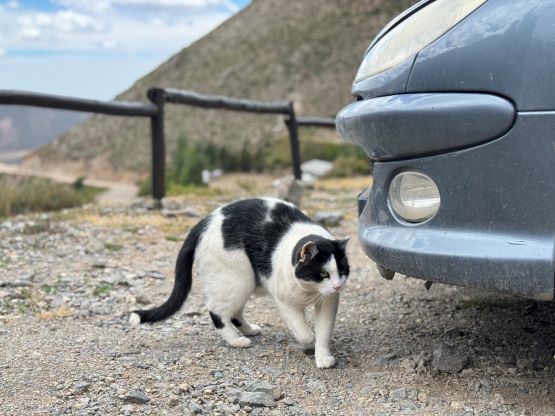
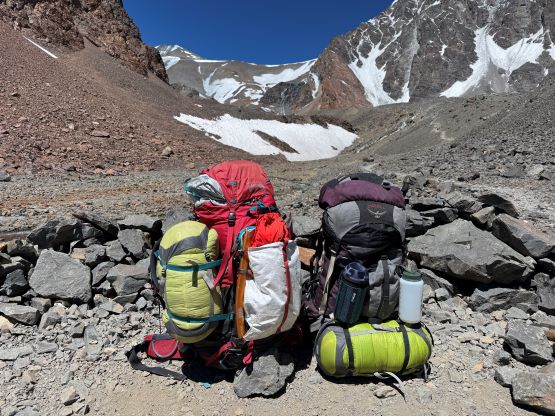
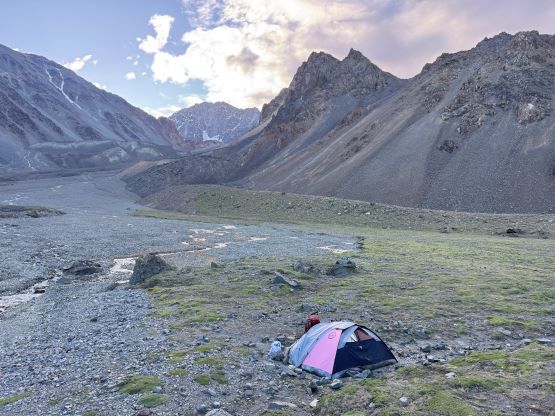
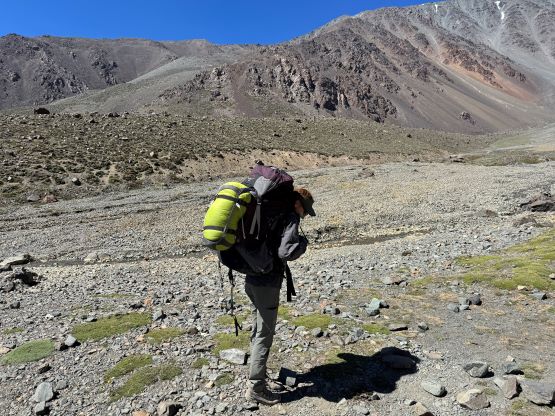
Erica and I had stuffed our backpacks to their full capacities (105L and 85L) and still had to carry two handbags of food, so double-carrying would be our only option. This was fine as that’s my plan anyway. The first night would be spent at Refugio Mausy which was at 2900 m altitude. The cost was just under 20 USD per person. To make things better we had the entire refugio to ourselves, but don’t expect that to be the “norm”, as on our return on the 25th the refugio was full. There were a few options for our “camp 1” and the advice was given by Lusiana to camp at Veguitas Superior (3450 m). My original plan was Piedra Grande at 3550 m but Lusiana said there’s no reliable drinking water and I considered that as a very crucial piece of information. The weather was cloudy on our arrival day but we did the first carry to Veguitas Superior nevertheless as it wouldn’t have taken too long. Because we would be sleeping in the hut we carried the tent and set it up. There were at least 20 soldiers camping in the vicinity but I thought we picked a nice spot away from those guys. Little did I know that I actually pitched the tent on top of some hidden cactus (most of the vegetation in the vicinity was prickly). We discovered the problem the next day and thankfully it caused no virtual damage. I was not particularly trusting the people so I locked the tent’s door and window, dropped an Airtag inside and used all kinds of security measures. This was proven to be overkill as the people in this country were actually very nice. This was already Erica’s highest elevation reached and asides some faster heart beats she felt no altitude problem. We then slowly descended back to the hut. To my surprise there’s electricity (charging), a kitchen, free WiFi as well as hot shower so we should have brought a few pieces of luxury items but we made do. The WiFi was nice as I was still seriously jetlagged. I was able to kill a few hours by watching Chinese drama on YouTube.
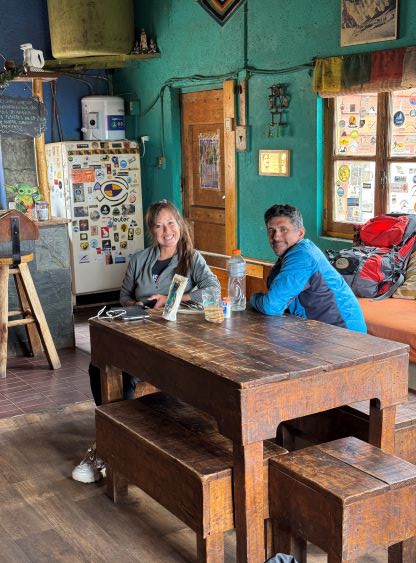


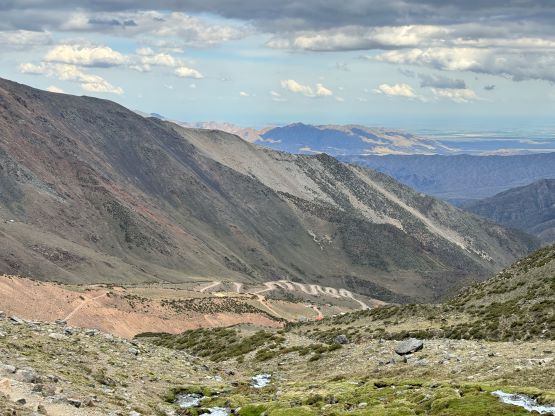
I did not fall back to sleep until 5 am so the decision was then easily made to sleep in till whenever we wanted, which turned out to be about 11 am in the morning. Erica was more comfortable with the kitchen so I made her doing the cooking thing. Among the options we decided to have the cuscus with curries brought from Canada, as these were the heaviest and none of us wanted to carry them any higher. We eventually left the hut at 1 pm and about two hours later we arrived at Veguitas Superior. I quickly discovered the issues with the cactus which had punctured through the tent’s floor but caused no damage to the air mattresses thankfully. My first reaction was to cut those prickly plants using the scissors I brought, but there could be more and sure enough I was correct. I then made the decision to relocate our tent to a spot completely free of vegetation and fortunately, the new location was actually closer to the water source. Most of the streams were murky but we found one that’s clean. We still took the precautions and filtered the water before drinking. There was no precipitation so we took a short walk towards the base of Cerro Adolfo Calle to about 3570 m elevation before descending back to the camp. The sleep came rather easily, which was to my surprise. Maybe by this point I was finally tired enough to let the jetlag thing go.


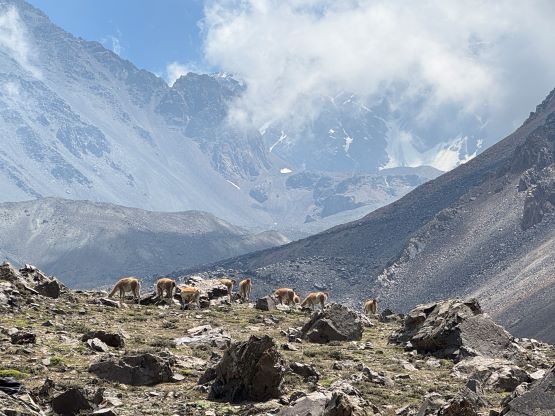
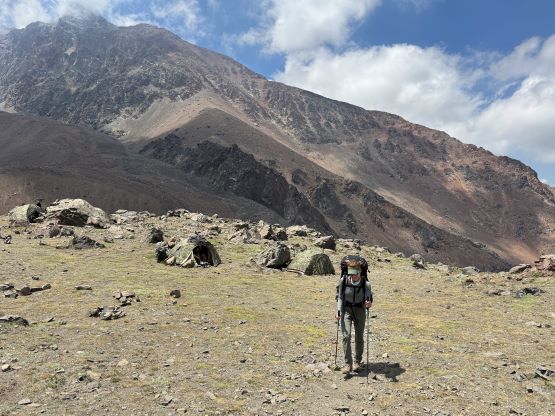
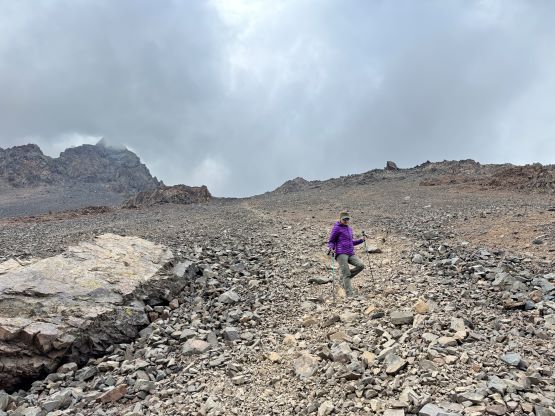
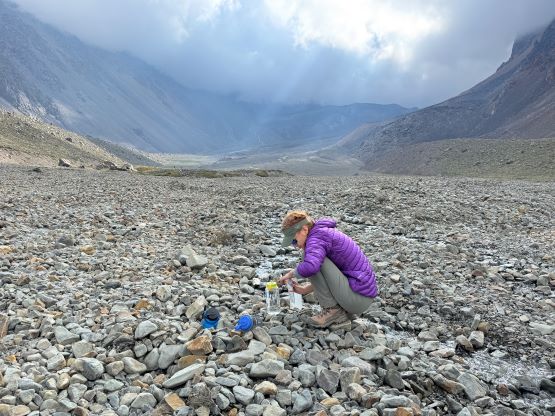
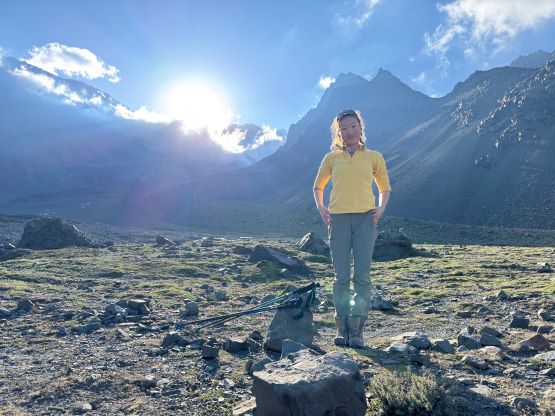

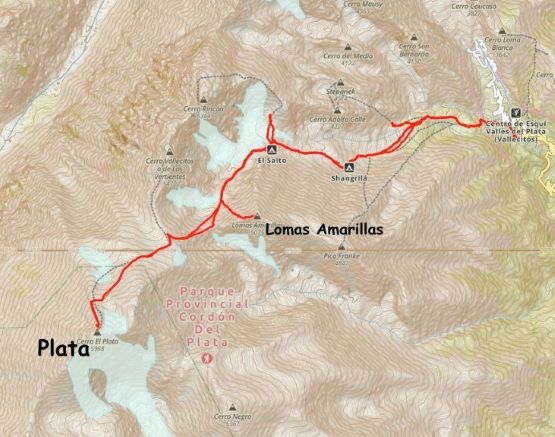
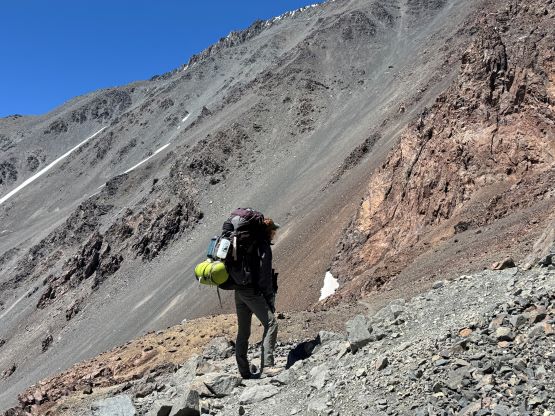
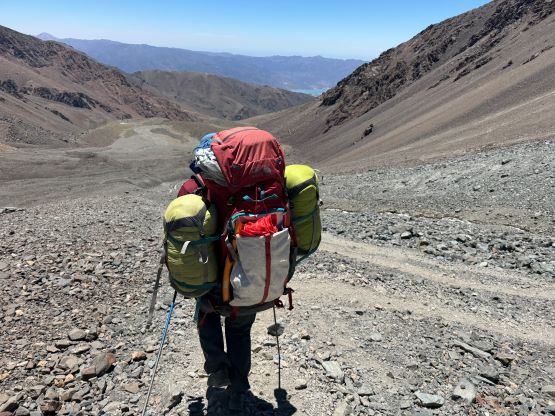
On the 3rd day we leisurely woke up at around 10 am and started the two days of double-carrying to the upper camp (El Salto) at 4350 m elevation. These would be the harder days because the elevation gain was rather significant, and our loads were not light. Fortunately the views had started to open up and the weather was mostly sunny so our stoke level was quite high. On the first carry I wasn’t quite sure about the way as on Gaia it showed no trail connecting Veguitas Superior towards Piedra Grande, so I did some cross country travel. We were able to see the correct path traversing on the very side of the valley, so we would take that path on the way back. The way we took was quite efficient too. We carried all the way to Shangrila at 3800 m before stopping for the first break. The second break was at 4100 m underneath that final steep ascent beside the waterfall up to El Salto. This part wasn’t as bad as I thought, but the camp Salto was indeed as gross as Connor made it sound. There were literally shits and toilet paper in the middle of the camp so we did no lingering and carried to the upper camp (Salto de Agua Superior) which was 50 m higher. This camp was slightly less sheltered from the winds but much cleaner and closer to the drinkable water. The water was nonetheless not perfect. There was one tiny clear stream but the taste suggested some high minerals concentrations. There was surprisingly some cell receptions at this area so I was able to check the weather forecasts. I had made Francis to send some inReach texts but those were no longer needed. On the 4th day we completed this double-carry and I decided for us to make an additional carry to the high camp (La Hoyada) at 4660 m elevation in the evening. This was because the best summit window was the following day. This evening stroll took about 3 hours and was very scenic.
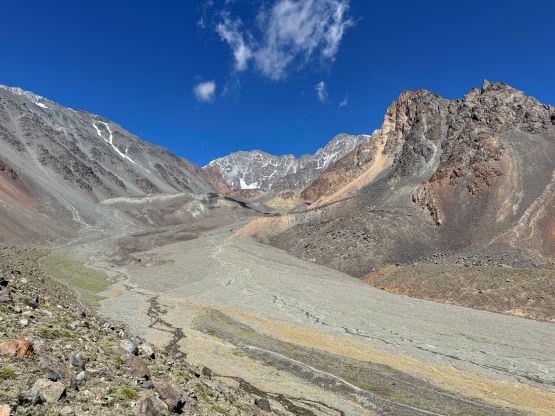
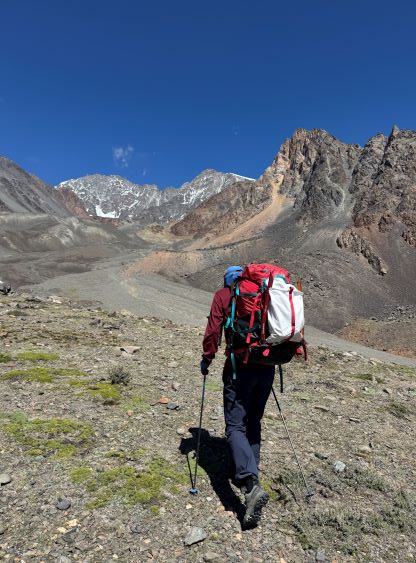
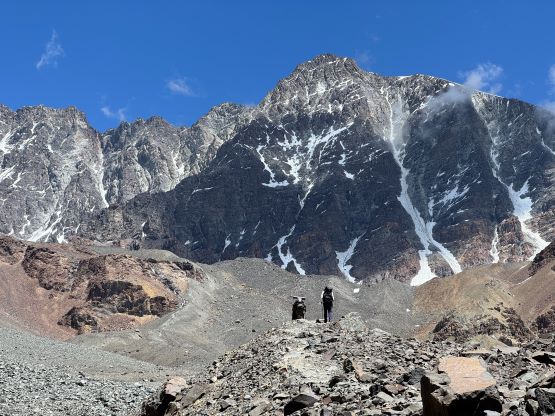

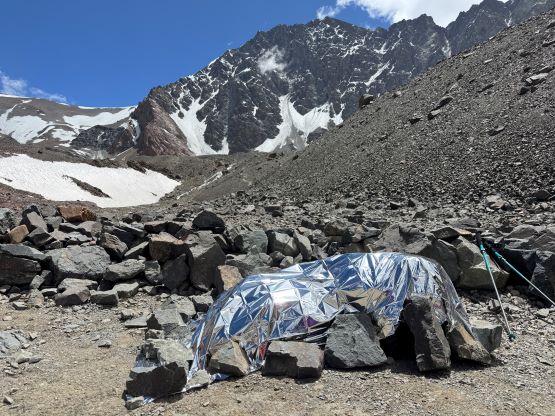


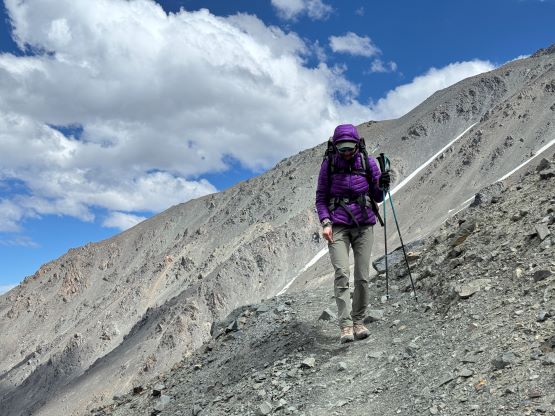


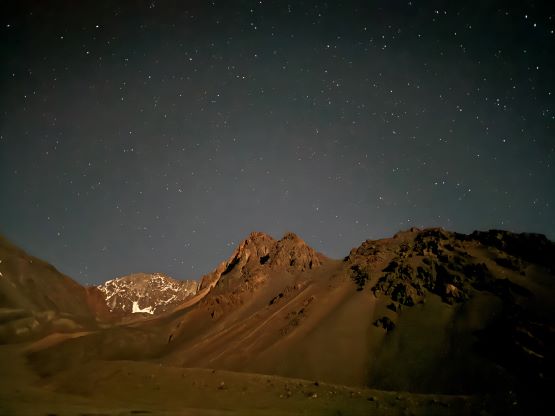
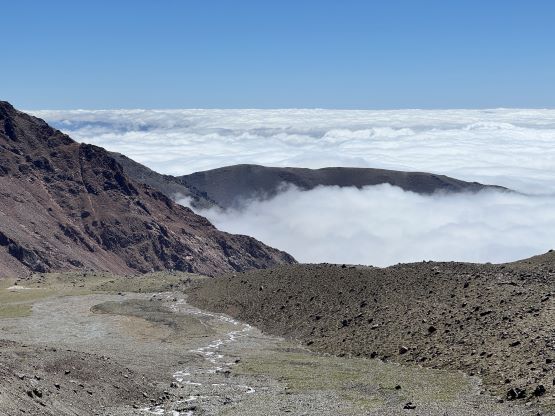
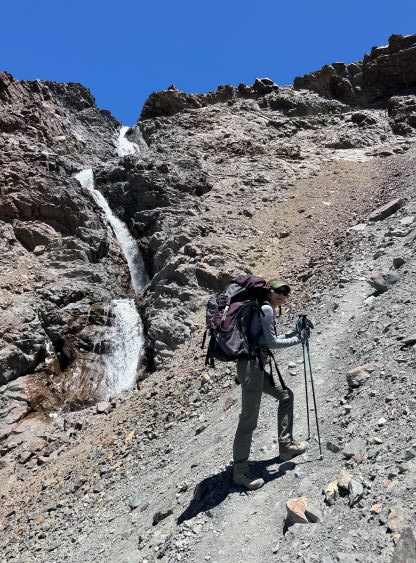


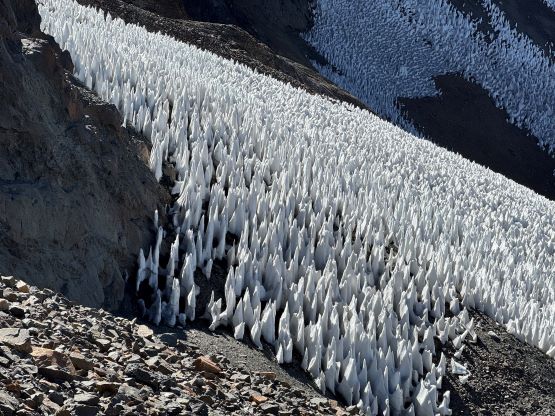


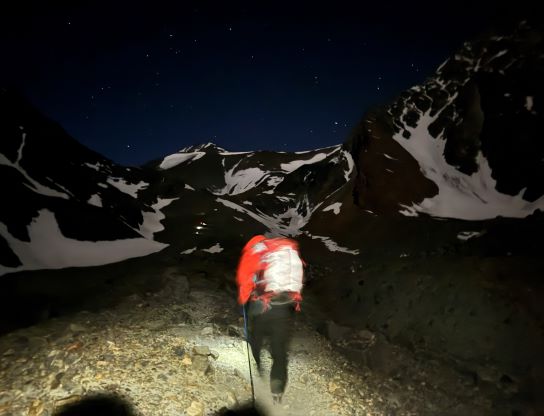
Through the entire evening I was debating whether we should take advantage of this first summit window or not. The next day (the 23rd) had some high winds so I thought we would either summit on the 22nd or wait till the 24th. The 22nd (Day 5) directly from the 4350m camp would not be ideal from the acclimatization perspective but none of us was feeling weak. We would make the final decision at 5 am when the alarm went off, and if none of us was feeling the altitude we would go for it. Our exceptional fitness could potentially offset one day’s short of acclimatization from my previous high altitude experience. In the end we woke up at around 4 am and decided to go for it, and a lot of the other teams were also aiming for this window. Most of them had started about an hour or two earlier but we caught up to and passed the majority by the time we reached La Hoyada. We did no lingering beside picking up our ditched gears (boots, mittens and goggles) but thank to the exceptionally good weather those all turned out to be training weight. I was able to wear the trail-runners all the way to the summit and that was not often heard, especially comparing to Connor’s experience on this peak. There were two tracks and I knew from Connor’s mistake that we should take the left one aiming directly towards the first saddle, even though this might seem counter intuitive. This was indeed the correct climber’s ascending tracks as the other one (which we used on the descent) was full of scree. The saddle was at 4850 m and we took the first break of the day there, in the sunshine.

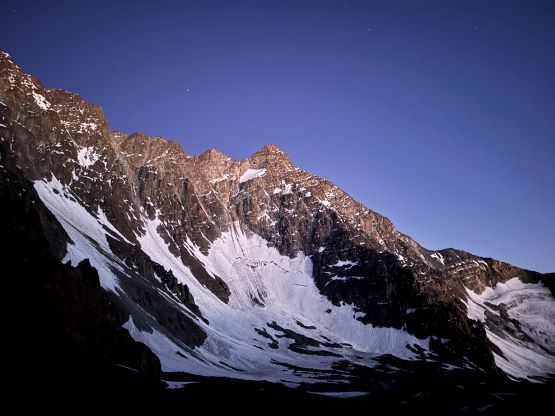


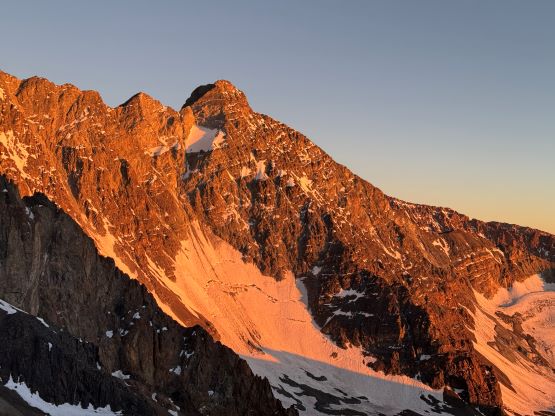
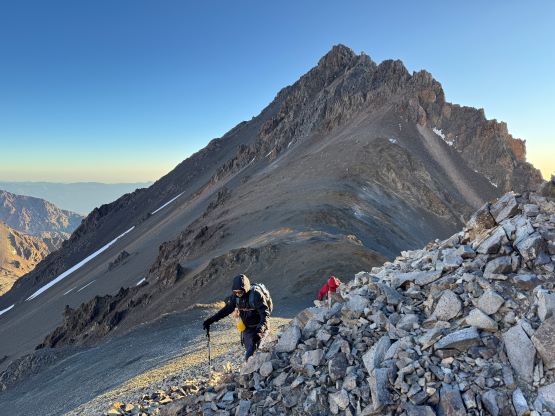
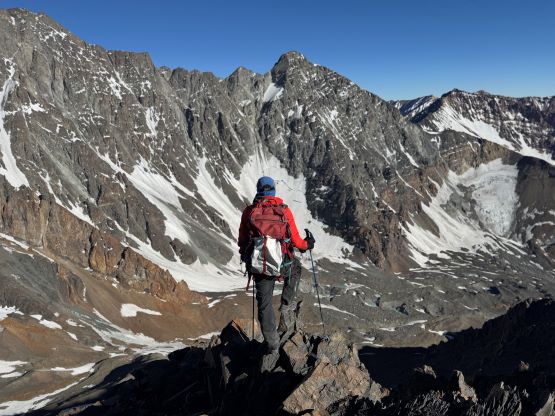
For the past few hundred meters of elevation gain we were slightly behind one solo Argentinian climber who was going for Cerro Vallecitos. Everyone else was slower than us so I thought we were definitely doing good. The next stage grunting to the 5200-m Vallecitos saddle was seemingly never-ending but the winds were non-existing and the views were opening. I was feeling the altitude at around 4900 m but the feeling went away quickly. We were able to maintain a reasonably steady pace afterwards. At that saddle we parted with the climbers going for Cerro Vallecitos and by this point there were only three of them ahead on the way to Cerro El Plata. We eventually caught up to and passed all of them. The next stage was ridiculously long and foreshortened, traversing continuously due SW across several bowls while gaining over 500 m elevation. One patch of snow slope needed to be crossed, but it was shallow enough that no traction device was needed. I had decided for us to leave the ice axes and crampons at camp so it was good that we didn’t need them. The previous group did use crampons as we could tell from the tracks, but we were also climbers from Canada so crossing a snow slope wasn’t going to be problematic. The SW orientation of this stage meant it would normally be done with a strong headwind but that was not the case for us. The winds were minimal and the temperature was comfortable. At 5650 m we ditched some unnecessary gears including mittens, goggles and stoves, and did the final 300 m grunt up the north ridge without much weight. Erica was finally feeling the altitude but we still passed that last group and made the summit the first of the day, in just over 6 hours after leaving the camp.


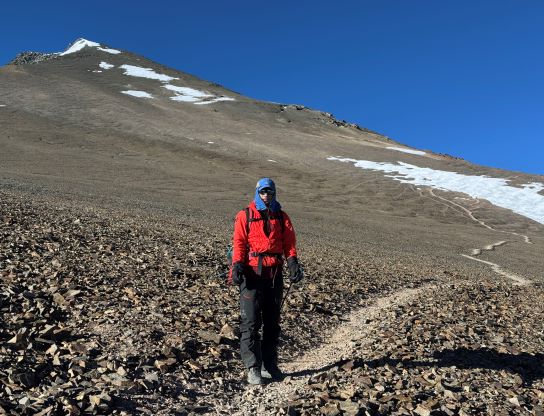


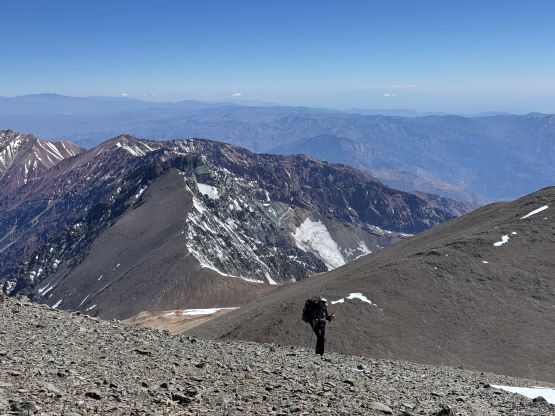

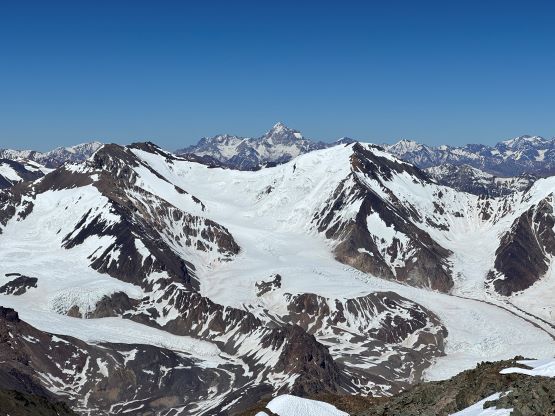


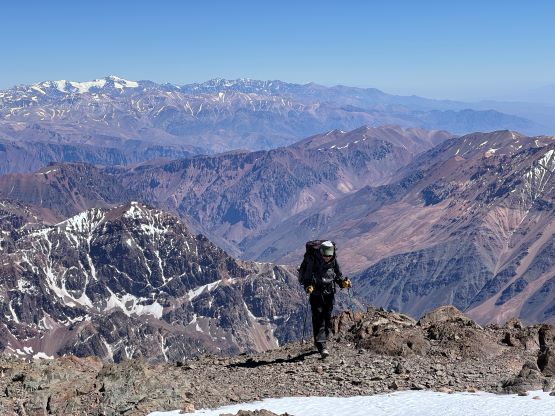

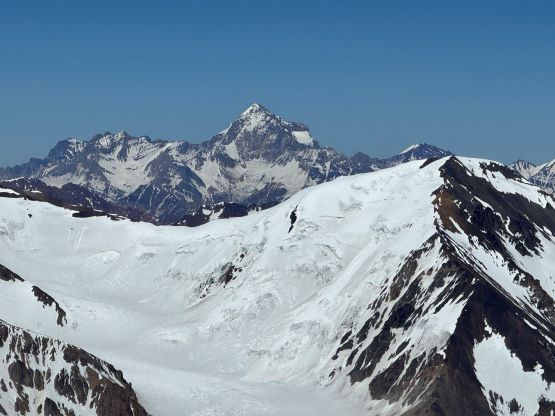

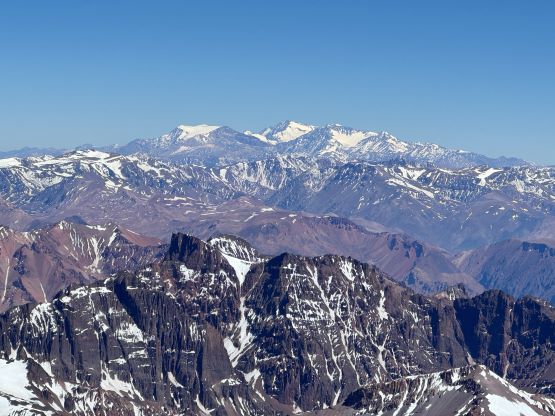


The altitude was definitely too high for just the 5th day from Mendoza (800 m) so we quickly started the descent. It was tempted to run, but I made us to “hike” so we wouldn’t develop headaches. We stopped at that ditched gears and cooked a meal of Ramen and melted some snow. My lighters did not work at this altitude (should have known that from my past trips) but I always carried a spare sparker and that saved the expedition. We had no issue with the gas canisters bought in Mendoza with the MSR Reactor. We then leisurely descended back to the 5200 m saddle and then plunged down that climber’s descent path back to the high camp – La Hoyada. It turned out that there were only 4 teams that summitted Cerro El Plata and everyone else either turned around or went for the lower peak of Cerro Vallecitos. After a long break at the high camp we picked up the remaining ditched gears and walked back to the Salto Camp at 4350 m, in just over 10 hours round trip. Considering this was only the 5th day of the expedition I think we did exceptionally well, and we developed no headache nor any altitude related problem in the evening.
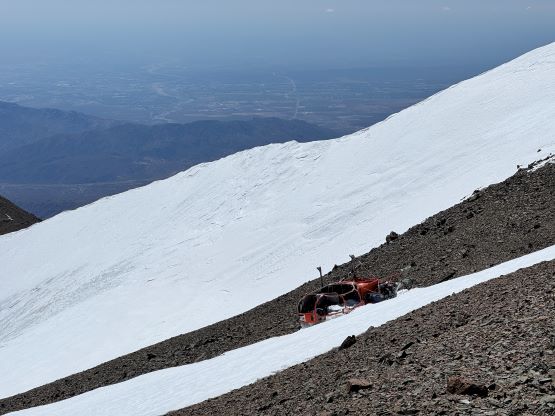


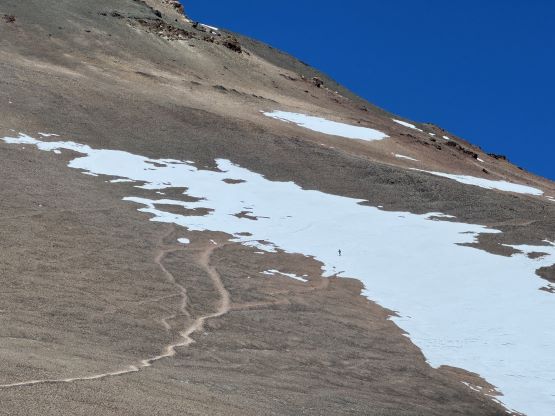


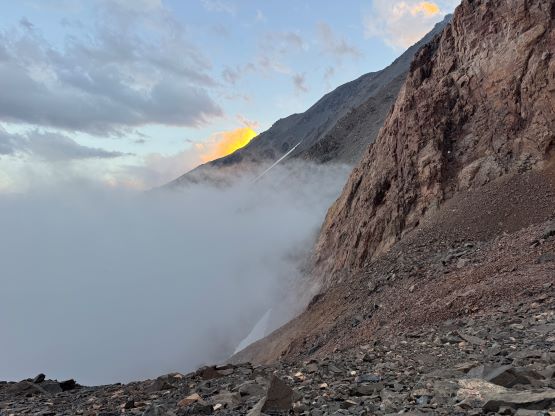
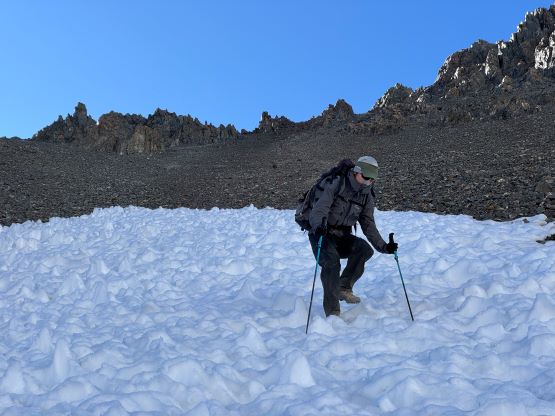
The 6th day (23rd) was mostly cloudy so we spent the entire day resting at the camp. I got bored in the afternoon and went for a solo scouting mission to check out the approach to Cerro Rincón as I wanted to do that peak on the 24th. The result was negative, as the “trail” shown on Gaia map was just a “route”, and the approach involved crossing some annoyingly loose moraines. In the morning in the pitch dark I thought this route had some high risks of causing injuries, so I told Erica that we should go for Lomas Amarillas instead. This one was the lowest (5135 m) of the few that had 100 m prominence. This was also not a no-brainer summit as there’s no trail. The route involved plodding up a 400 m scree chute directly above La Hoyada, but at least there’s a trail leading up to La Hoyada. The morning of the 24th (Day 7) we woke up at 4 am in some cold mists but I insisted for us to start as planned. The plod up back up to the high camp was definitely unpleasant with low visibilities and headwinds but we did ascend above the fog layer, and the views were inspiring. The bottom part of that 400 m scree chute was still covered in snow, but there were enough textures on the snow that we were able to ascend in just the trail runners. I had again, brought the high altitude boots for weight training purposes. The temperatures were definitely colder and I could feel the toes, but it wasn’t cold enough for me to don the boots. The upper west ridge of Lomas Amarillas actually involved some scrambling and minor knife edges which was actually fun, and the summit itself was basically free of wind. I was leading the way at my maximum output and got us to the summit in about 2.5 hours from camp, but Erica could have gone much faster on the steep parts.
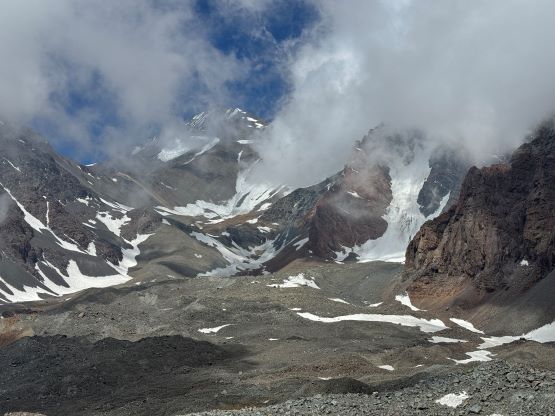


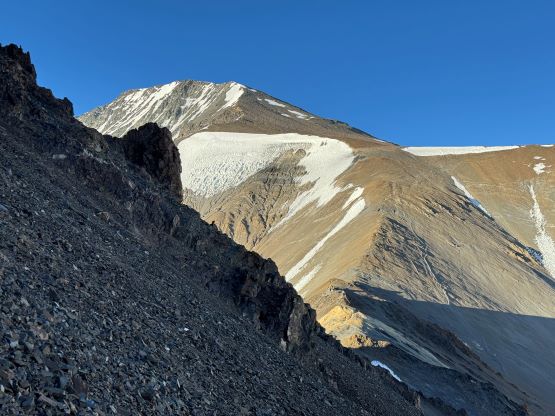

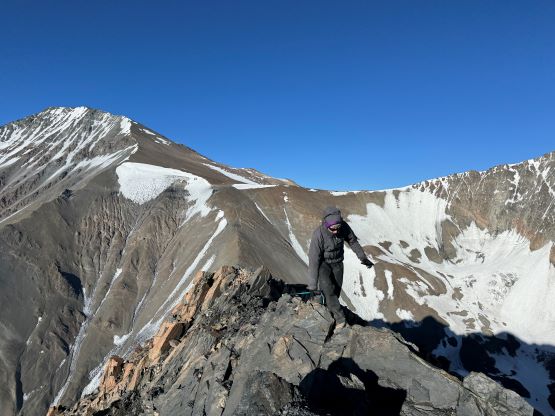
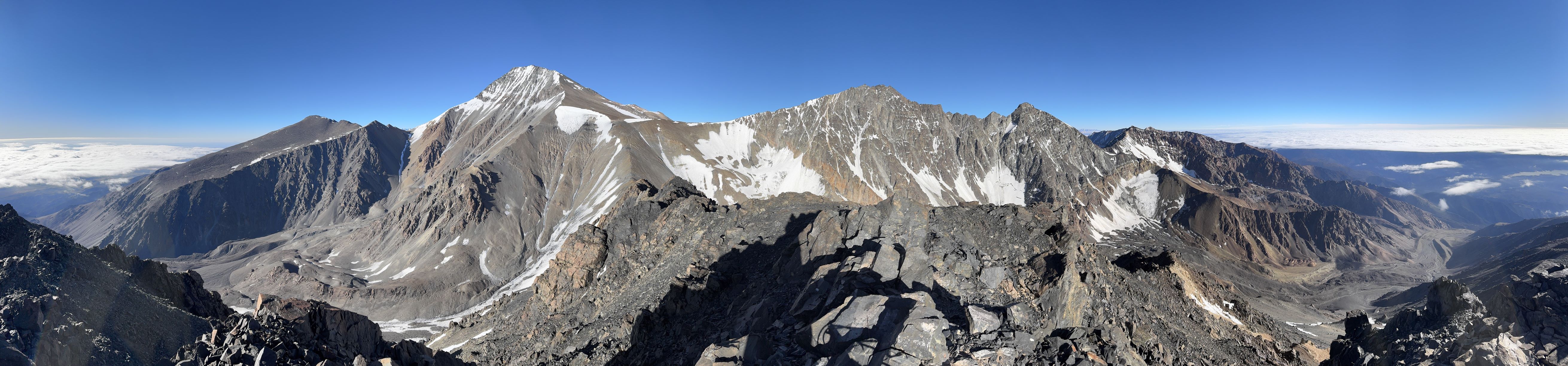

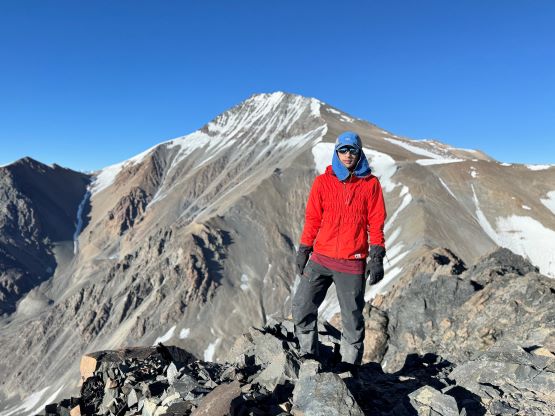

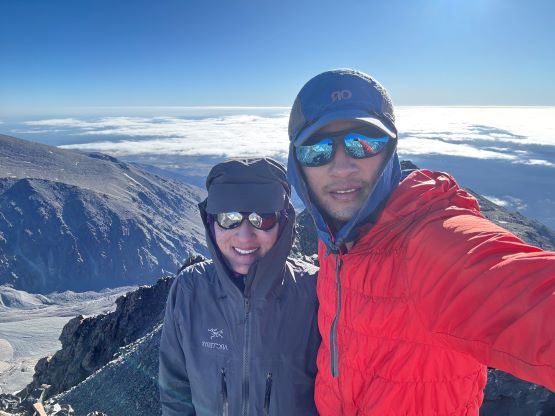
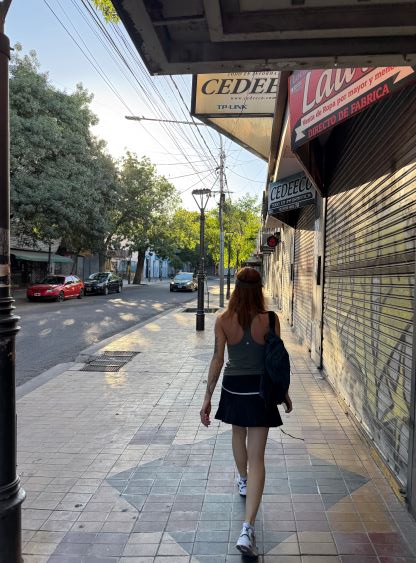
The descent was fast and furious as the annoying scree was finally doing us some favour. That snow slope was also fairly straightforward to descend without donning traction, and we got back to the camp in about 4.5 hours round trip by mid morning. In the previous day I had already texted the driver to come back a day earlier to pick us up, so we had a day left in the itinerary. We could have spent another night at El Salto and did the entire descent in the morning of the 8th day, but it’s better to break the heavy carrying over two days. The pack turned out to be lighter than I thought, but this was still Erica’s heaviest carry ever. After Shangrila Erica was feeling her back so I took her sleeping bag and carried down to the 3450 m camp. I was feeling some leg pain afterwards so I probably should not have taken the extra loads. Nevertheless the pain went away the next day so I could stop worrying. I was wondering why the camp was so empty but quickly realized that this was the Christmas Eve, that everyone’s supposed to be at home. There’s also no cell reception at this camp so the Eve was spent together by just the two of us. The following day we leisurely got up at 9 am and carried down to Refugio Mausy. I did not carry Erica’s sleeping bag this time. The driver showed up on time at 1 pm and a couple hours later we were back in Mendoza. Most of the restaurants were unfortunately closed on Christmas Day but Erica managed to find one that’s about 2 km away. The walking in the empty city in the evening was actually quite enjoyable and we celebrated the success with a fulfilled but expensive meal.





 Steven's Peak-bagging Journey