Aconcagua
December 29-January 4, 2024/25
6961m
Mendoza, Argentina
Aconcagua is the highest in South America and the 2nd most prominent in the entire world, that does not need much introduction. It’s one of the fabled “7 summits” that attracts climbers from all over the world. The normal route does not require much technical climbing skills but the altitude, the weather and the physical efforts are not to be taken lightly. Unlike Mt. Everest this peak does not legally require a guide, but hiring a logistic company to sort out the permit and mule transportations is almost essential. Over the past few years I’ve climbed six 6000ers and one 8000er so paying 5000+ USD for a guided ascent would not make much sense. In fact, I had my own idea of how to put this peak down and I believed 100% that my way would grant the highest possible chance of success. Ever since I came to Mendoza to climb Mercedario in 2020 I had been formulating a plan for Aconcagua, but it wasn’t until 2024 that I finally found the most ideal partner. Erica had no previous high altitude experience and in fact, her highest point reached was Mt. Tatlow under 3100 m elevation, but her extraordinary uphill fitness is even better than mine. With myself leading and providing the essential high altitude experience I had no doubt that we would perform much better than most teams up there. However, unlike myself Erica had no money so I had an additional challenge to lay out a plan with the lowest possible cost. Meanwhile I would provide all of the group gears plus 8000m down parka, -32C sleeping bag, duffle bags etc. for Erica that the only piece of expensive gear she needed to purchase was her 6000m boots.
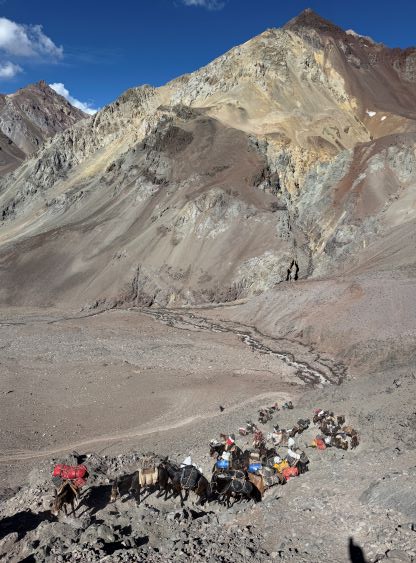
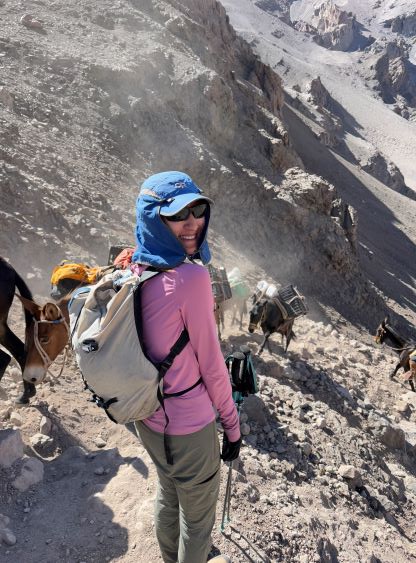
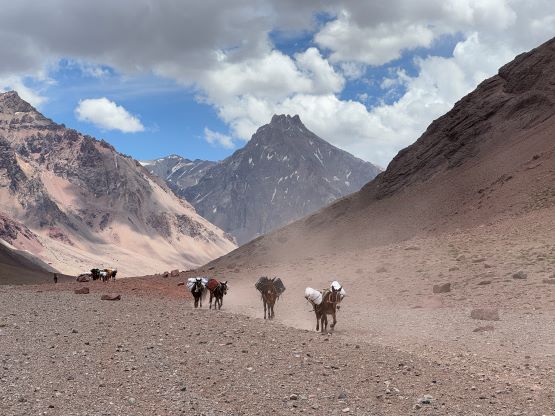
I decided on INKA for logistic services because this is the only company that offers the “bare bone” package that does not include any sort of luxury including but not limited to WiFi, hot shower and meals. This was not listed on their website but was given upon request via email. We would each pay 150 USD for the “essential service” that only includes the toilets and drinking water at the base camp, as well as the assistance in obtaining the climbing permits but nothing more. In addition to the essential services we together paid 680 USD for the round trip mule transportation (up to 60 kg each way), which could not be skipped without significantly cutting our chance of success. The climbing permit was 850 USD each, and that was to be paid in cash upon arrival and that’s basically it. The park’s office was quite strict about the rule that all climbers must have insurance that covers the helicopter evacuation above 6000 m and not many companies could be approved. My trusty insurance company (Tugo) is known in the climbing circle as the “best” in its league so I was fine, but Erica did end up having to spend 400 USD for an additional evacuation insurance, which was a bit of bummer but considering everything together I think we did a great job keeping the cost down.
This was my plan. We would book the one-way air ticket to Mendoza, and spend at least a week (ended up being 8 days) on Cerro El Plata (5968m) to acclimatize. We would then spend 3 days in Mendoza to recover and do Aconcagua afterwards in the smash-and-grab style. The 60-kg limit allowed us to have ~15 days of food at the base camp but we only needed 3 days above the base camp. This would give us 12 buffer days in case of persistent bad weather and these days could be spent comfortably at the base camp and not in the miserable higher camps. None of the guided itinerary gives more than 3 buffer days so I don’t think there’s any other way with a higher chance of success besides perhaps taking the Nimsdai’s VIP package and using oxygen bottles. As mentioned earlier we were low on budget and I also preferred to do this peak as independently as possible, even just for Erica’s learning experience. We most likely would finish the climb without using all of the buffer days so depends on our feeling and motivation, we could either climb a few more peaks or directly fly home. This could not be decided until the very last minute hence the initial decision to book the one-way air tickets. This did jack up the costs by at least 700 dollars unfortunately (each of us).
INKA is one of, if not the biggest company out there but their communication was nowhere the greatest. Their replies (via email) were initially clear and quick but had become slow and unsatisfactory after our arrival in Argentina. In any case Erica and I showed up at their office in Mendoza one day earlier than they said (to have more buffer), paid the permits and the remaining balance and learnt that our planned approach would likely not going to work thank to some unforeseen constraints with the mules. We were planning to do the standard approach with one night in Confluencia (the 28th) but to make that happen we had to deliver the 60 kg mule bags one day earlier in the morning (27th) and that had to be done in person in Los Puquios near Penitentes. We could not make that happen, unfortunately. I quickly formulated an alternative solution, that was to make a single push from the trail-head (Horcones) to the base camp (Plaza de Mulas) on the 29th. This was possible only because we were already acclimatized and this allowed us to more or less follow the scheduled itinerary. We could of course start one day later to be still able to spend the night in Confluencia but at this point we were sensing an ideal summit window on Jan. 2nd and starting a day later would not position us well for that. Together with the receptionist we made the decision to be in Los Puquios in the morning of the 29th, deliver the bags and make a single push to the base camp, but there’s more problems coming. We then booked one night in a private room in Altas Cumbres Penitentes, fearing of Covid infection in shared hostel rooms. I pushed hard for INKA’s driver to pick us up from this hostel but to no avail. The receptionist said the earliest possible time would be 9 am and that put us well in the day’s heat. Still, we were fit so I couldn’t care that much.
We then learnt that the park’s office was somehow closed and we would have to wait for the next day (27th) to get our permits, which was fine as we on purposely showed up at their office a day earlier to have buffer time. We then spent the rest of the day (26th) shopping for food. Similar to a week earlier for Cerro El Plata, the gas canisters and the expensive dehydrated meals were bought from El Refugio Aconcagua and the ramens were bought in Carrefour supermarket. The ramens were ridiculously expensive but we had come to the conclusion after spending over 10 days in this country, that anything imported would be very expensive. I was just happy that we were able to find those ramen packages and of course, there’s only one brand and three flavours. The quality was nowhere comparable to the ones we bought in T&T Supermarket back in Canada. We made do with the snacks and bars in Carrefour and eventually did manage to put together ~15 days worth of food. We did come prepared with about 15 meals worth of boil-in-bag rice/couscous and ready-to-eat Indian curry packages. These things were otherwise nowhere possible to obtain in Argentina. By the next morning (27th) we received What’s App messages from INKA, that the permits could not be issued due to Erica’s insurance. Erica then spent several hours calling but the eventual result was negative, that the only way to start this trip as planned was to suck up an additional 400 USD for the evacuation insurance offered by the Aconcagua’s park. I thought this was a total scam but the park is the authority and what else could we do. The insurance PDFs were sent to INKA months ahead so I didn’t understand why we had to wait until the very last minute to know the issue. Had we been told a month earlier we would have sorted that out at home or at least Erica could have just switched her insurance company to Tugo. For a similar price, Tugo’s package could be used for one year anywhere in the world, and not just for this one particular trip. The receptionist eventually delivered the copies of our permits at 6:30 pm to our hotel.


The next thing was the transportation from Mendoza to Penitentes and INKA offered a private transfer at 320 USD one way. I consulted with our driver for Cerro El Plata and the quote was 160 USD. For 2 hours of driving on pavement that was ridiculous. We went back to the third option and that was to take the bus that costed about 15 USD per person. The reason to not make this “plan A” was to avoid shared spaces for as much as possible (being Covid smart) but the expensive prices in this country forced us to take the bus, at last. I had managed to catch Covid or at least some sort of respiratory viruses on most of the travel trips in the past two years (Everest, Alpamayo, Ecuador to name a few) so I was overly cautious on this topic now. For all of the flights and bus travels I made us to wear N95 masks throughout. In any case we made the bus driver to drop us off right in front of Altas Cumbres Penitentes which was about a kilometer short from the actual village, and settled the night there. The environment of this hotel was much nicer than expected and the only thing they could have made better was the bathroom and the shower. The water was either too cold or too hot so after hearing Erica’s struggling I decided to skip the shower and go straight to sleep. The elevation here was 2600 m so I was also happy that after 3 nights at 800 m altitude we were finally able to go higher again.
The INKA’s driver did show up on time and by 9:20 am we were unloading our luggage bags in Los Puquios which was roughly halfway between Penitentes and the Horcones trail-head. Right away we learnt another major problem, that at this time of the day the bags could not possibly be sent all the way to Plaza de Mulas. I was outrageously mad but tried my best to not be angry. I told the person in charge of the mules that she should call INKA right now. It’s outside the working hour but call the emergency line. Thankfully the company admitted that they had made a horrible mistake, and was able to quickly come up with a solution, that was to give us one night’s tent (which worth 80 USD) and one day’s worth of meals (120 USD per person) at Plaza de Mulas for free. We, on the other hand, would have to carry our sleeping bags as those could not be rented (or given) at the base camp. I was still not happy as these sleeping bags were quite heavy for a 25-km death march at altitude, but this was our only viable solution. We were also told that we’d better start soon as the park’s office in Confluencia would turn us back if we couldn’t make there by 12 pm. In fire drill mode we dug the sleeping bags out and signed the duffles to INKA to be delivered to the base camp on the next day. We were then transported to Horcones, checked in with the park’s rangers and then it was finally the time for us to face the mountain itself and this was exactly at 10 am. Our permits were legit and caused no further delay.
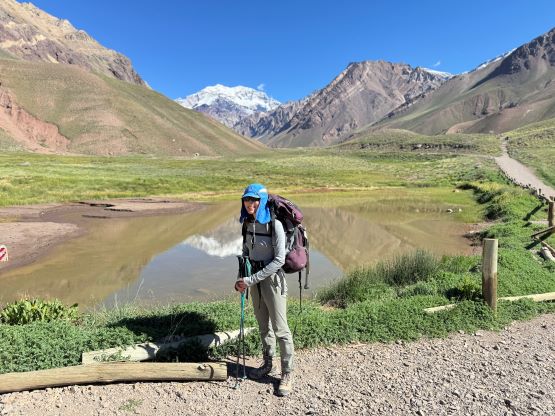
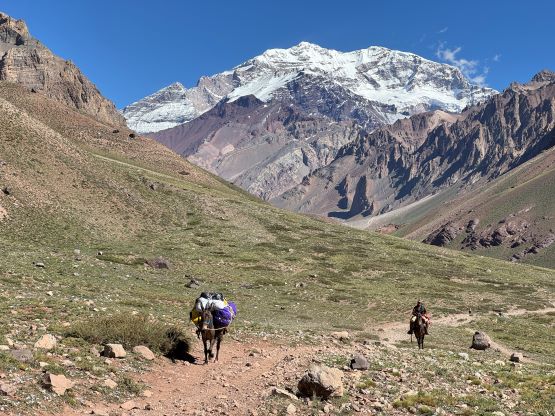
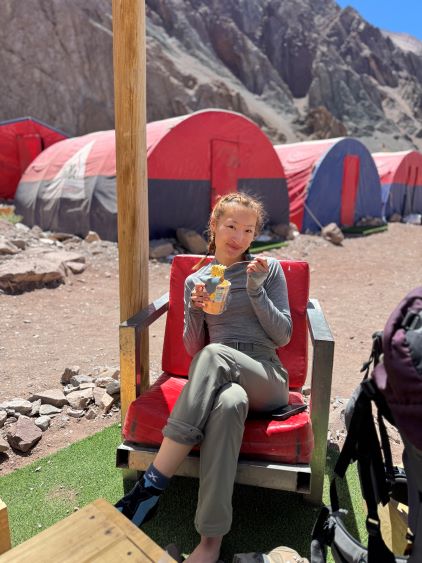
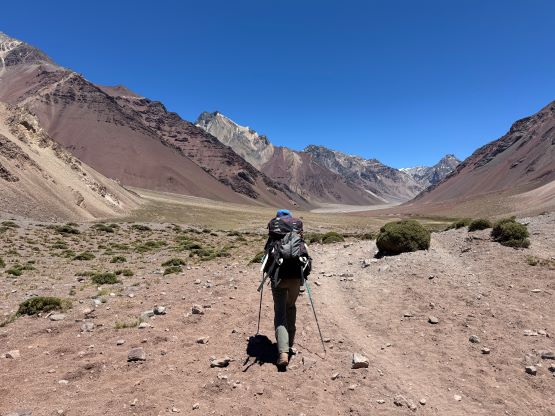
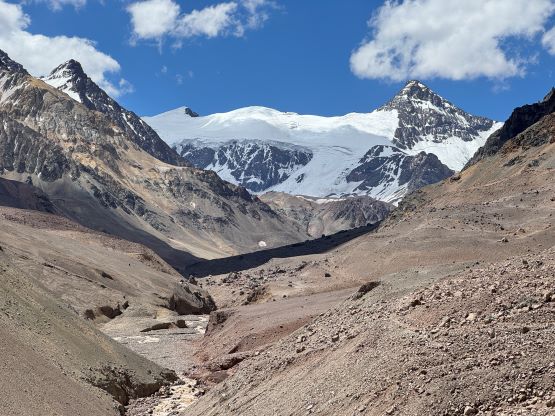
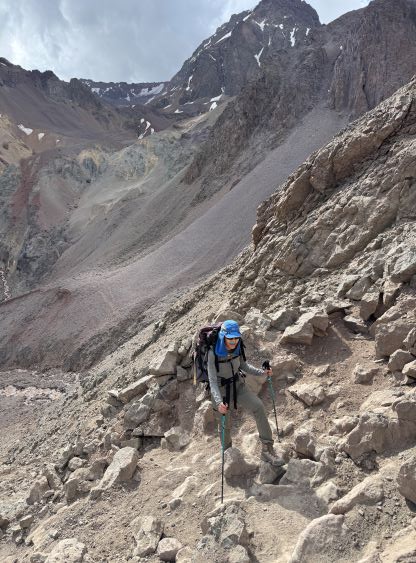
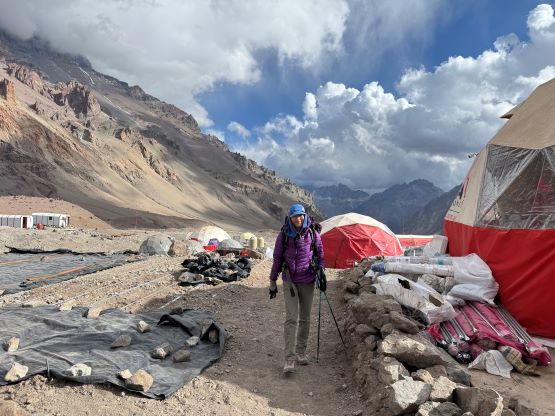
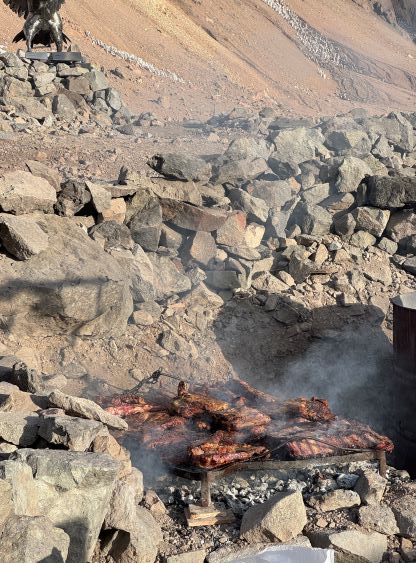
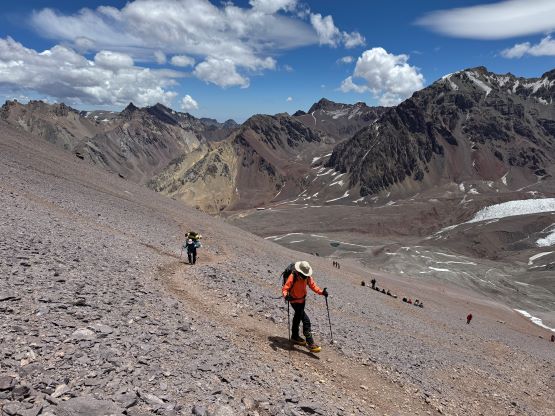
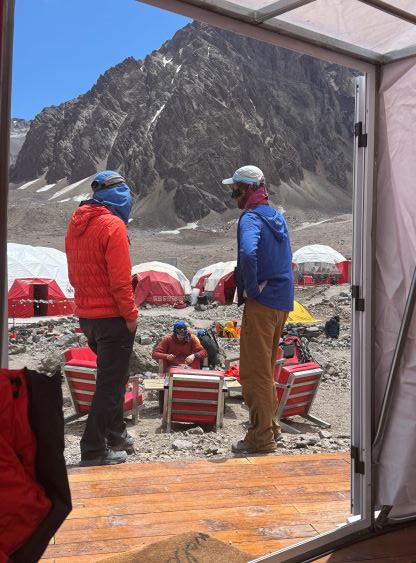
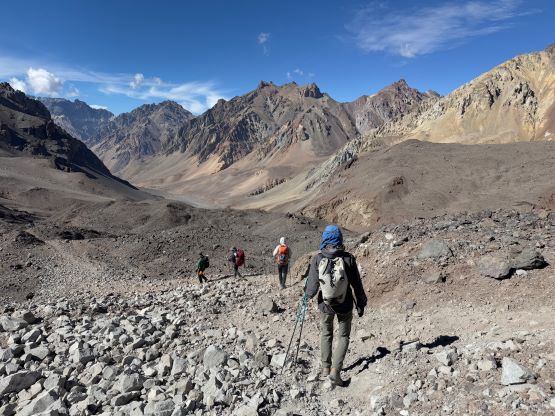
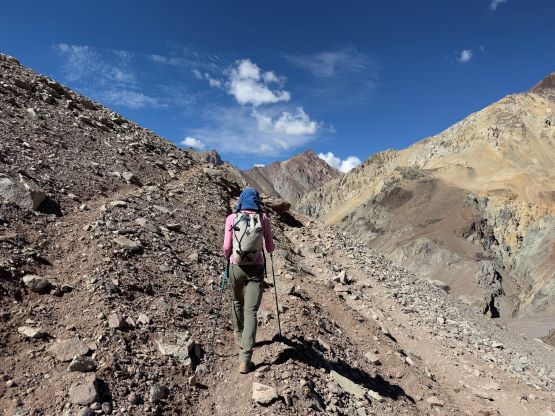
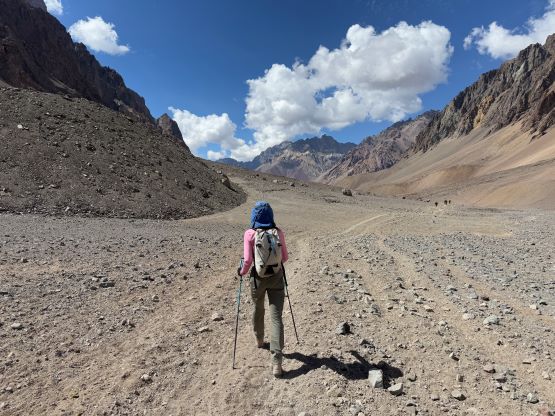
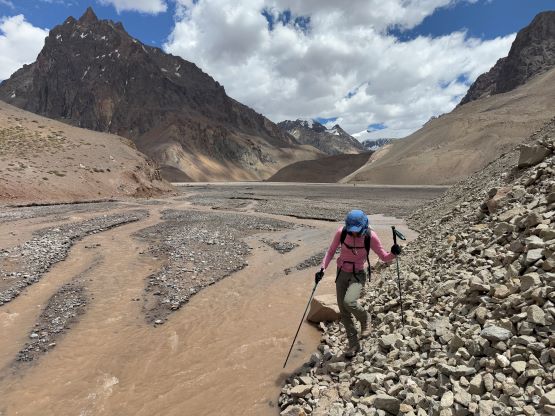
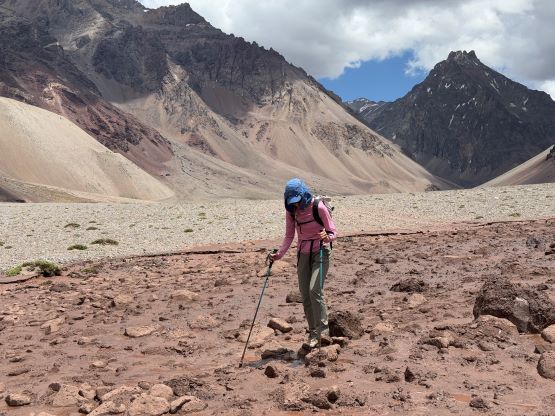
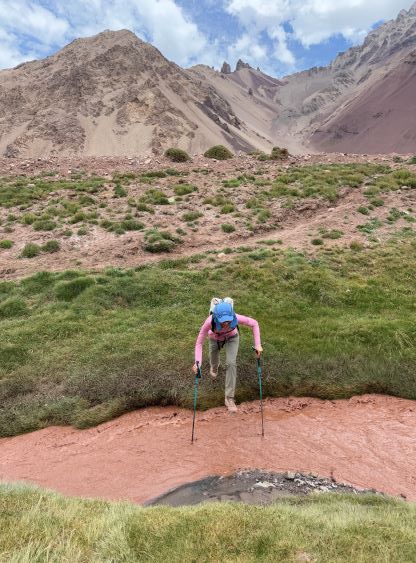
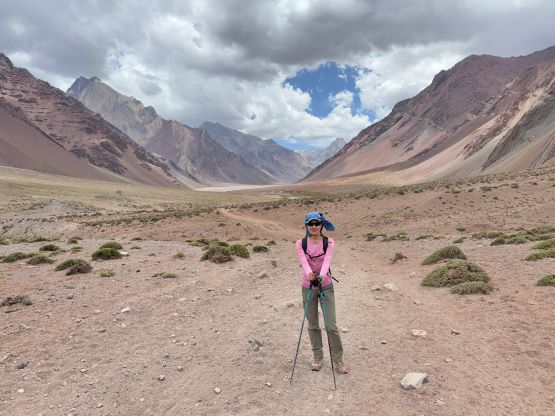
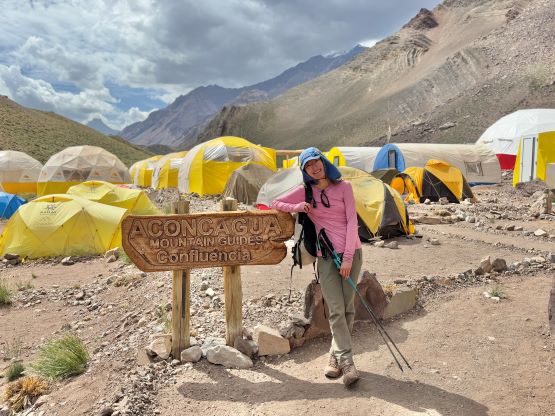
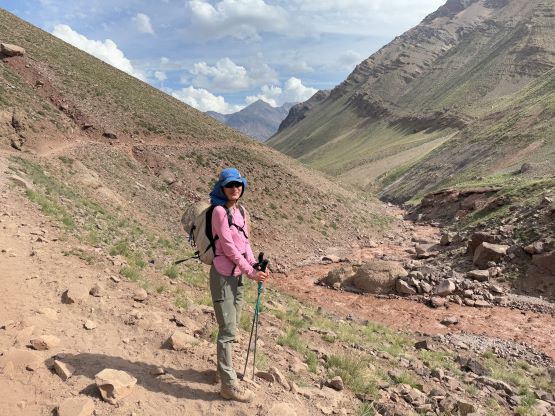
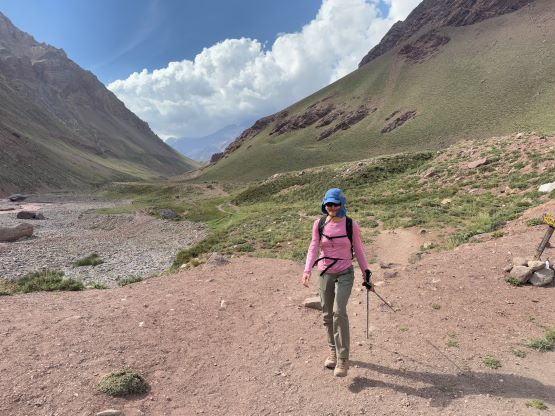
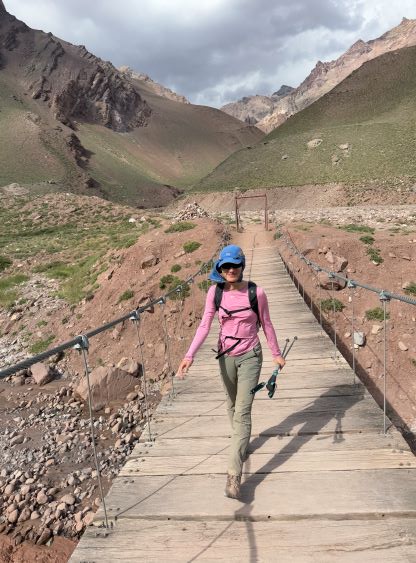
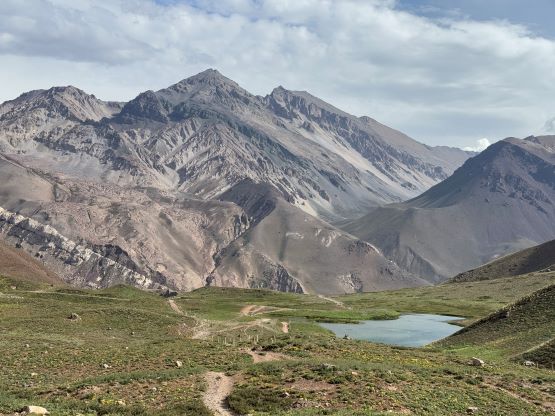
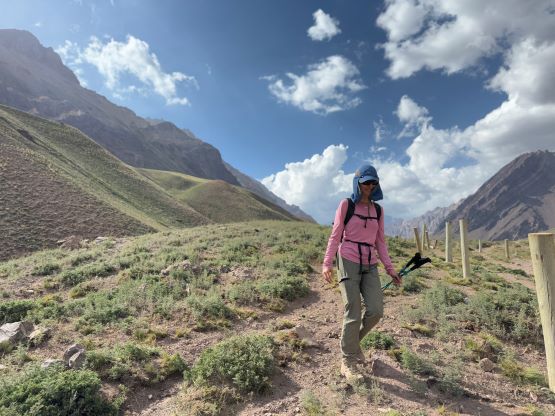
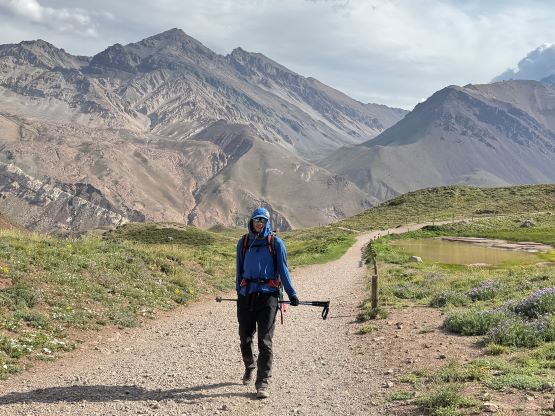
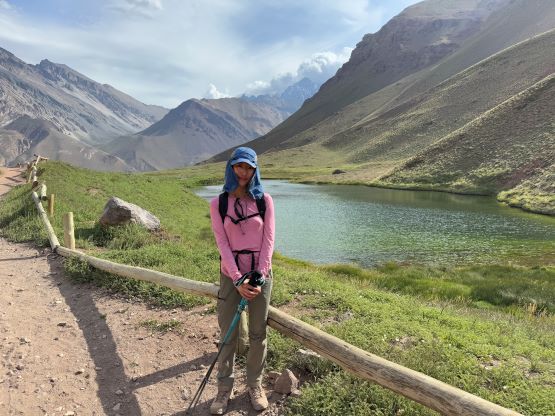
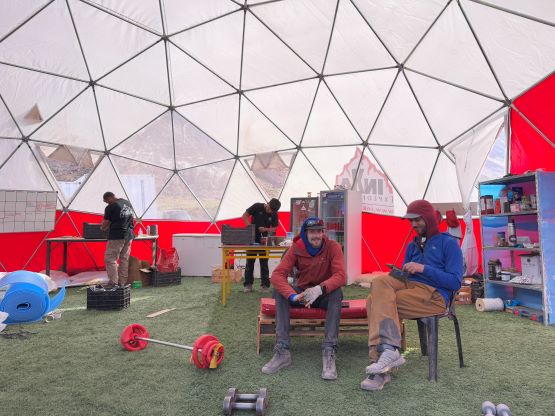
None of us had attempted Aconcagua previously so who knew how long this approach would take, so off we went as if we were plodding at the sea level. Thankfully the trail was easy and the elevation gain was very gradual that we were able to maintain at least 4 km/h pace, and this eventually positioned us at Confluencia at 11:40 am, 1 hour 40 minutes after starting. The INKA’s manager at this camp nicely introduced us to the park’s rangers and they gave us permission to continue. We then did the mandatory medical check and they also gave us green lights. After breathing a sigh of relieve we went back to INKA’s dome tent and asked for some hot water. We had brought two packs of ramen to be cooked in Confluencia and it was finally our turn to take a much needed break. About an hour later it was the time to resume. The plod from Confluencia to Plaza de Mulas was a real death march. The scenery was good but monotonous, and the trail quality was not very good on some spots. There were also abundant amount of annoying up-and-downs and we were also facing a sustained head winds for most of it. After about halfway we were feeling the drag and started to slow down with some frequent breaks, but eventually did manage to reach the base camp in less than 7.5 hours from the trail-head (excluding the time spent in Confluencia). We were exhausted but I told Erica that we were okay as I had just read Rob Woodall and Adam Walker‘s trip reports the previous night in Penitentes. If these guys needed over 12 hours to get here we were definitely doing fine, especially considering we were also hauling our sleeping bags. On a side note I don’t like to read trip reports these days on popular climbs prior to our own trip. These trip reports were fun to read but served minimal use in our own success, and they somehow took the fun and exploration part out of if for me. I eventually decided to read Rob’s report as he’s the one offering a complete set of GPX track on peakbagger.com, and Rob’s report directed me to Adam’s report. These two reports together made me think that Aconcagua might actually be a bit harder than I thought, which was correct, to some extent. The night was quite cold and I had only brought one thin puffer and Erica’s was also suffering. We consulted with Raphael and Sofia, the managers of INKA’s base camp and they offered their own jackets to us. We were also lucky that this was a Sunday, and they were having a tradition BBQ dinner every Sunday. The free meal turned out to be a huge ass Argentine steak. Erica managed to get a hot shower (skipping the 25 USD as they never charged us) and the dome tent offered by the company was a nice 3-person North Face. It was here that I started to think INKA was actually a very good company, besides their communication pre trip.
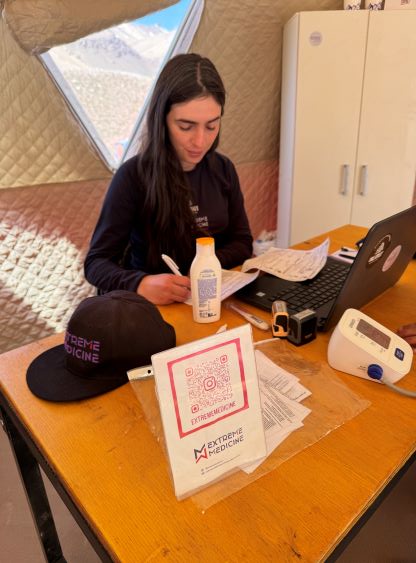

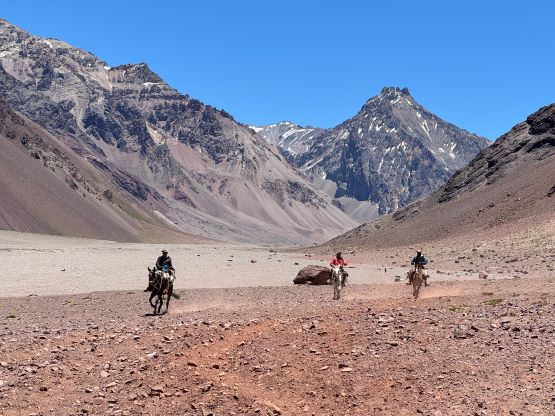
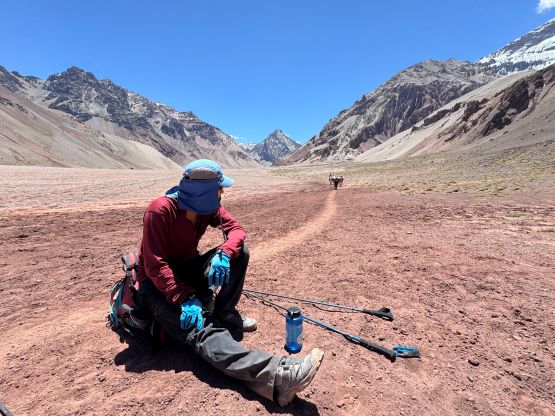
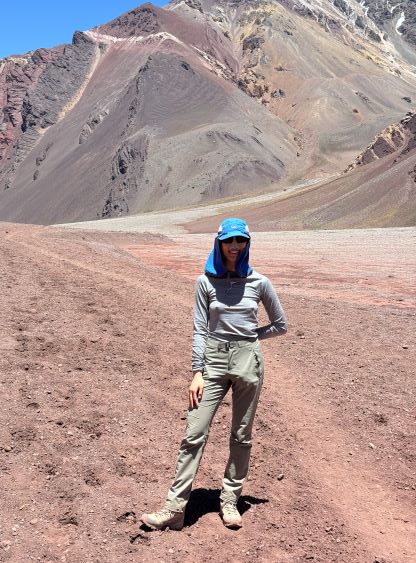
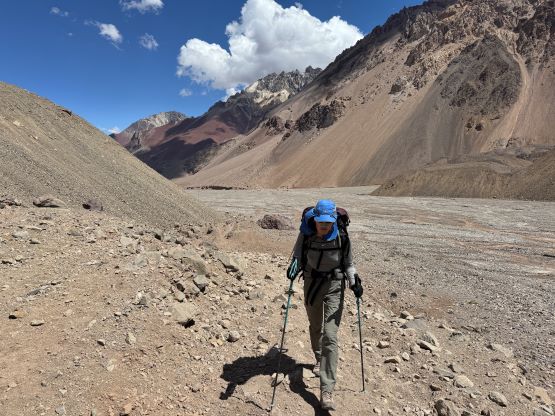
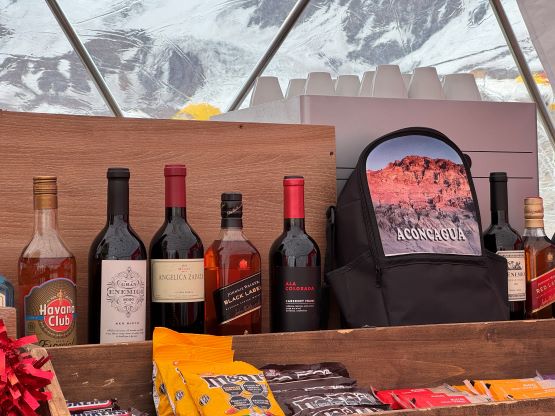
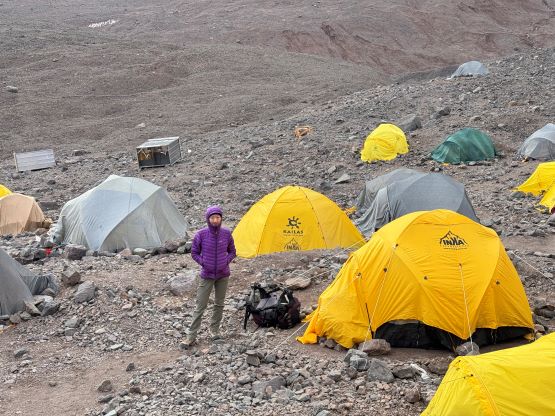
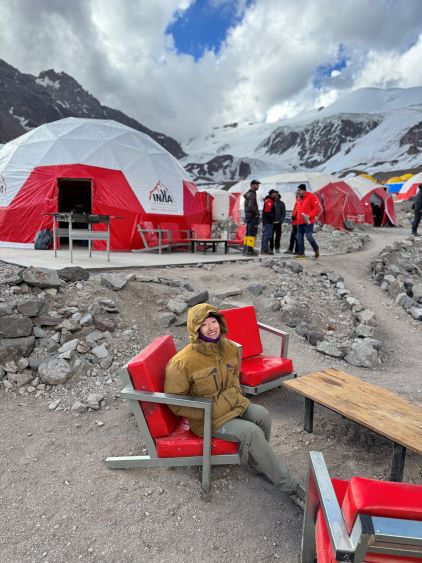


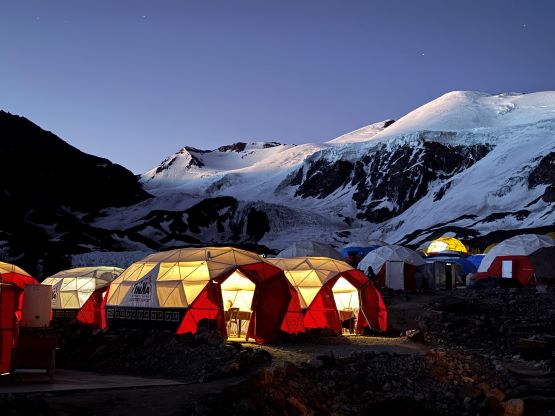
The next morning we went to the dining tent and the breakfast was eventually served about half an hour late, but that’s okay as the quality of the meal was acceptable. By this point we had been mostly taking to a Balgarian guy named Nikolai, who’s also known as “Kevin” by the company for reasons that I’m not going to share. This was Nikolai’s 4th day of the trip and his appetite wasn’t doing great. We had no issue with that, but a few hours later Erica started to feel sick, unsure if it’s the food or the altitude. I told Erica that whether we were able to start as planned depended also on our bags. The manager at Los Puquios promised us that the mules would come at “noon” but we were not permitted to get our bags until after 2 pm. These extra 2 hours made us very hungry but I resisted the temptation to make further complaints. Raphael also permitted us to stay another night in INKA’s dome tent for free, which I thought was very nice. Throughout the day Erica was not feeling any better and she had partially lost her appetite. The plan was to move to C1 (Camp Canada) on the following day but we would have to reassess in the morning. Regardless our itinerary we made an appointment to do the mandatory medical check at 5:30 pm, and of course it was not on schedule. We had to wait for half an hour outside the medication tent in the flurries for our turn. I was surprised that Erica had easily passed the test, so it was most likely the food and not the altitude. Talking to some Taiwanese climbers I learnt that food poisoning on Aconcagua was rather common. I’m a weird guy who grew up very dirtily in China so I don’t easily get food poisoned even when my partners were having serious diarrhea eating the exact same food.
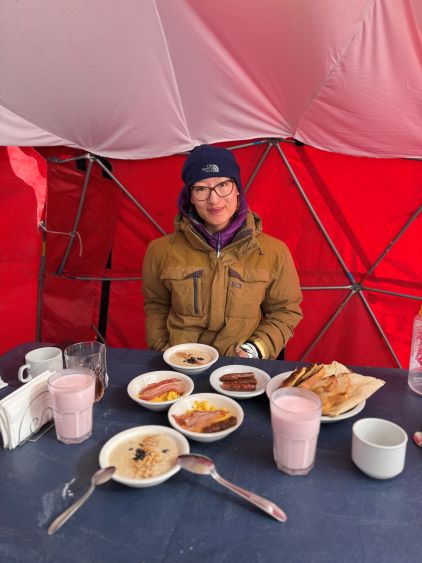
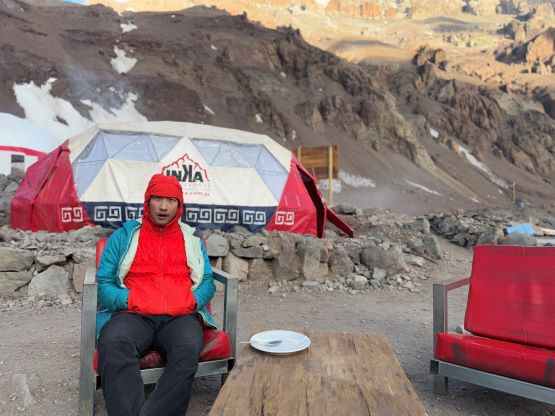
The third day started bright and sunny but the summit was capped with some lenticular clouds. This was supposed to be the windiest day and it sure looked that way. I walked Erica back to the medical tent and they still gave us green light to continue, but Erica was only feeling 60-70%. I was thinking to wait for another day and Jan. 3rd was also looking promisingly as a summit day, but the weather forecast changed. The only window was now on the 2nd so we either started now, or wait for the next window. I was packing as if I had to solo it, but after I finished packing Erica said that she would like to give it a shot. Another hour later at about 1 pm we were able to start. Meanwhile I consulted with Raphael and Sofia that we would like to hire a porter for 20 kg weight but the reply was negative. It was impossible to have porter at such last minute. I was 50/50 about the result because the porter was very expensive here. The 20 kg for 2.5 hours of plodding to C1 would cost 195 USD. I told Erica that I would suck it up and be our own porter. By this point we had learnt from various sources that there’s no water (not even snow) at C1 so we together loaded up 7 L of water. I carried 4.75 L of of that, in addition to our tent and Erica’s sleeping bag. I did not weight my pack but it was probably in the range of 50-60 lb. The going started hard but I quickly caught the rhythm. There were also tens of climbers ahead and we slowly passed most of them. The only persons plodding faster than us were the porters and even they were only marginally faster. About 50 m under C1 we had caught up and passed the INKA’s commercial team and this granted us a nice tent spot. I’m very familiar with these popular peaks, that to obtain the nicest tent spots (or to claim the best pre-set tent) one would have to be their first. The INKA’s guides were also very generous and offered us two additional liters of water for free, and this, combined with the 7 L that we hauled us saved us from making a lengthy trip to gather snow, or being seriously dehydrated. The evening was gorgeous at this camp and we walked around for photos and socialized with other climbers from the same company. The winds were surprisingly calm here at 5050 m.
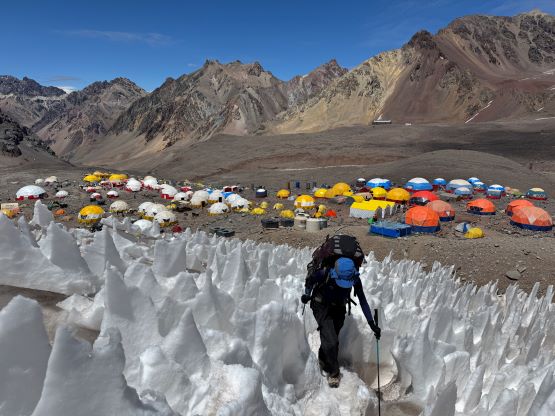
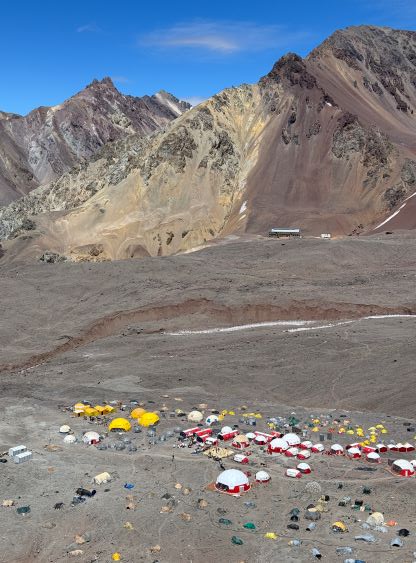
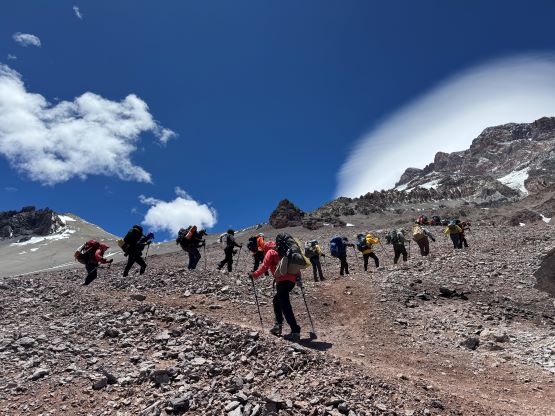
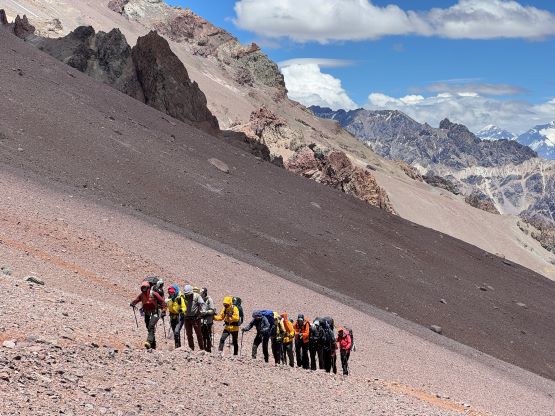
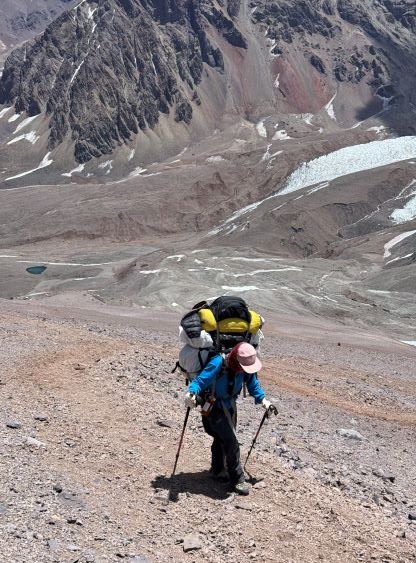
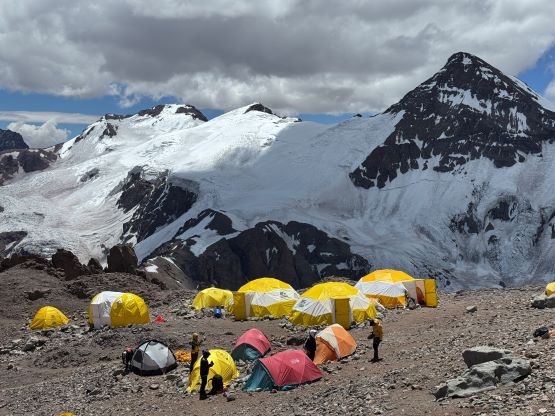


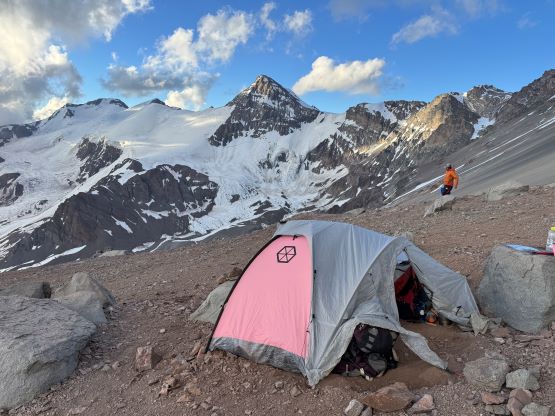
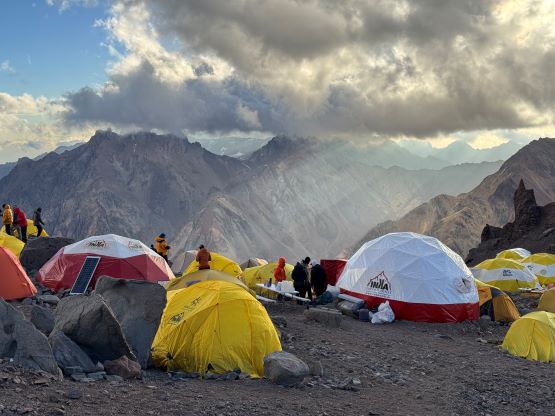
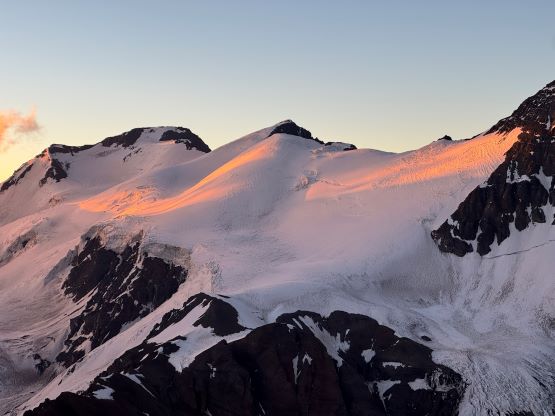
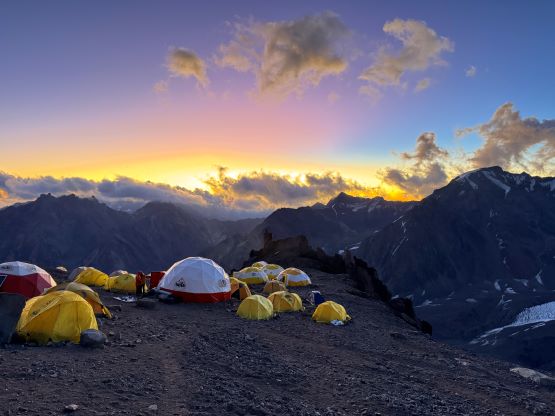
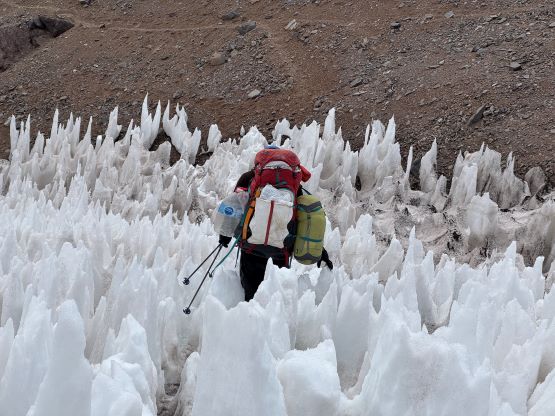
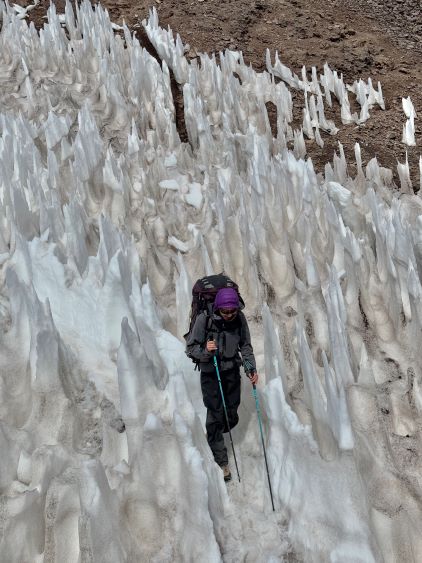
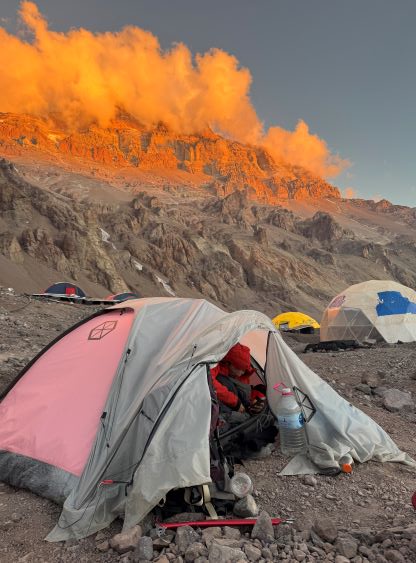
The amount of water consumption at this altitude was far greater than I thought, that by the morning we were down to only 2.5 L and 1 L of which was needed for cooking breakfast. We also drank an additional liter of water so we only had 0.5 L left, which was not enough for us to ascend to C2. Both of us tried to get more water from INKA’s dome tent but this time, to no avail. I then made the decision to quickly pack things up and melt snow as soon as we encountered the first major patch of penitentes which turned out to be about halfway between the camps. There were a few smaller patches earlier on, but I wasn’t satisfied with the colour of them. I then quickly realized that cooking without the vestibule in the winds at this altitude was next to impossible but there’s thankfully a boulder to provide some shelter, that the ignition was marginally possible. By the way my own lighters could not work even at the base camp’s altitude so from Cerro El Plata onward we had been using my sparkler, but here at Aconcagua’s basecamp they were selling the “high altitude lighters” for 5 dollars each. I bought two for us, and they worked all the way up to 5600 m at C2 without issue. These were just the normal Bic lighters whereas mines were the torch styled, so those planning Aconcagua take note of that. Excluding the time melting snow we got to C2 in under 2 hours. We pitched our tent in the INKA’s area which is the uppermost just under 5600 m elevation. The pitching was difficult in the winds and necessitated two people’s team work. We then spent the next half an hour walking around searching for that rumoured tarn, which never ended up exist. In some years one could collect water from that but not in this season. It was completely iced up that even with an ice axe it was not possible to access liquid water. Our neighbours were one couple from Vancouver trying the 360 route, and another soloist in his own Samaya 2.0 tent with vestibule (same as ours). I could tell from this soloist’s tent that he must be fast, as this tent costs 1600 dollars so to afford that he better knew what he’s doing. They told us that the only solution was to melt snow, and thankfully we pitched our tent not far from the snowfield. INKA had provided two massive ass shovels and I kindly borrowed one potato bag from the guides. The next few hours were then spent collecting and melting snow. We got more than 8 L of water and the 450-gram canister was still having residuals. This was also Erica’s first time melting snow so I made her doing more work for the experience.
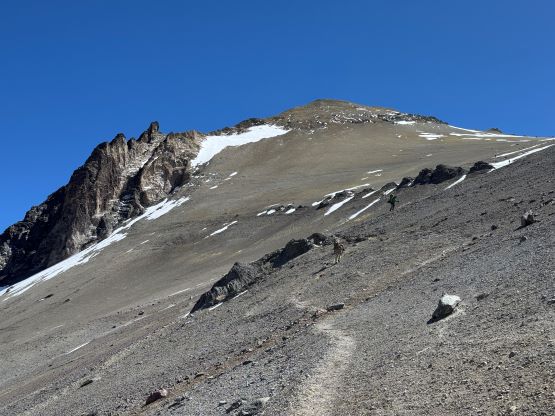

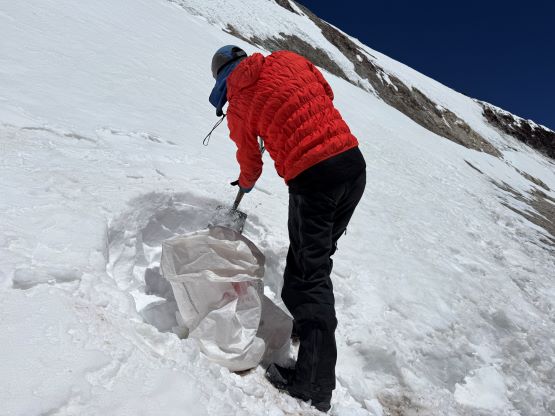

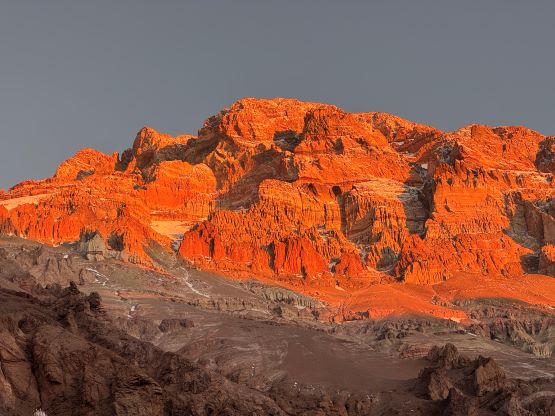
In the evening two rangers (policias) showed up checking everyone’s itinerary. I told them that we were from Canada and were about to start at 4 am for the summit push. The rangers nodded and didn’t even bother to check our permits, which was to my surprise. The lightings had become gorgeous so we abandoned the idea to sleep early and walked around for photos. We also learnt that the INKA’s toilet had opened so that saved us some hassles. I’m not sure whether or not we were supposed to use that toilet though. The sunset show finished at around 10 pm and it’s time to sleep, but sleep never came easily at this altitude, especially without being properly acclimatized. Cerro El Plata itself was high enough, but we only spent 3 nights at 4350 m and that’s not quite sufficient for Aconcagua’s light-and-fast push. I ended up getting at most 1 hour of sleep but Erica had no problem sleeping. In fact, Erica’s old stomach issue had gone away but she developed new stomach problem that did not go away by the time we got up at 3 am. Nevertheless she had to give it a try and we would see how that went.

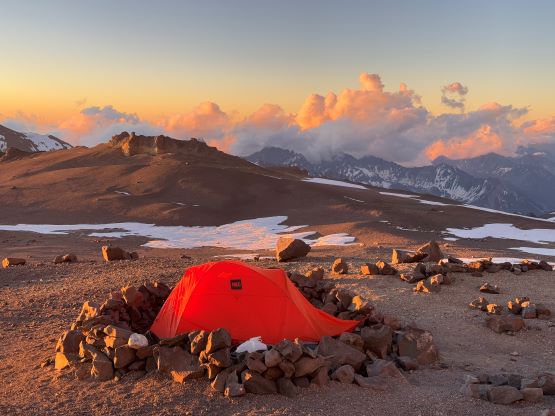
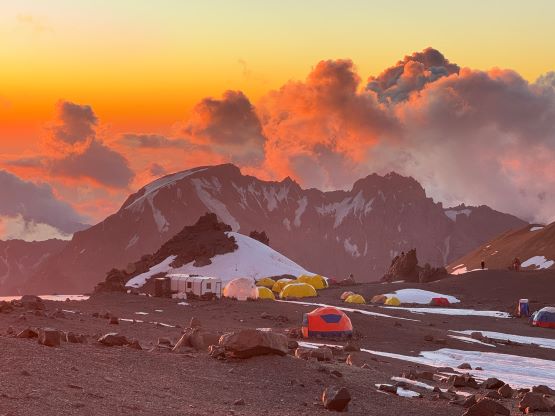
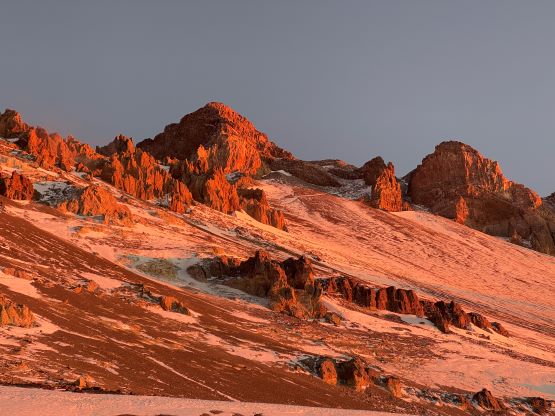
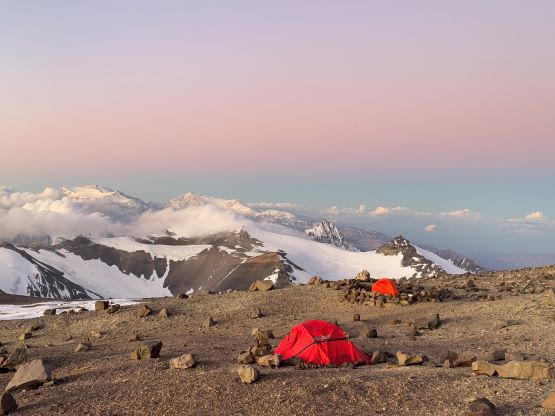
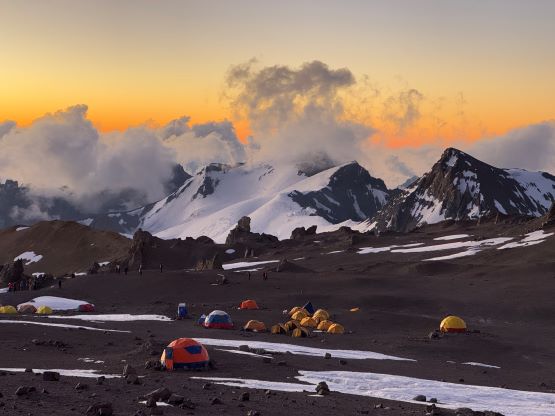
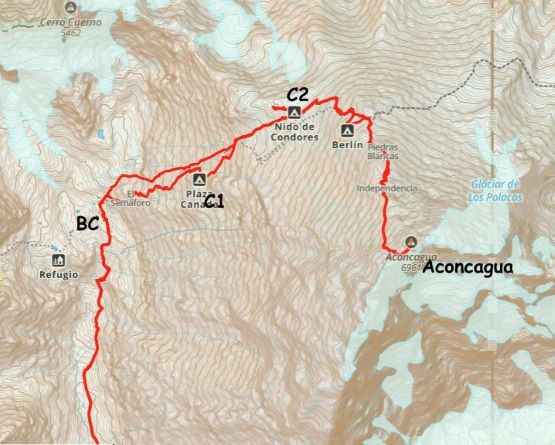
Most people would spend an additional 2 days acclimatizing to C3 (Berlin or Cólera) at just under 6000 m elevation but fit parties usually skipped that camp. I was recommended strongly by both Oakley and Petter to skip C3 and I agreed with them, so our summit push would be Day 5 from C2 (Nido de Condores). We got up at 3 am and managed to start going an hour later. I had told Erica that the 6000m boots would be used for solely one day and I was correct. In hindsight we should have hauled the trail runners to C3 as the descent from C3 down to C2 later in the day would be much nicer in the runners. The boots were only needed above C3. That soloist had started at least half an hour earlier so in the pitch dark we quickly had to find our own way. Thankfully I had Rob’s GPX guiding the way, even though we didn’t take the exact same path. The route-finding was needed but not complicated. About an hour later we made to Camp Berlin and then quickly traversed to Camp Cólera. In retrospect it’s possible to go directly to Cólera skipping Berlin, as we discovered on the descent. A streak of headlamps showed up above Cólera which was to my expectation. Apparently quite a lot of climbers were gang ho at this timing window. We did our first short break at Camp Cólera donning some wind protection (for Erica) and then resumed. The game quickly became how many climbers could we pass. The daybreak came at Piedras Blancas and it was also here that we had passed most of the guided groups. By the time we reached the slope above Independencia we had passed most except for the few fast climbers higher up.
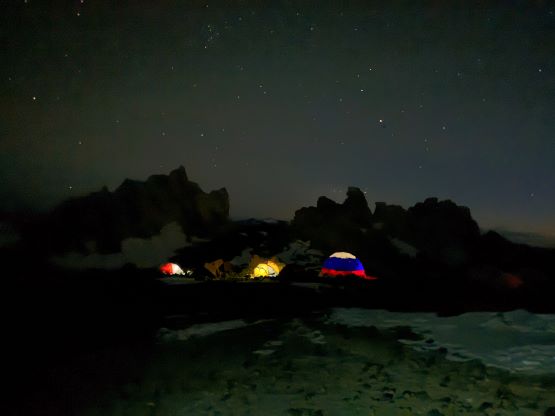
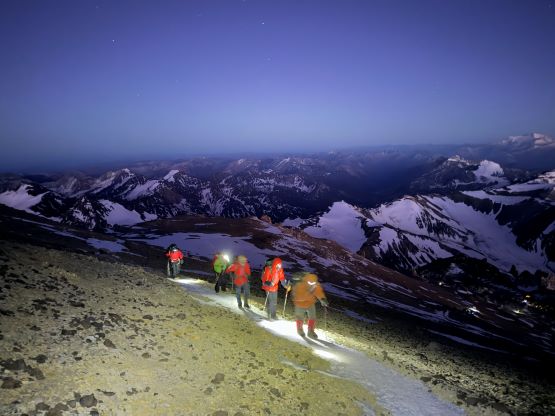
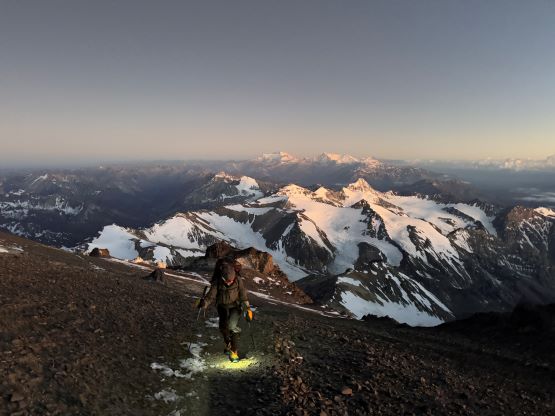
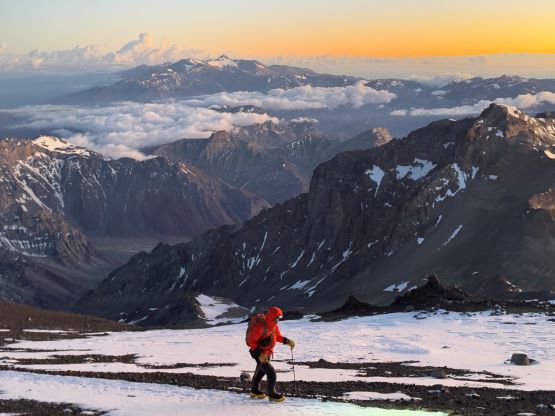
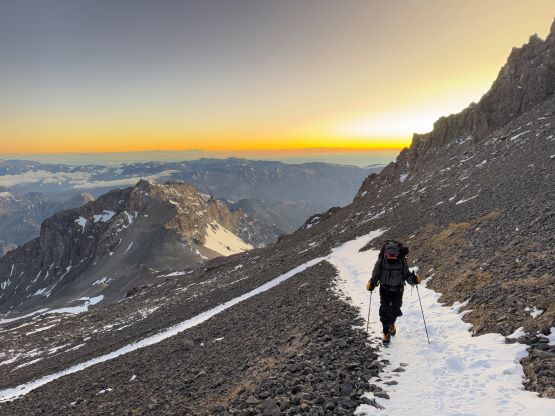
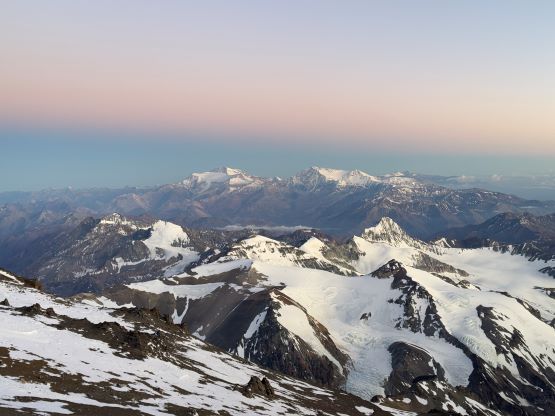
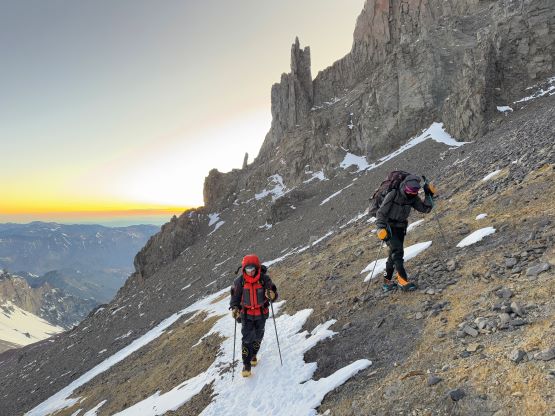
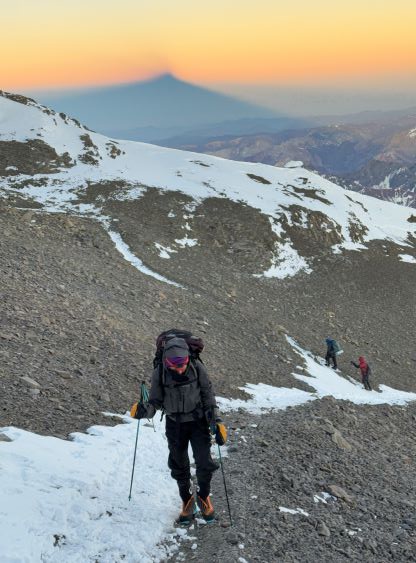
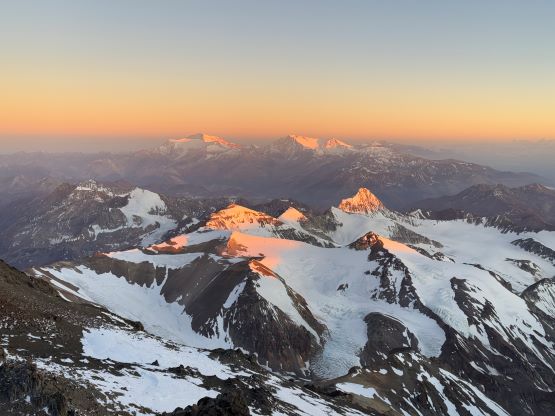

It was becoming increasingly cold but I persisted onward in just t-shirt with a thin puffer. Erica had donned her 8000m down mittens and quickly made for another transition to don the 8000m (Absolute Zero) parka. I had bought that parka back in 2020 for Denali and Logan but never ended up using it, and the first time it being used was here on Aconcagua, for Erica. I myself also donned the parka which is the Feather Friends’ Khumbu, not as warm as the Absolute Zero but still warm enough for Denali’s use. The balaclava restricted my breathing so I gave it up. I did not need to don the down mittens and neither did I use them on Everest nor Mercedario. My fingers’ circulation was definitely better than the averaged, that the 60-dollar MEC gloves were sufficient enough for all of my high altitude climbs as well as the coldest days I’ve spent in the Canadian Rockies. It was the time to start that infamous traverse, which thankfully was without much head winds. The crampons (mine being the Petzl Irvis Hybrids) were finally stepped on here, but the ice axes were never used. The traverse was nowhere as steep as people made it sound like, that for someone comfortable on steep snow it was rather trivial, but it was physically and mentally exhausting. I finally hit my wall at around 6500 m elevation and had to stop frequently to breathe. Erica, on the other hand, was able to keep up by only breathing through her nose, which I thought was amusing. Our time from C2 to the summit was 5.5 hours and this was on par with Eric Gilbertson and Connor McEntee’s time, and I did not believe those guys did this peak by only breathing through their noses. Erica did have AMS symptom of being extremely sleepy and fatigue but we persisted on. The grunt up through the Canaleta was as grueling as people made it sound, and the final 100 m up the SW Ridge was the worst. I eventually made Erica to go ahead and she quickly passed the guy and lady ahead, becoming the second to summit only after that soloist in the Samaya tent. I also managed to past the guy but fell shortly behind the girl, becoming the 4th summitter of the day. The five of us here formed the “team 1” of this day and we all made some amazing time.
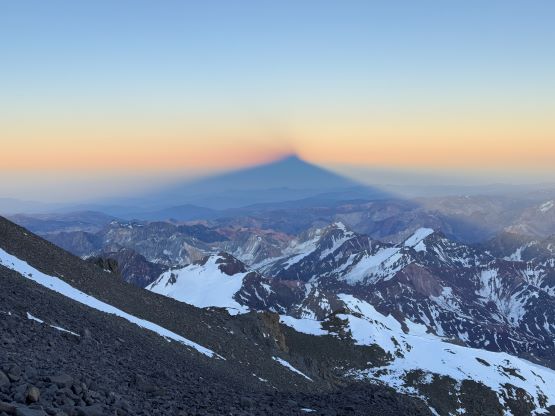
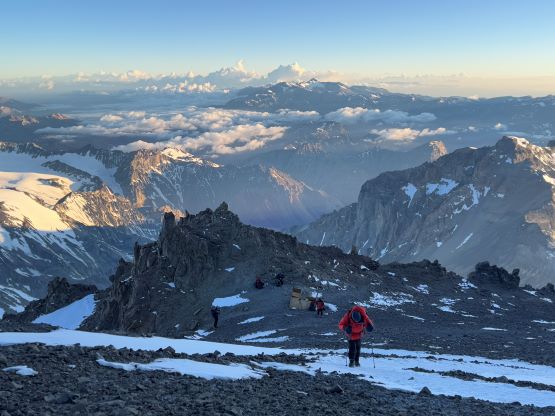
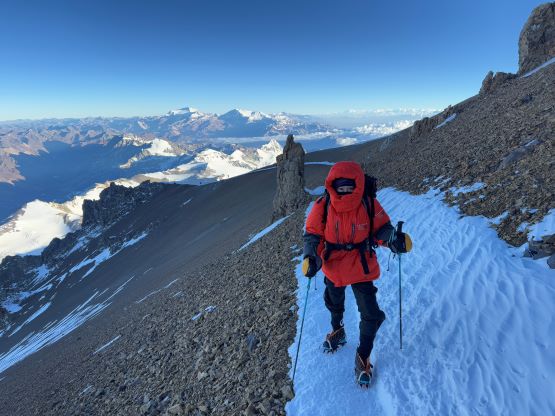
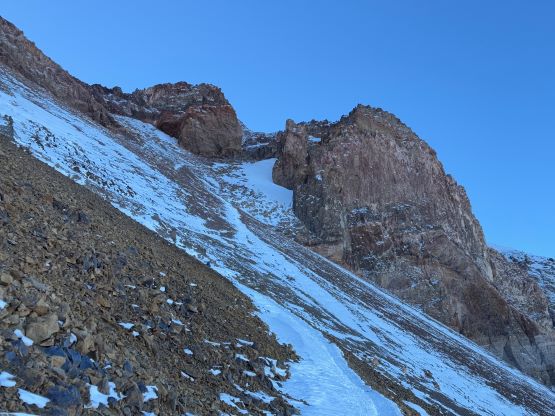
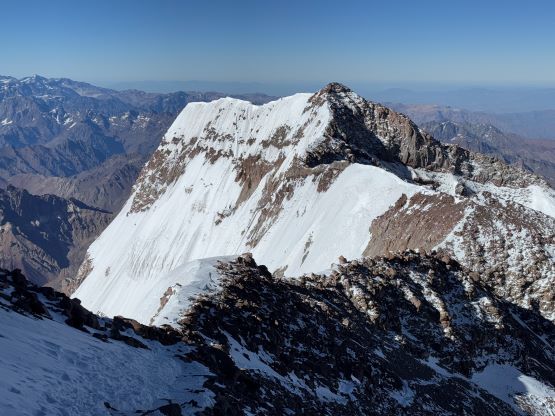
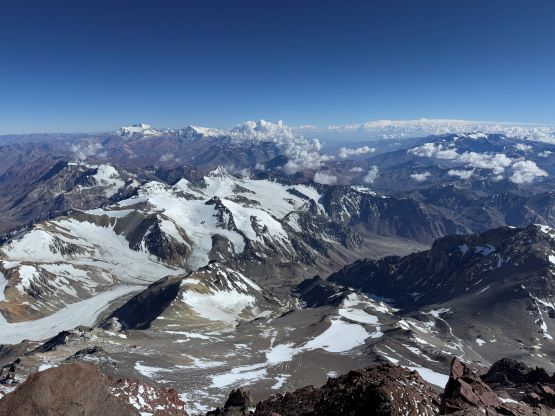
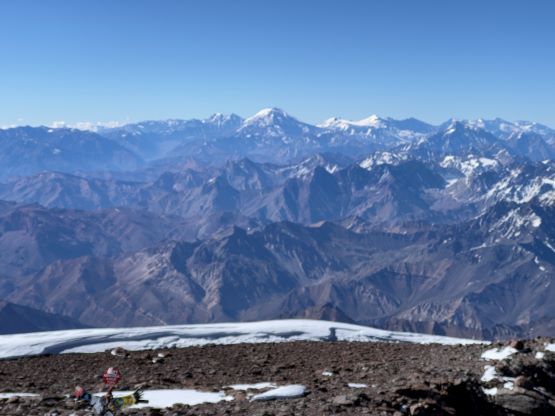

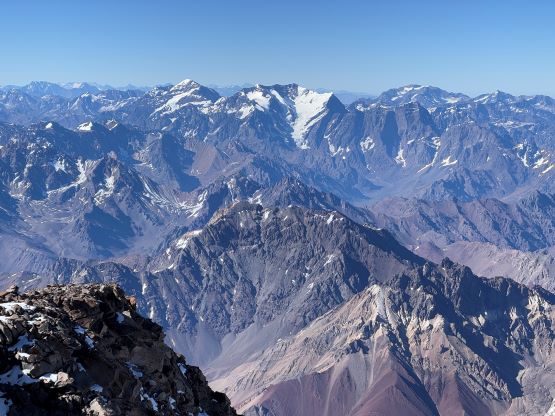
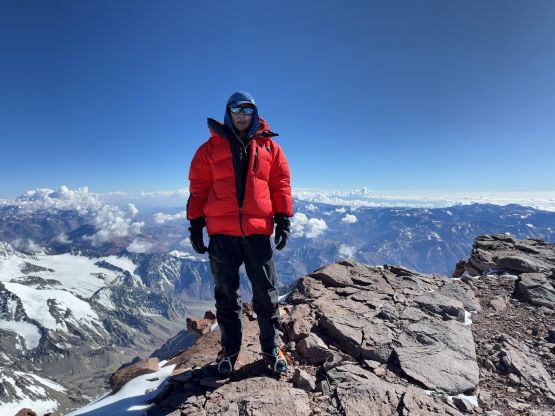
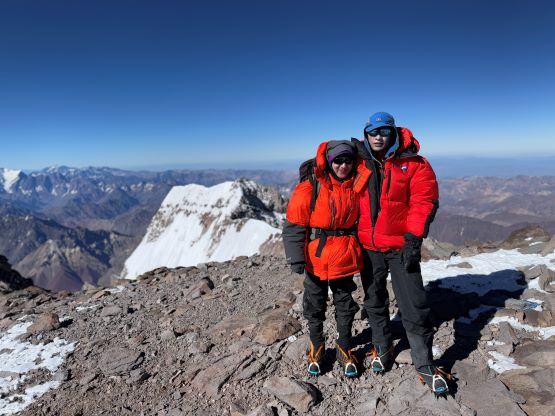
Besides taking some obligatory victory shots I did not linger any longer than 3 minutes up on the summit. My stomach was bowing and my arms had started to tingle so I was quite concerned. I told Erica that if she needed any further transition then I would not wait. I would descend as quickly as I could, at all costs and Erica agreed. The donning of sunscreen was sort of mandatory so that stop could not be saved. I did not remember much for the next while, but the next thing I stopped at the cave area waiting for Erica to catch up. I had felt considerably better through descending 200 m so it’s better to do the rest of the descent together. I later learnt that Erica’s arms were also tingling even from the day before, so that proved the theory that doing Cerro El Plata itself was not sufficient to fully acclimatize for Aconcagua, but we were overall fit enough to pull it off rather quickly. The virgin snow beside the highway of tracks on that traverse provided a soft platform to plunge down, that by no time we were down to the shoulder above Independencia, removing our crampons. We took a lengthy break there as we both were feeling fine by now, and did the rest of the descent down to Camp Colera rather leisurely. This was Erica’s first time wearing the 6000 m boots and the boots were giving her toes massive troubles. I started to regret not hauling the trail runners up high but there’s nothing we could do beside taking our time and sucking it up. The descent from Camp Colera down to Nido de Condores was brutal on Erica’s feet so we really took our time, but still got back by lunch time.
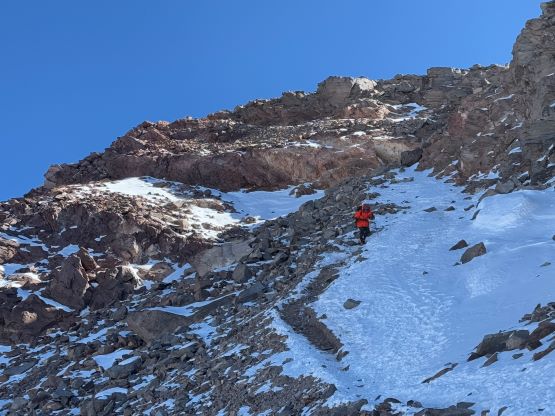

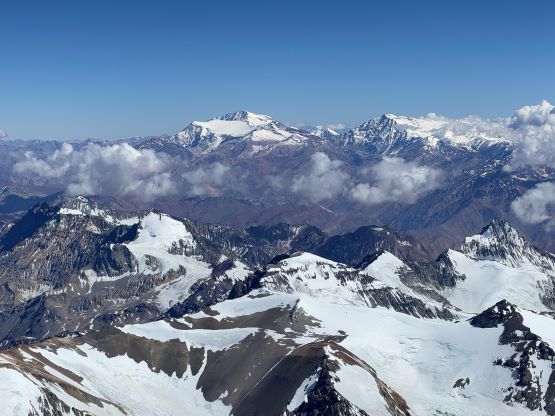
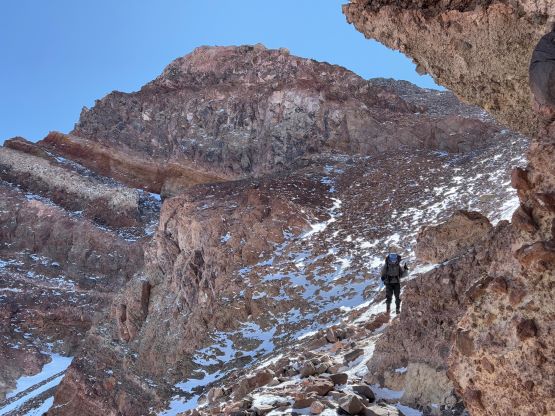
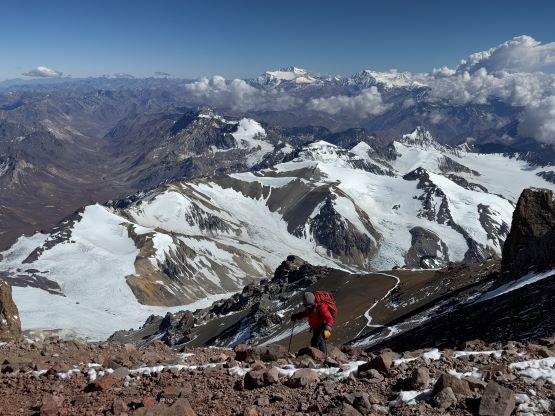
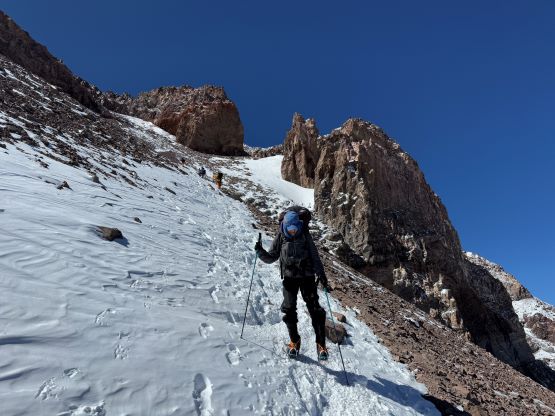
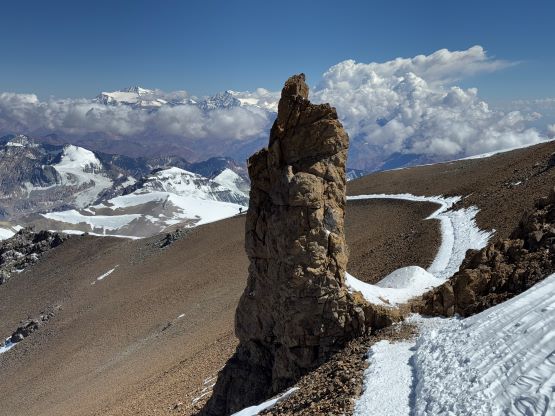

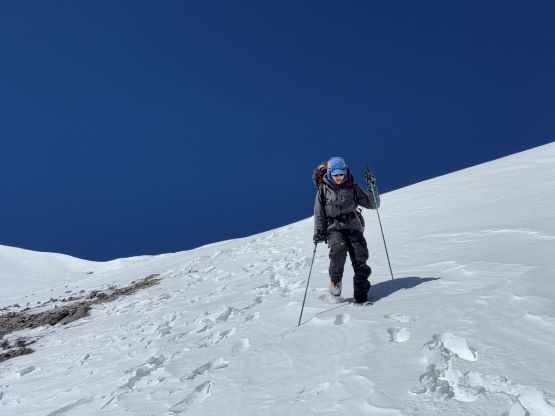
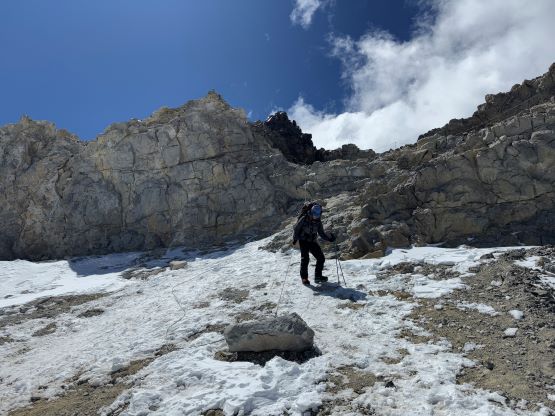
Most parties would spend another night at their high camp whether it’s C2 or C3, but that made no sense for us. For various reasons we should descend all the way to the base camp on this same day, but since we were doing great on time we should take our time resting at C2. The extra package of dinner and the ramens (brought for contingency) had now become the luxury, that we cooked everything we could to regather some physical and mental strength. That 6L water jug had also become quite useful. The water we collected yesterday did not freeze, and served us well on this day, that melting snow was no longer needed. About an hour or two later we finally got out and got our things packed. The weather was turning but the winds weren’t too strong, but it had become overcast with some isolated flurries. The descent from C2 to the base camp was still quite cold, but at least it was fast. I led us descending most of the “scree route” but made lots of stops for Erica’s feet to recover. The toes and the blisters were becoming serious but again, there’s nothing we could do. I thought about to call for the helicopter to make use of that 400 USD Erica had spent, but this isn’t Mt. Everest, that the blisters wouldn’t be serious enough to initiate a rescue, so suck it up and that’s it. I didn’t think we descended that much faster than the ascent, but still got down to the base camp in time for a leisure dinner, after reclaiming our bags. I kindly asked if we could spend another night or two in INKA’s tents but this time we would have to pay, so we still had to dig everything out to pitch our own tent. At this point we had decided to spend 45 dollars to purchase 4G of WiFi, and the first thing I did was to log Aconcagua on Peakbagger. Right away I noticed that two others had logged it on the same day and sure enough, one of them had sent me an email asking it was me descending the Canaleta. I remembered nothing from that section as I was dead focused on going down, but sure enough I replied that let’s meet up on the following day. The two Washingtonians would spend another night at C3.
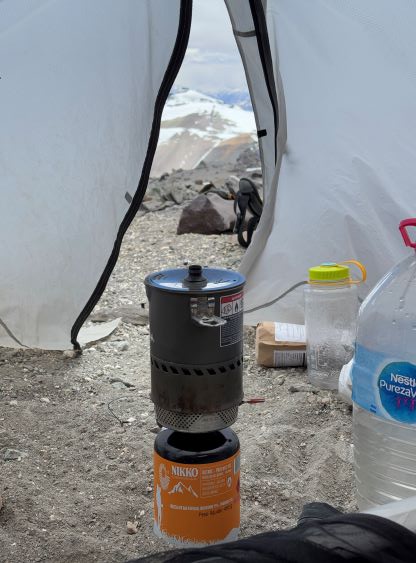
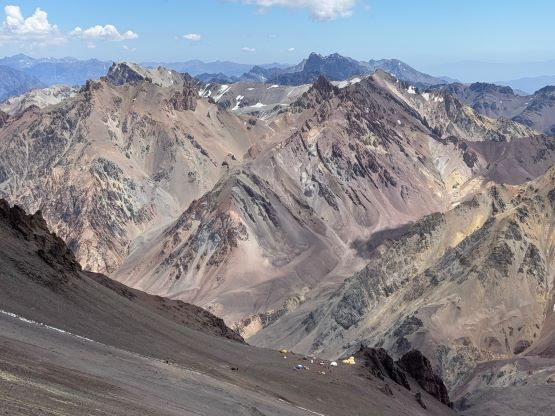

All of my AMS symptoms were gone by the next morning at the base camp but Erica’s fingers’ tingling persisted for a few more days afterwards. We also had no sun burn nor frost bite, contrary to most Aconcagua’s accounts. We had earned ourselves a full rest day at the base camp mostly to eat the 30 kg of food we had brought this far. The Indian curries would be accompanying the couscous in double the planned amount, as otherwise we wouldn’t be finishing them. Adam and Jacob, the two Washingtonians showed up midday and we spent some time chatting. I also started to research the bonus objectives that we would be doing in the next few days. We spotted a cheaper window to fly home on the 11th and the current itinerary would position us back in Mendoza by the end of the 5th. There were too many days to kill, and I made plans for two more Ultras. The original thought was to join Rob and Deividas’ trip but I changed my mind after digging through some local Facebook groups, that one of their objectives would likely not going to work. I didn’t want to take a chance so I found my own transportation and would go for the two easier objectives. This killed the majority of the day but I still had a few more hours to do something. I decided spontaneous to read more Aconcagua’s trip reports, as it’s fun to read the others’ struggling. The first one I bothered to read was Greg Slayden’s as that’s the 3rd version of the same trip, besides Rob Woodall and Adam Walker’s. I then went to Francis Bailey’s website as his account was the only one being guided, which sounded and tasted like a disaster. One should definitely avoid being involved in a large guided team at all costs. The final report I read was the Gilbertsons’ which surely sounded like one written by the MIT kids. I remembered skimming through that report many years ago but this time I finally read it word by word. It was 11:30 pm now and I thought I had finally made enough use of the gigabites, so went to sleep.
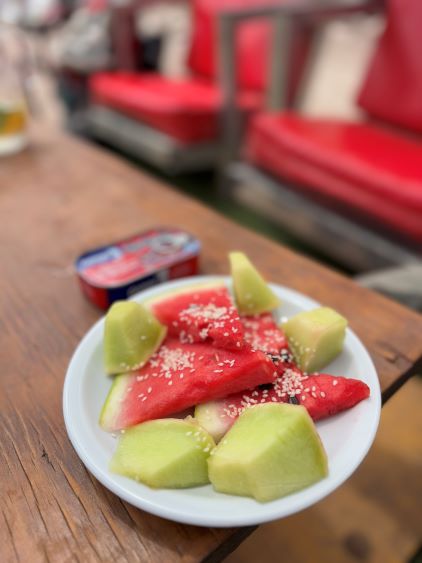
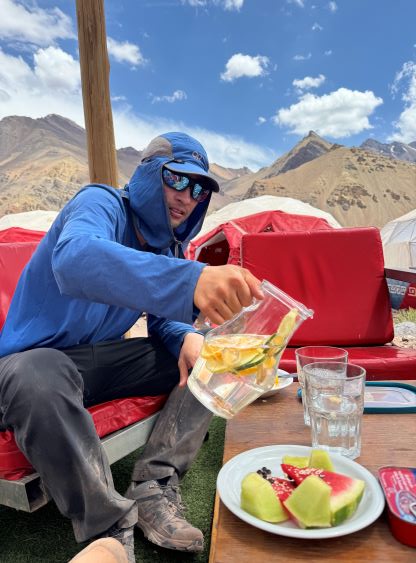
The 7th, and the final day would be spent trekking 25 km back down the Horcones valley route. I was unsure how Erica would do with her black toe nails and massive ass blisters, but again we couldn’t initiate a rescue and there’s no way would we pay 1700 USD for the helicopter ride, so suck it up and be it. There’s more logistics in the morning as Raphael made us to get the mule bags ready by 8:30 am. I didn’t understand the reason but sure, why not embracing the cold for one more time. The packing was downright miserable but the sun eventually came up at 9 am and we could finally warm ourselves up. Raphael promised the mule bags to be down in Los Puquios by 5-6 pm so technically we could have booked the 8 pm bus back to Mendoza, but I didn’t want to put my bid on INKA’s reliability. I was downright correct, as otherwise we would have missed the bus. The bags didn’t arrive until after 9 pm, which was surprisingly not to my surprise. The trekking itself was more enjoyable than on the way in, and I made Erica to lead most of the way. Erica stated multiple times that we should plod slowly but her “slow” was still much faster than most people’s pace. We took a shit ton of breaks to dry her feet but our plodding pace was still much faster than most groups’. We eventually got down to Confluencia where Adam and Jacob was also at, and gave the two packs of ramen for INKA to prepare for. They also provided us fruit salads but didn’t charge us any. About an hour and half later we finally got out and did the final 7 km hike back to the trail-head, completing the round trip C2C moving time in under 24 hours. The driver showed up quickly but as mentioned earlier, we spent a few hours waiting for our bags to arrive. Thankfully nobody had committed to that 8 pm bus as otherwise this would lead to another disaster. We booked another night of stay in Altas Cumbres Penitentes and took the 12 pm bus back to Mendoza on the next day.


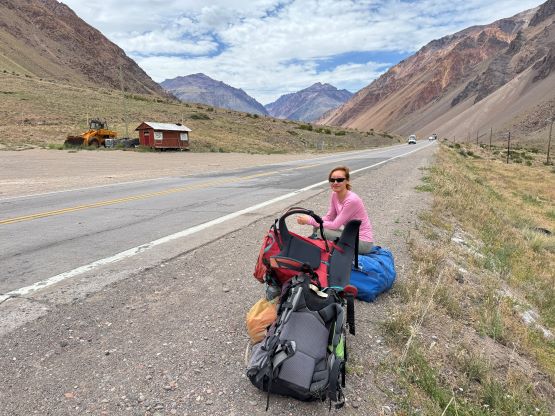
At last, it’s the gear talk. I think Aconcagua is on the list for a lot of you guys, so here’s what we used. Despite the troubles we had with INKA I would still recommend this company, even just for the reason that they could customize to your own needs. But if I were to do again I would firstly do my own research of how the mules work, and plan 2 buffer days at the start and 1 buffer day at the end to take in account of the contingency. What happened to us could easily happen to any other agency’s clients.
- INKA Essential Services – 150 USD each
- Mule round trip Los Puquios – Plaza de Mulas (no stop at Confluencia) – 680 USD
- Permits – 850 USD each
- Insurance – Tugo (myself) + 400 USD for Erica local insurance
- Backpacks – AMG 105L (me), Osprey 85L (Erica)
- Phantom 6000 boots (used only for 1 day)
- Parka – Mountain Hardwear Absolute Zero (Erica), Feather Friends Khumbu (me)
- Mittens – Rab 8000m (Erica), Mountain Hardwear Absolute Zero (me, not used)
- Down pants – not used
- Arc’teryx Beta AR pants (me) or equivalent (Erica)
- MEC -20C sleeping bag (me), Western Mountaineering Puma GWS -32C (Erica)
- Thermarest men’s XTherm (me), women’s XLite (Erica)
- Samaya 2.0 tent with vestibule (expensive!)
- Julbo goggles (not used)
- MSR Reactor stove with fuel bottles bought in Mendoza
- BIC lighters with sparkler for spare
- Ice axes – never used
- Crampons – Petzl Irvis Hybrids (me), Petzl Vasaks (Erica)
 Steven's Peak-bagging Journey